
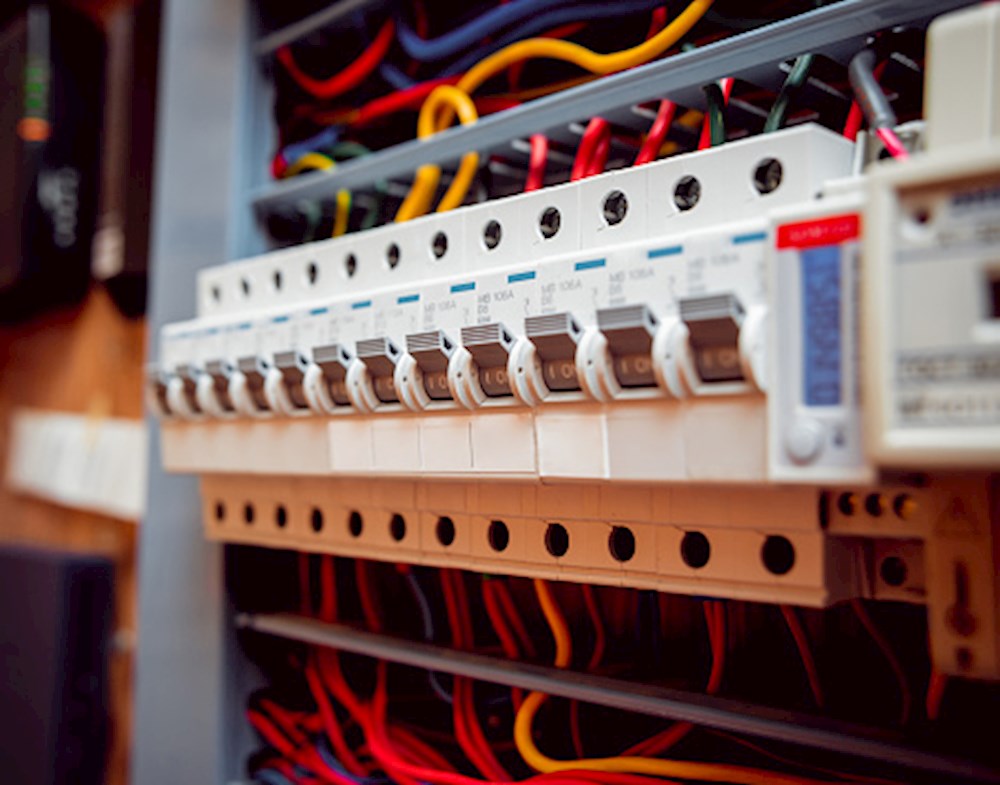
Replacing a consumer unit costs on average between €350 and €1,150, depending on the type of distribution board and the number of circuits you need. During this task, an outdated fuse box is replaced with a modern consumer unit equipped with residual current devices (RCDs) and automatic circuit breakers. In this price guide, you can read exactly what determines the costs for replacing a consumer unit and what you should look out for.
What does it cost to replace a consumer unit?
Replacing a consumer unit costs on average between €350 and €850 for a 1-phase distribution board and between €700 and €1,150 for a 3-phase consumer unit. These prices are including materials, labour, and 21% VAT. The exact costs depend on the number of circuits you need and the type of connection in your home.
Costs per type of consumer unit
Type of consumer unit | Price |
|---|---|
1-phase distribution board | €350 - €850 |
3-phase consumer unit | €700 - €1,150 |
A 1-phase consumer unit is suitable for smaller homes with limited power consumption. A 3-phase consumer unit is usually installed in larger homes or with higher energy consumption, for example when you charge an electric car or have an electric hob.
Costs per number of circuits
Number of circuits | 1-phase consumer unit | 3-phase consumer unit |
|---|---|---|
4 circuits | €450 - €700 | €700 - €750 |
5 circuits | €500 - €550 | €550 - €650 |
6 circuits | €700 - €800 | €700 - €800 |
7 circuits | €550 - €650 | €600 - €700 |
8 circuits | €750 - €850 | €800 - €950 |
9 circuits | €650 - €800 | €900 - €1,000 |
10 to 12 circuits | €700 - €850 | €900 - €1,150 |
The number of circuits determines how many separate circuits you can connect. A larger home with more rooms and appliances needs more circuits. The professional charges on average from €65 per hour for replacing a fuse box. The total job usually lasts between two and four hours, depending on the complexity of the installation.
Costs of replacing a consumer unit by type
The difference between a 1-phase and 3-phase consumer unit lies in the connection. A 1-phase consumer unit works on 220-230V and has two wires, a 3-phase consumer unit works on 380-400V and has four wires. A 3-phase connection is necessary with higher power consumption, such as when you charge an electric car or use an induction hob.
Number of circuits | 1-phase consumer unit | 3-phase consumer unit |
|---|---|---|
4 circuits | €450 - €700 | €700 - €750 |
5 circuits | €500 - €550 | €550 - €650 |
6 circuits | €700 - €800 | €700 - €800 |
7 circuits | €550 - €650 | €600 - €700 |
8 circuits | €750 - €850 | €800 - €950 |
9 circuits | €650 - €800 | €900 - €1,000 |
10 to 12 circuits | €700 - €850 | €900 - €1,150 |
Price-determining factors for replacing a consumer unit
The costs for replacing a consumer unit vary by situation. Below you can read which factors influence the price and why some jobs cost more time and money than others.
Type of consumer unit
A 3-phase consumer unit costs more than a 1-phase consumer unit. This is due to the more complex connection with four wires instead of two and the heavier components needed to process higher current strengths. A 3-phase consumer unit requires more expertise and longer installation time.
Number of circuits
The more circuits are installed, the higher the costs will be. Each additional circuit means more wiring, extra RCDs, and more time to connect and label everything correctly. An average household nowadays needs 7 to 9 circuits.
Power consumption per circuit
Each room needs at least one circuit. In addition, each heavy appliance requires its own circuit: washing machine, dryer, oven, induction hob, air conditioning, electric boiler, and charging point. When determining the number of circuits, immediately include future expansions such as solar panels or a charging station. This prevents you from having to expand the distribution board again later.
Urgency and timing
Urgent jobs increase the costs. The professional must adjust their planning and may have to reschedule other work. Work during the weekend costs more than on weekdays due to the higher rates that then apply.
Location and accessibility
A difficult-to-reach consumer unit increases labour costs. Think of placement in concrete walls, limited workspace, or a large distance to the main connection. The professional then needs more time to lay the wiring and perform the installation.
Brand of consumer unit
A-brands such as Merlin, Holec, Attema, or Gerin are more expensive than B-brands. The quality and durability are often comparable. By choosing a B-brand, you can save up to €200 on material costs.
Condition of existing wiring
In old homes, outdated wiring may need to be replaced. If the existing wires no longer meet the standards or are damaged, the professional must pull new cables. This leads to substantial additional costs and longer work duration.
Legal requirements NEN 1010
Every new consumer unit must comply with the NEN 1010 standard. A certified electrician must install and inspect this. RCD protection is mandatory for all circuits, which means extra components and therefore higher costs.
Preparation
Good preparation saves time and money. Ensure the consumer unit is easily accessible by removing items. Make a list of desired labels for the circuits so the professional can apply them directly. This prevents later confusion about which circuit serves what.
Delay of maintenance
Fixing small problems is more economical than repairing major damage. Signals such as regular blowing of fuses or a burning smell indicate urgency. Waiting to replace can lead to short circuits, fire hazards, or damage to equipment.
Local availability
Local professionals can be on-site faster, which is especially important for urgent jobs. Short travel distances lower the total costs because no or less travel time is charged.
Transparency in prices
With platforms using fixed rates, you know in advance what you pay, without surprises and without call-out charges. This makes comparing easier and prevents discussions afterwards.
Extra costs and surcharges when replacing a consumer unit
Extra costs for replacing a consumer unit are situation-dependent. You do not pay call-out charges. Urgent jobs or work in the weekend cost more due to applicable surcharges.
Extra option | Price |
|---|---|
Installing socket | €50 - €100 |
Grounding | €200 - €250 |
Installing light point in consumer unit | €150 - €250 |
Cooker group | €50 - €100 |
Bell transformer | €30 - €50 |
RCBO (individual RCD) | €75 - €100 |
Upgrade main connection: With high power consumption, an upgrade of the main connection may be necessary (for example from 1x25A to 3x25A), for which permission and work from the grid operator are required.
Existing wiring: In old homes, outdated cabling may need to be replaced, which significantly increases the costs.
How does the professional work when replacing a consumer unit?
Replacing a consumer unit follows a fixed sequence of activities where safety and quality come first.
Inspection: The electrician inspects the current installation and determines the required number of circuits and whether you need a 1-phase or 3-phase consumer unit. The condition of the existing wiring is also assessed.
Power interruption: The electrician switches off the power and, if necessary, contacts the grid operator for official power interruption or when changing the main connection. The home is temporarily without power.
Disassembly and installation: The old consumer unit is dismantled and the new distribution board with RCDs is placed. All circuits are connected and clearly labeled per room or appliance.
Inspection and certification: All circuits are individually tested for proper functioning. The electrician inspects the installation and provides an installation certificate that is legally required and necessary for your insurance.
Cleanup and explanation: The workspace is tidied up and you receive an explanation about the new consumer unit and the circuits. A standard replacement takes on average 3 to 6 hours, depending on the number of circuits. The costs are settled immediately afterwards.
How can you save on replacing a consumer unit?
There are several ways to lower the costs for replacing a consumer unit without compromising on quality.
Do not delay: Do not wait to replace if you notice signals such as regular blowing of fuses, a burning smell, or missing RCD protection. Addressing small problems early prevents greater damage and higher costs.
Provide good preparation: Make the consumer unit easily accessible by removing items, switch off sensitive devices, and make a list of desired labels for the circuits. This saves the professional time and lowers the labour costs.
Choose the right moment: Do not book in the weekend or with urgency. Planned activities on weekdays are more economical because no surcharges apply.
Think of the future: Directly have enough circuits placed for future expansions such as solar panels or a charging station. Expanding the distribution board later is more expensive than doing it right the first time.
Book via Zoofy: You get a fixed rate in advance, without call-out charges and without surprises. You only pay after completion of the job.
Common reasons to replace a consumer unit
Problems with a consumer unit can have various causes, from aging to acute dangerous situations.
Outdated fuse box
Old fuse boxes with fuse wires no longer meet NEN 1010 standards and have no RCD protection. These boxes provide insufficient protection against electrocution and regularly cause voltage peaks that damage equipment.
Regular blowing of fuses
Fuses that often blow during normal use indicate overload of the circuit. This happens when too many appliances are connected to one circuit or the consumer unit has too few circuits for current power consumption.
Fire hazard due to aging
Melted or discoloured parts, sparks, burning smell, or burn marks are acute warning signals. These phenomena indicate poor contacts, overheating, or short circuits and require immediate action due to danger to life and risk of house fire.
Too few circuits
Modern households use more devices with high power consumption than thirty years ago. Old boxes with only 3 or 4 circuits cannot handle this load, which leads to overload and regular failures.
Find the best electrician for replacing your consumer unit
Replacing a consumer unit may only be performed by a certified electrician due to legal NEN 1010 standards and safety risks.
No call-out charges: You only pay for the actual work, never extra for the professional's arrival.
Fixed price in advance: You know exactly what the costs are before the job begins, without surprises.
Fast booking without quotation hassle: Arrange an electrician directly without time-consuming back-and-forth emailing.
Payment after completion: You only pay via QR code when the work has been completed to satisfaction.
Verified professionals: All connected electricians are verified and achieve an average customer score of 9.2.
Warranty on work and materials: Ask the electrician about the warranty, often 2 to 5 years on both the work and the components.
Book an electrician for replacing your consumer unit
Ready to have your consumer unit replaced? At Zoofy, you book a professional directly, without quotes and without call-out charges. You see exactly what it costs beforehand, and Zoofy connects you to a reliable, verified professional. You only pay once the work is done. Book a professional directly.
Useful links
Frequently asked questions
The costs for replacing a consumer unit lie between €350 and €1,150, depending on the type of connection (1-phase or 3-phase) and the number of circuits. This price is including material, labour, and 21% VAT. You pay no call-out charges and know exactly what the costs are beforehand.
No, work on the consumer unit may only be carried out by a certified electrician. This is legally mandatory due to safety risks and NEN 1010 standards. The connected professional provides an installation certificate after installation which is required for your insurance.
A standard replacement takes on average 3 to 6 hours, depending on the number of circuits and the complexity of the existing wiring. During the work, the home is temporarily without power.
The costs for a 3-phase consumer unit lie between €700 and €1,150. A 3-phase connection works on 380-400V and is necessary with higher power consumption, for example for an electric car or induction hob.
There is no legal maximum age, but fuse boxes older than 30 years usually no longer meet current safety standards. Signals such as regular blowing of fuses, a burning smell, or missing RCD protection require immediate replacement due to fire and electrocution hazards.
Yes, your presence is needed for questions during the work and the final check. You only pay via QR code after the job is finished.
The smart meter stays in place. This is the property of the grid operator and is not replaced by the electrician.
Yes, the electrician provides an installation certificate that is legally required and necessary for insurance and when selling the house.
A central RCD switches off all circuits in the event of a fault, while RCBOs work per circuit. With RCBOs, only one circuit fails, which is more practical for daily use.
Most professionals offer 2 to 5 years warranty on both materials and work. Ask the electrician about this beforehand to have certainty about the warranty conditions.