
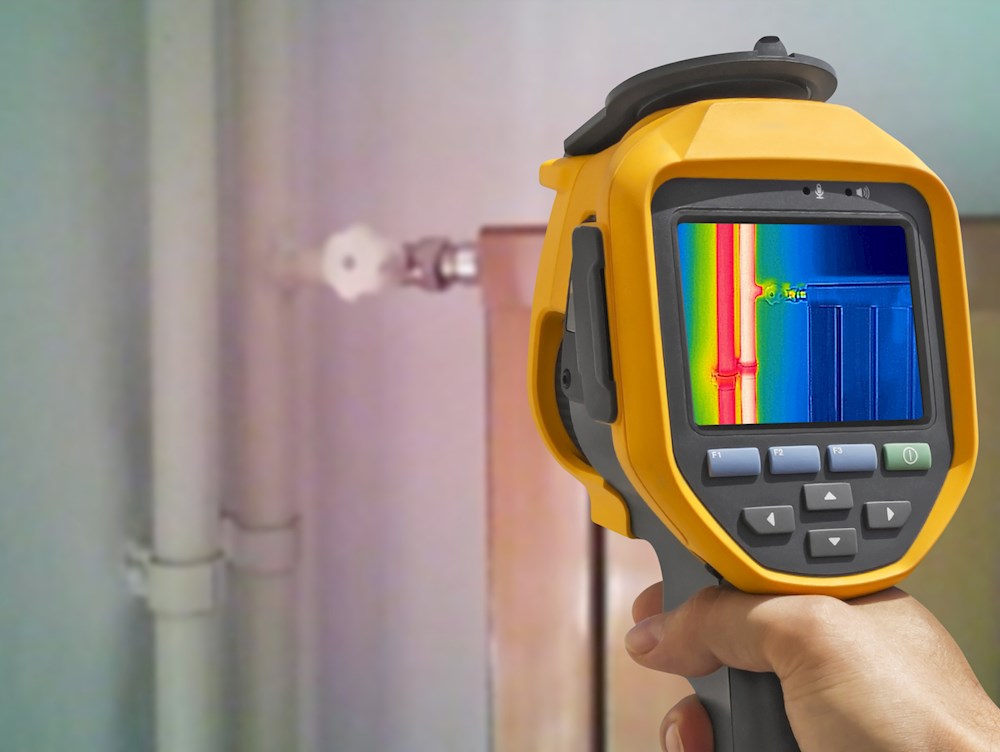
Professionally locating a leak using specialist equipment such as thermal imaging cameras, ultrasound, and tracer gas costs between €400 and €500 on average. The costs for leak detection depend on the nature of the leak, the accessibility of the location, and the required measurement techniques. In this price guide, you can read which factors determine the price and how you can book a professional for locating a leak.
What does leak detection cost?
Locating a leak costs between €400 and €500 per project on average. These costs include the use of specialist equipment and the time the professional needs to locate the source of the leak. The exact price depends on the complexity of the situation and the accessibility of the location.
Overview of leak detection costs
Work activities | Unit | Costs |
|---|---|---|
Locating the leak | project | €400 - €500 |
Sloping roof repair | per m² | €100 - €150 |
Gutter repair | project | €100 - €200 |
Flat roof repair | per m² | €150 - €250 |
Removing shower tray | project | €300 - €400 |
Replacing flat roof drain | project | €200 - €250 |
Replacing lead flashing | per metre | €85 - €100 |
Replacing single roof tiles (max. 5 pieces) | project | €100 - €150 |
The table shows that the price for leak detection is mainly determined by the detection work itself. Any repairs after locating the leak are added on top. The type of repair and the scope determine the final total price.
Additional costs after detection
Work activities | Unit | Costs |
|---|---|---|
Plastering small surface | per m² | €20 - €25 |
Plastering large surface | per m² | €15 - €25 |
New floor tiles | per m² | €50 - €100 |
New wall tiles | per m² | €50 - €100 |
After repairing the leak, finishing is often necessary. Especially with leaks in central heating pipes or leaks in walls and floors, the plasterwork or tiling must be restored. All mentioned prices include 21% VAT and labour of the affiliated professionals.
Leak detection costs per type of leak
The costs for leak detection depend heavily on where the leak is located and what follow-up work is required. Simply locating a leak in the bathroom costs differently than when a complete shower tray needs to be removed. Below you can see what various detection and repair activities cost.
Type of work | Unit | Price indication |
|---|---|---|
Leak detection (locating) | per project | €400 - €500 |
Roof leak detection | per project | €400 - €500 |
Sloping roof repair | per m² | €100 - €150 |
Flat roof repair | per m² | €150 - €250 |
Gutter repair | per project | €100 - €200 |
Removing shower tray | per project | €300 - €400 |
Flat roof drain | per project | €200 - €250 |
Replacing lead flashing | per metre | €85 - €100 |
Replacing roof tiles (max 5) | per project | €100 - €150 |
Price-determining factors for leak detection
The costs for leak detection vary per situation. What might be an hour's work in one home can take half a day elsewhere. Below you can see which factors determine the price and how you can limit costs.
Urgency versus planned
An acute leak requires immediate action. The professional must adjust their schedule and reschedule other jobs. This leads to an urgency surcharge, causing costs to be higher than with a planned appointment. A small leak investigated early prevents this additional price.
Weekend and evening hours
Work outside regular office hours costs more. The professional then works irregular times, which translates into a higher price. Plan the detection during the week during the day if possible.
Complexity and accessibility
Manner of accessibility requires more time and effort. A leak in a crawl space, behind tiled walls, or under a concrete floor is harder to locate than a visible leak at a gutter. Older homes with outdated piping systems often require extra detection work because pipes are not laid logically or are poorly documented. This increases the costs for locating the leak.
Type of leak
The difference between a visible and a hidden leak is large. A wet spot near a gutter points directly to the source. A creeping leak under the floor or in a wall requires advanced equipment and more time. The more hidden the leak, the higher the price.
Required equipment
Each type of leak requires specific detection methods. A thermal imaging camera shows temperature differences in case of moisture damage. Ultrasound detects water flow behind walls. Tracer gas tracks down small leaks in central heating pipes. Thermography visualises hidden moisture spots. A sewer camera inspects drain pipes from the inside. The choice of equipment influences the total costs.
Follow-up damage
A leak often damages more than just the pipe. Plasterwork comes loose, tiles are affected, and woodwork begins to rot. After detecting and repairing the leak, this damage must be restored. This entails extra labour hours and material costs.
Region
In large cities, the costs for leak detection are often higher than in rural areas. Higher overhead costs such as parking permits and longer travel times due to traffic affect the price.
Do not delay jobs
Fixing a small leak early saves money. Moisture problems can cause mould within 24 to 48 hours. Structural water damage to beams, floors, or walls is more expensive to repair than just locating and sealing the original leak.
Choose a local professional
Local professionals are on-site faster and charge less travel time. This reduces the total price and ensures faster help in acute situations.
Good preparation
Ensure the workspace is clear and accessible. Clear away furniture, boxes, and items near the possible location of the leak. This saves the professional time and keeps the price manageable.
Use an honest platform
At Zoofy, you know in advance what you pay. No call-out charges, no surprises afterwards. You book a professional directly without long waiting lists or unclear rates.
Extra costs and surcharges for leak detection
Extra costs for leak detection depend on urgency and time. At Zoofy, you pay no call-out charges.
Urgency surcharge: For acute leaks, a surcharge applies because the professional must adjust their schedule immediately to be on-site quickly.
Weekend surcharge: Work during the weekend is more expensive than during the week due to irregular working hours.
Additional work after detection: Repairs such as restoring plasterwork (€20-€25 per m²), replacing tiles (€50-€100 per m²), or replacing lead flashing (€85-€100 per metre) come on top of the detection price.
How does the professional work during leak detection?
The leak detection proceeds in five clear steps, where the professional first analyses the situation and then deploys the correct detection method.
Intake and visual inspection: The professional discusses the complaints such as moisture spots, musty smell, or increased water consumption. He performs an initial inspection to determine the possible location of the leak.
Choice of detection method: Based on the symptoms, the professional chooses the right equipment. For hidden pipes, thermography or a thermal imaging camera is used, for small leaks tracer gas, for pressure pipes ultrasonic sound, and for sewer problems a sewer camera.
Execution of detection: The professional locates the exact source of the leak with the chosen equipment. Modern non-destructive methods prevent unnecessary breaking and demolition work, keeping costs limited.
Reporting: The professional creates a report with findings and photos. He discusses the urgency and provides advice on the repair.
Repair or quote: You can choose immediate repair or a quote for follow-up work. A leak detection takes 1 to 2 hours on average. Ensure the space is accessible and move furniture beforehand to limit costs.
How can you save on leak detection?
There are various ways to limit the costs for leak detection by planning smartly and preparing well.
Check preventively: Regularly inspect gutters, sealant joints in the bathroom, and pipe connections. Replace outdated rubbers and sealant in time. Watch for early signals such as moisture spots, musty smell, or increased water consumption.
Clear the workspace: Ensure the space is accessible before the professional arrives. Move furniture, boxes, and items near the possible location of the leak. This saves the professional time and keeps costs manageable.
Plan during the week: Do not book on the weekend or with urgency unless necessary. Planned appointments during the week are more economical because no surcharges apply.
Take emergency measures: In case of an acute leak, you can turn off the main valve yourself, place drip trays, and switch off electricity in wet areas. This limits follow-up damage and keeps the price lower.
Book via Zoofy: You get a fixed rate in advance, without call-out charges and without surprises. You only pay after the job is completed.
Common causes of leaks
Leaks arise from various causes, from outdated materials to installation errors.
Roof leaks
Roof leaks often arise from outdated roofing, shifted roof tiles, or defective lead flashing. Clogged gutters cause water nuisance that seeps inside through crevices. After a storm or heavy rain, the risk increases because weak spots succumb under water pressure.
Bathroom leaks
Bathroom leaks are caused by poor sealant joints, a defective shower tray, or leaking pipe connections behind tiles. Water slowly penetrates walls and floors, which often only becomes visible after weeks or months.
Pipe leaks
Pipe leaks arise from the ageing of copper and plastic, frost damage, or excessively high water pressure. Installation errors during construction also occur. These leaks are often hidden behind walls or under floors, making the costs for leak detection higher due to the required equipment.
Find the best professional for leak detection
In case of leaks, speed and expertise are crucial to prevent further damage.
No call-out charges: You only pay for the actual work, never extra for the arrival of the professional.
Fixed price in advance: You know exactly what the costs are before the job begins, without surprises afterwards.
Quick booking without quote hassle: Reserve a professional directly and do not wait weeks for quotes or price estimates.
Payment via QR code after completion: You only pay when the job is completely finished and you are satisfied with the result.
Reliable, verified professionals: All affiliated professionals are screened for quality and reliability, so you are assured of expert work.
The right specialist: For detection and piping work you book a plumber, for roof leaks a roofer, for tiling work a tiler, and for plasterwork a plasterer.
An experienced plumber with modern leak detection equipment saves you time, money, and prevents unnecessary damage.
Book a professional for leak detection
Ready to have a leak located? At Zoofy, you book a professional directly, without quotes and without call-out charges. You see exactly what it costs in advance, and Zoofy connects you with a reliable professional who has been verified. You only pay when the work is done. Book a professional directly.
Useful links
Frequently asked questions
In many cases, the costs for leak detection are covered by your buildings insurance, especially in case of sudden damage. Contact your insurer beforehand to check exactly what falls under the coverage. Keep the professional's report as evidence for your claim.
A professional leak investigation costs between €400 and €500 on average. The price depends on the complexity, the accessibility of the location, and the required detection equipment such as thermal imaging cameras or tracer gas.
Ja, an experienced plumber can locate leaks in water pipes, central heating systems, and bathrooms with professional equipment. For roof leaks, you hire a roofer. The costs for locating a leak in a central heating pipe are between €400 and €500.
The professional uses specialist equipment such as thermography, ultrasonic sound, or a thermal imaging camera to determine the exact location. These modern methods often make breaking work unnecessary and also locate hidden leaks behind walls and under floors.
A leak detection takes an average of 1 to 2 hours, depending on the accessibility and complexity of the leak. For difficult to access locations such as crawl spaces, it can take longer.
No, modern detection methods such as thermography and tracer gas often make breaking work unnecessary. Only during the actual repair may limited breaking work be necessary to reach the leak.
Turn off the main valve, catch water with buckets, and switch off electricity in wet areas. Book an urgent job via Zoofy to get a professional on-site quickly, although an urgency surcharge then applies.
Yes, it is recommended to be present so the professional can ask questions about the complaints and discuss findings directly with you. This speeds up the process and prevents misunderstandings.
The costs for locating a leak in the bathroom and sudden damage are often covered by your buildings insurance. Check your policy beforehand and keep all reports and invoices for your claim.
On average, a repaired spot must dry for 2 to 4 weeks, depending on the humidity level and ventilation. Only paint when the wall is completely dry to prevent new moisture problems.