
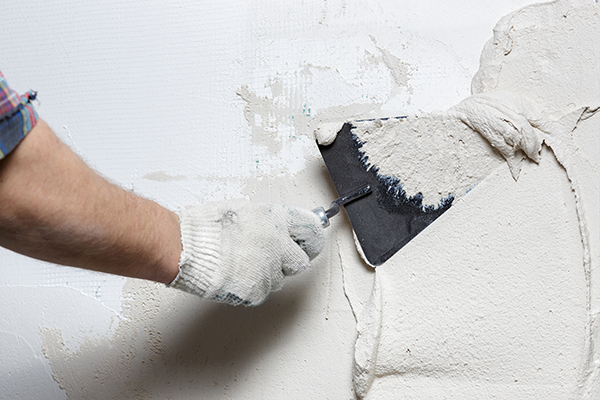
Repairing plasterwork costs on average between €250 and €400 for small areas, or €13 to €33 per square metre. The price depends on the extent of the damage, the type of plasterwork and whether there are cracks, holes or other damage in your plastered walls or ceilings. In this price guide, you can read exactly what influences the costs for repairing plasterwork and what to look out for when comparing quotes.
What does repairing plasterwork cost?
Repairing plasterwork costs on average €250 to €400 for smaller areas up to 30 square metres. For larger areas, plasterers work with a square metre price of €13 to €33 per m². The method of calculation depends on the scale: small jobs are calculated per project, larger jobs per square metre.
Overview of costs for repairing plasterwork
Type of work | Unit | Price |
|---|---|---|
Repairing indoor plasterwork less than 30 m² | project | €250-€400 |
Repairing indoor plasterwork per m² | m² | €13-€33 |
The price for repairing plasterwork varies mainly based on the area that needs to be restored. For small damages such as cracks or holes in a single wall or ceiling, the project price is the most practical. For larger areas, the square metre price is used, as this provides a fairer calculation for both you and the plasterer.
The prices mentioned include 21% VAT and labour. Material costs such as plaster mix, primer and finishing layers are standard included in the price. The professional performing the task brings their own tools, so you don't have to provide them yourself.
Costs of repairing plasterwork by type of work
The total price for repairing plasterwork depends on the scale of the job. For smaller areas up to 30 square metres, plasterers charge a fixed project price, while for larger areas, they charge per square metre. Below you can see what both options cost.
Type of work | Unit | Price |
|---|---|---|
Repairing indoor plasterwork less than 30 m² | project | €250-€400 |
Repairing indoor plasterwork per m² | m² | €13-€33 |
Price-determining factors for repairing plasterwork
The costs for repairing plasterwork vary per situation. Some jobs are finished quickly, others require more time and preparation. Below you can read which factors influence the price and how you can make a smart choice.
Extent of the damage
Small hairline cracks require less time than deep cracks or large damaged surfaces. The larger the damage, the more material and labour are required. This directly increases the costs.
Type of damage
Superficial cosmetic repairs are carried out faster than structural restoration. In the case of damp damage, the source must first be addressed before plasterwork can be restored. Structural problems may require reinforcement work, which costs extra time and material.
Underlying causes
Cracks sometimes indicate subsidence, damp problems or structural defects. Simply sealing a crack without solving the cause leads to recurring problems. A thorough analysis prevents more expensive repairs later.
Location and accessibility
Ceiling work requires scaffolding and is labour-intensive. Work in stairwells, above stairs or in high rooms requires extra effort. Wall work at eye level is more quickly accessible, which saves time and therefore costs.
Complexity of the task
Complex tasks such as large damages or specific plastering techniques require more expertise and time. Simple repairs are finished faster. This difference noticeably affects the total price.
Required materials
Standard plaster mix is affordable, but specific techniques such as Venetian plaster require more expensive materials. The amount of primer and finishing layers also determines the material costs.
Urgent or planned
Urgent jobs cost more because the professional has to adjust their schedule. Planned work is more economical because the plasterer can work more efficiently.
Weekend or weekdays
Work on weekends carries supplements. During the week, costs are lower because no extra rates apply.
Region
In large cities, prices are often higher than in rural areas. This is due to higher overhead costs and demand for professionals.
Weather influences on outdoor work
For outdoor plasterwork, frost, extreme heat and rain can negatively affect application and drying. Spring and autumn offer the best conditions, making the work proceed faster and more efficiently.
Do not delay tasks
Repairing small cracks in time is cheaper than restoring large damage. Postponed repairs lead to mould formation, further crumbling and structural damage to the underlying wall.
Good preparation
Ensure that the workplace is clear and accessible. Move furniture and cover the floor. This saves the professional time and keeps costs low.
Choose a local professional
Local professionals can be on site faster and have lower travel costs. This makes the total price more favourable.
Extra costs and surcharges when repairing plasterwork
Extra costs depend on the specific situation. At Zoofy, you do not pay call-out charges.
Urgency surcharge: For urgent jobs, a surcharge often applies because the professional must adjust their schedule.
Weekend surcharge: Work on weekends is more expensive than on weekdays.
Additional work for underlying problems: If it turns out during the repair that there are damp problems or structural damage, extra work may be needed to address the cause first.
Scaffolding or ladders: For ceiling work or work at great heights, extra costs may apply for scaffolding.
How does the professional work when repairing plasterwork?
Repairing plasterwork follows a set sequence of steps to guarantee a durable and beautiful result.
Inspection and preparation: The plasterer assesses the damage and determines the approach. The substrate is cleaned and loose parts are removed to ensure good adhesion.
Filling and restoring: Cracks and holes are filled with the correct plaster mortar or filler. In case of larger damage, work is done in multiple layers for a solid base.
Drying time: Between work steps, the plasterwork must dry. This takes per layer a few hours to a day, depending on the thickness and conditions in the room.
Finishing: After drying, the surface is sanded smooth and finished, matching the existing plasterwork. A small repair can be completed in one day, but larger jobs with multiple layers can take 2-3 days due to drying times.
Preparation by you: Move furniture near the wall to be repaired, cover floors and ensure free access to the workplace. This keeps costs low and prevents extra work for the professional.
How can you save on repairing plasterwork?
There are several ways to lower the costs for repairing plasterwork without sacrificing quality.
Address cracks in time: Small cracks become larger damage if you leave them. The longer you wait, the higher the costs become due to more extensive restoration work.
Prepare the workplace: Move furniture yourself, cover floors and ensure free access. This saves the professional time and keeps the price low.
Plan during the week: Do not book urgent jobs or weekend work. Planned work during the week is more economical because no surcharges apply.
Maintenance after repair: Regularly check for new cracks, ventilate well to prevent moisture build-up, and paint in time for protection of the plasterwork.
Book through Zoofy: You get a fixed price in advance, without call-out charges and without surprises. You only pay after completion of the task.
Common causes of damage to plasterwork
Damage to plasterwork can have various causes, each with its own practical effect on the state of your walls or ceilings.
Damp
Leaks, rising damp or condensation damage plasterwork by attacking the structure from within. This leads to cracks, discolouration and eventually crumbling. Damp weakens the adhesion between plaster and substrate, which can cause the plasterwork to come loose.
Subsidence
Movements in the foundation or load-bearing structure of the building cause tension on walls and ceilings. These movements pull cracks through the plasterwork, often in vertical or diagonal patterns.
Temperature fluctuations
Expansion and contraction of wall and ceiling materials due to seasonal temperature fluctuations leads to hairline cracks in the plasterwork. These are mainly cosmetic, but can grow if they are not filled in time.
Ageing
Over time, plasterwork loses its elasticity and adhesive power. It can crumble, fade or come loose from the substrate, especially in places where it is regularly exposed to moisture or temperature fluctuations.
Incorrect substrate
Plasterwork applied to an unsuitable or poorly prepared substrate does not adhere well. This can lead to cracks, hollow spots or peeling plasterwork shortly after application. Repair costs can increase if the work has to be done again.
Recurring cracks
If the same cracks return after repair, this indicates an underlying problem such as persistent damp problems, ongoing movement in the construction or an incorrect repair method. Without addressing the cause, repair remains symptom management.
Find the best professional for repairing plasterwork
A reliable plasterer prevents recurring cracks and unnecessary extra costs.
Experience with plastering techniques: An experienced professional delivers durable work that lasts for years and knows how specific repairs are best handled.
No call-out charges: You never pay extra for the professional carrying out the task to arrive.
Fixed price in advance: You know exactly what you pay, without surprises afterwards.
Book quickly without quote hassle: Choose a moment directly without endless waiting for quotes from different parties.
Payment via QR code after completion: You only pay once the task is fully completed and you are satisfied with the result.
Reliable, verified professionals: All affiliated plasterers are verified and use quality materials for a good final result.
Be careful with cheap quotes: Unrealistically low prices can indicate inferior materials or inexperienced professionals, leading to recurring problems.
Book a professional for repairing plasterwork
Ready to have plasterwork repaired? At Zoofy, you book a professional directly, without quotes and without call-out charges. You see exactly what it costs in advance, and Zoofy pairs you with a reliable professional who has been verified. You only pay when the work is done. Book a professional directly now.
Useful links
Frequently asked questions
The costs are between €13 and €33 per m² for larger areas. For small jobs up to 30 square metres, plasterers charge a project price of €250 to €400.
Very small superficial cracks can potentially be filled yourself with filler from the hardware store. For structural cracks or larger areas, a professional is needed to prevent permanent damage.
A small repair can be completed in one day. Larger jobs take 2-3 days due to drying times between the work steps.
For limited damage, repairing is cheaper and sufficient. In case of extensive damage over large areas or structural problems, full replacement may be more durable and cost-effective.
Recurring cracks often indicate underlying problems such as subsidence, damp problems or movement in the building that have not been resolved. Without addressing the cause, costs will increase.
Yes, new plaster layers can be applied over existing plasterwork provided the substrate is clean, solid and well prepared. This ensures optimal adhesion.
Yes, ceiling work is more labour-intensive and requires scaffolding, which increases costs compared to wall work at eye level.
The plasterwork can only be repaired after the source of the damp has been addressed, otherwise the damage will return. Damp weakens the adhesion and causes crumbling.
Many affiliated professionals give a guarantee on their work, often 1-2 years. Ask about this beforehand and record it in writing.
Spring and autumn are ideal. Avoid frost, extreme heat and rainy periods because these negatively affect application and drying.