

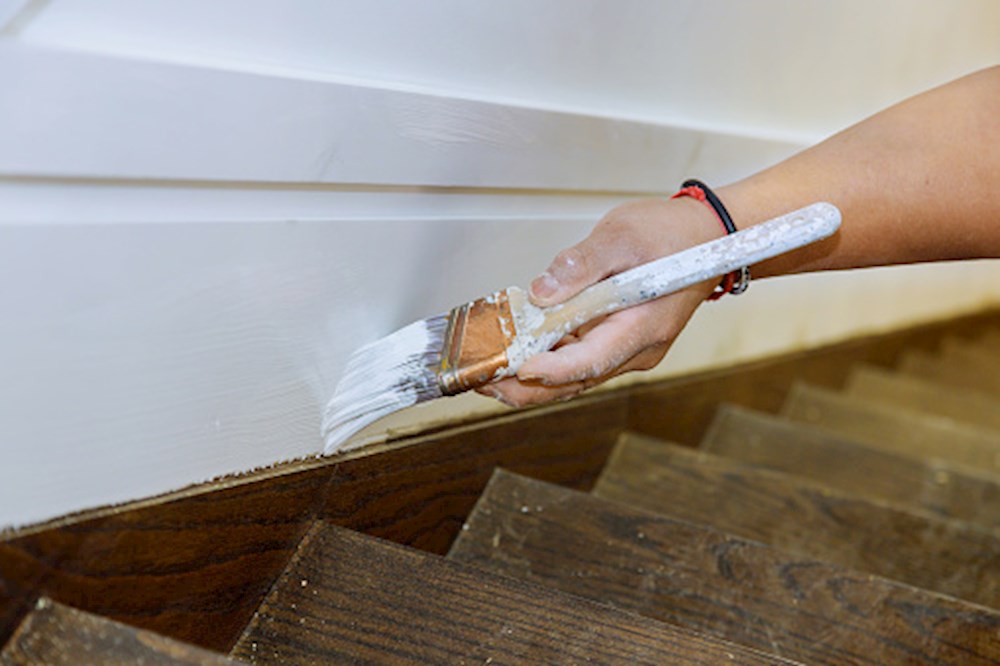
What does painting the stairs cost
Costs of painting stairs 2026
Painting a staircase costs on average between €400 and €1,000, depending on the condition of the stairs, the type of paint, and the number of steps. The price is determined by the preparatory work such as removing old paint or covering, sanding, and priming, followed by finishing the steps, risers, and handrail. In this price guide, you can read exactly what painting a staircase costs and what you should look out for with this task.
What does it cost to paint a staircase?
Painting a staircase costs on average €700, with a range of €400 to €1,000 for a complete treatment. This price includes 21% VAT and labour, and covers all necessary work such as sanding, priming, and finishing steps, risers, and handrail. Total costs are calculated per project, not per hour or square metre.
Costs of painting stairs
Work | Costs |
|---|---|
Complete stair painting | €400 - €1,000 |
Painting stair railing | €50 - €150 |
The table shows what you can expect with different options. A complete staircase treatment varies greatly in price, depending on the size of the stairs and the preparatory work required. If you only want to have the stair railing renewed, you can count on a significantly lower amount.
The cost difference arises mainly from the condition of the stairs and their size. A staircase that requires intensive preparatory work, such as removing old paint or repairs to damaged steps, will end up at the top of the price range. The number of steps and the complexity of details such as balustrades also influence the final costs. The affiliated professionals calculate exactly what the work entails per situation.
Costs of painting stairs per scenario
The costs for painting a staircase vary mainly based on the condition of the stairs and which parts need to be treated. For a staircase in good condition that only needs a new coat of paint, you pay around €400, while a staircase with glued-on carpet and damaged steps goes towards €1,000. Below you can see what different scenarios cost.
Part | Condition/situation | Costs |
|---|---|---|
Complete stairs | Good condition, only new paint layer | €400 |
Complete stairs | Removing carpet, replacing a few steps | €700 |
Complete stairs | Removing carpet, replacing multiple steps, extra primer layers | €1,000 |
Stair railing | Standard treatment | €50 - €150 |
Price-determining factors for stair painting
The costs for painting a staircase vary per situation. Not every staircase requires the same approach, and the factors that determine the price range from the condition of the wood to practical matters such as planning and accessibility. Below you can see what influences the final price.
Condition of the stairs
A staircase with glued-on carpet costs more time and labour than a bare wooden staircase. Removing carpet with dozens of nails is labour-intensive, and glue residue must be completely removed before the paint adheres well. Old paint layers that are peeling or flaking must first be sanded off. In the case of rotting wood or visible damage to steps, repair is necessary before painting can take place. This preparatory work increases the price.
Stair shape and type
A straight staircase is easier to treat than a spiral staircase or a quarter-turn staircase. With curved stairs, corners and transition areas are difficult to reach, requiring extra precision and time. An open staircase must be painted on both sides, while a closed staircase with risers has more surface area but is easier to access. More complex shapes such as balustrades with many spindles cost more labour.
Paint type and quality
Stairs undergo intensive daily use and therefore need hard-wearing paint. Water-based acrylic paint dries quickly and is environmentally friendly, but alkyd resin paint offers higher wear resistance and is better at resisting scratches. Special stair paint with anti-slip properties increases safety but costs more. Glossy or semi-glossy paint is more durable than matte paint because it protects better against mechanical stress. Choosing high-quality material increases the costs.
Number of paint layers
A difficult substrate sometimes requires three layers of primer to create an even surface. Multiple thin layers provide a better end result than one thick layer but cost more time. With heavily damaged or porous wood, extra primer layers are necessary for good adhesion.
Urgency versus planned work
Urgent jobs are more expensive than planned work. The professional must adjust their schedule, which takes administrative time and potentially displaces other appointments. If you plan the job well in advance, you can save costs.
Weekend or weekdays
Work at the weekend costs more than during the week. This is due to higher labour costs outside regular working hours.
Accessibility of the stairs
A staircase in a cramped space or in a difficult-to-reach place, such as an attic staircase, requires extra time. With limited workspace, special tools are needed or the professional has to change position more often, which increases the labour duration.
Region
In large cities, costs are often higher than in rural areas. This difference arises from higher general costs such as parking rates and longer travel times due to traffic.
Own preparation
You can save costs by doing preparatory work yourself. Think of removing floor covering, removing glue residue, or pre-sanding yourself. The fewer labour hours the professional needs, the lower the total price will be.
Combining with other painting work
When you combine multiple projects, such as painting the stairs together with window frames or doors, you often get a more attractive total price. The professional is already on-site and can work more efficiently.
Delay leads to higher costs
Addressing small damages early is more economical than repairing major damage. Wear from daily use leads to scratches, dents, and discolouration. If neglected, these problems can lead to structural damage to the wood, requiring more expensive repairs.
Local professional
A local professional can be on-site faster and charges no or less travel time. This saves on the final costs and ensures faster handling for any aftercare.
Extra costs and surcharges for stair painting
The costs for painting a staircase can turn out higher due to extra options or surcharges. At Zoofy, you pay no call-out charges.
Urgent jobs cost more because the professional must adjust their planning
Work at the weekend is more expensive than during the week
Special stair railings, LED lighting in the stairs, or anti-slip strips increase the price
New-build stairs are often delivered as a shell in primer and can have damage from construction work, requiring extra repair work
Replacement of damaged stair steps comes on top of the standard treatment
How does the painter work when painting stairs?
Painting a staircase follows a fixed sequence of preparation, sanding, and finishing.
Preparation: The painter covers the surroundings with masking tape and foil to prevent splashes. Decoration and loose objects are removed.
Removing covering: Any stair covering is removed by soaking it with warm soapy water. After a few hours, the carpet is pulled off and glue residue is removed.
Sanding and degreasing: The entire staircase is sanded with 180 grit for untreated wood or 240 grit for repainting. Immediately afterwards, it is degreased to guarantee good adhesion.
Filling and caulking: Unevenness is worked away with putty and wood filler. Gaps are filled with acrylic sealant, after which it is lightly sanded again and the stairs are made dust-free.
Applying primer: The stairs are primed at least twice with sanding in between. Grey primer for dark final colours, white for light colours.
Finishing: The staircase is finished in two to three thin layers. Often the every-other-step method is used, where day one the even steps and day two the odd steps are painted so that the stairs remain usable.
The entire project takes several days to a week due to drying times. Costs are influenced by these steps and the condition of the stairs.
How can you save on stair painting?
There are several ways to lower the costs of painting a staircase without compromising on quality.
Handle damage early: Regular maintenance prevents small scratches or worn spots from growing into structural damage that requires expensive repairs. Early intervention saves on total costs.
Do the groundwork yourself: You can remove stair covering and glue residue, tape off the area, and pre-sand. This saves labour hours. The actual paintwork does require craftsmanship due to the many angles and surfaces.
Plan well in advance: Do not book at the weekend or with urgency. Plan the job in a less busy period and avoid surcharges for urgent work or weekend hours.
Choose quality paint: Cheap paint is false economy. High-quality stair paint lasts longer and prevents you from having to have it repainted within a few years.
Combine projects: Have stairs, window frames, and doors painted at the same time for economies of scale. The professional is already on-site and can work more efficiently.
Book via Zoofy: You get a fixed rate in advance, without call-out charges and without surprises. You only pay after completion of the job.
Common problems with a worn staircase
Daily use leads to various forms of wear that eventually affect the safety and appearance of your stairs.
Mechanical wear due to intensive use
Vibrating footsteps, abrasive shoe soles, and gripping the handrail cause scratches, dents, and discolouration. In busy spots such as the first and last step, the lacquer layer wears away faster. This arises from daily walking up and down by several family members.
Peeling paint and worn finish
The protective layer becomes damaged by mechanical stress and detaches locally. Peeling paint often occurs with stairs that were treated years ago and have had no maintenance since. Slippery or uneven surfaces increase the risk of falling.
Postponed maintenance
If you ignore small damages, structural problems to the wood itself arise. What starts as superficial wear can lead to moisture ingress and damage to stair steps, which ultimately brings higher costs.
Find the best painter for your stairs
Painting a staircase requires craftsmanship because of the many surfaces, angles, and intensive use.
Craftsmanship prevents expensive mistakes: A professional painter works faster and more carefully with the right materials, and gives advice on paint choice and finish. Doing it yourself can ultimately turn out more expensive due to mistakes in preparation or finishing.
No call-out charges: You never pay extra for the arrival of the professional, which keeps costs predictable.
Fixed price in advance: You know exactly what the costs are, without surprises afterwards.
Book quickly without hassle: Choose a time immediately and schedule your job.
Payment via QR code after completion: You only pay when the job is completed entirely to your satisfaction.
Reliable, verified professionals: All affiliated painters are verified and have demonstrable experience with stair work.
Look for quality, not just price: Experience, references, and craftsmanship determine the final result and influence costs in the long term.
Frequently asked questions about stair painting
Which type of paint is best for a staircase?
Stairs need special wear-resistant paint. Good options are water-based acrylic paint (fast drying, environmentally friendly), alkyd resin paint (high wear resistance), or special stair paint with anti-slip properties. Glossy or semi-glossy paint is more resistant to wear than matte paint.
How long does it take to paint a staircase?
The entire project usually takes several days to a week due to the required drying time between paint layers. Stair paint is recoatable after 5-6 hours, can be used carefully after 12-24 hours, and is fully cured after 7-14 days.
Can I use the stairs during the painting work?
Yes, the affiliated professionals can apply the every-other-step method: day one the even steps, day two the odd steps. This way, the stairs remain usable during drying.
What does it cost to paint only the stair railing?
Painting a stair railing separately costs between €50 and €150, depending on the number of paint layers and the type of paint.
What are the costs for a stair renovation of 14 steps?
For a standard staircase of 14 steps, the costs are between €400 and €1,000. The exact price depends on the condition of the stairs and necessary preparatory work.
Why is primer so important?
Primer ensures optimal adhesion of the final layer. For stairs, at least two coats of primer are applied because they are used intensively. Without good primer, the final layer wears off faster.
How often should a staircase be repainted?
On average every 5 to 7 years, depending on the wear and the quality of the paint used. High-quality stair paint can last longer with normal use.
Can I do preparatory work myself to save costs?
Yes, you can remove the stair covering and glue residue yourself, tape off, and pre-sand. The actual painting work is better left to a professional because of the many angles and surfaces.
What is the difference in costs between an open and closed staircase?
An open staircase must be painted on both sides, which is more work. A closed staircase with risers has more surface area but is only painted on the top, making it require less labour.
What are the benefits of anti-slip paint?
Anti-slip paint offers extra grip and is especially safe for households with children or the elderly. It prevents slipping on smooth stair steps and increases safety.
Book a painter for your stairs
Ready to have your stairs painted? At Zoofy you book a professional directly, without quotes and without call-out charges. You see exactly what it costs beforehand, and Zoofy pairs you with a reliable painter who has been verified. You only pay when the work is finished.