

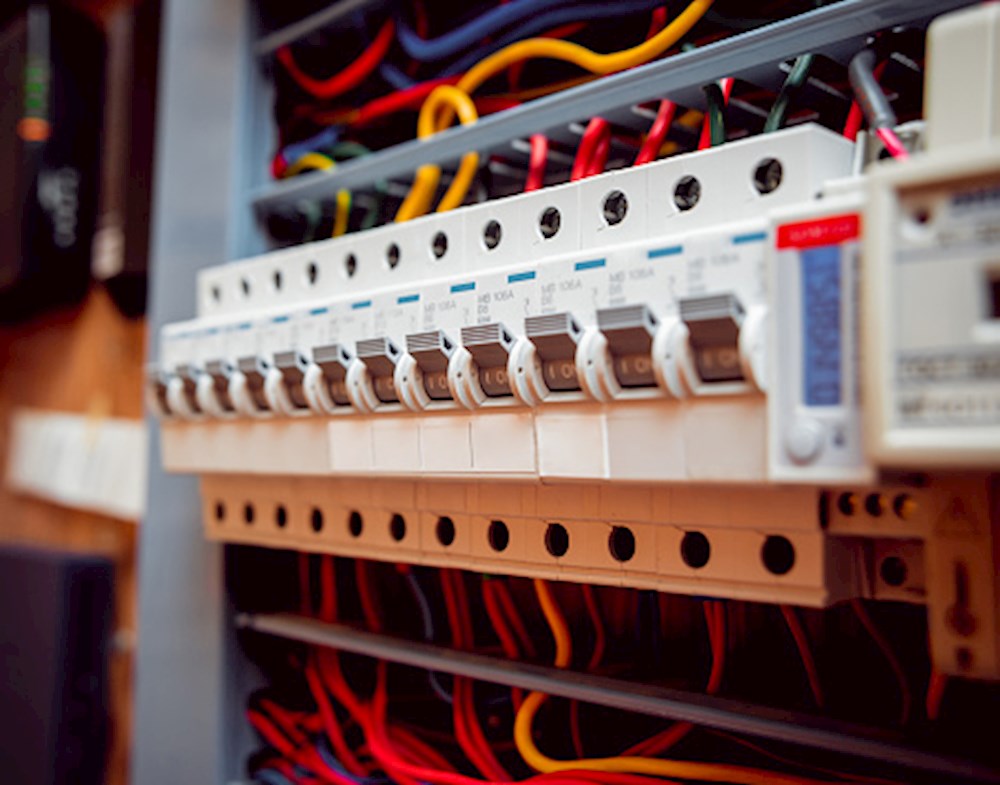
Cost of new fuse box
Installing a new consumer unit costs on average between €450 and €800, depending on the number of groups you need. Replacing or expanding a new consumer unit ensures that your electrical installation is safe and future-proof, which is essential during renovations or if your current consumer unit becomes outdated. In this price guide, you can read about the costs of a new consumer unit and what to look for when choosing the right system for your situation.
Table of Contents
How much does a new consumer unit cost?
Installing a new consumer unit costs on average between €450 and €800, depending on the number of groups you need. These costs include materials, labour, and 21% VAT. The price is calculated per project, where the number of groups and the brand of the consumer unit determine the total costs.
Consumer unit costs per number of groups
Number of groups | Costs |
|---|---|
4 groups | €450 to €550 |
6 groups | €450 to €550 |
8 groups | €500 to €650 |
10 groups | €600 to €800 |
The table shows that the costs for a new consumer unit increase as you need more groups. A consumer unit with 4 or 6 groups falls into the same price range, while larger systems with 8 or 10 groups are more expensive due to more materials and installation options.
Materials make up approximately 75% of the total costs. A-brands such as Hager, Holec, and ABB offer higher reliability than B-brands, which translates into a slightly higher purchase price but also more certainty in the long term. The professional carrying out the job can advise you on the best brand for your situation.
The costs for expanding a consumer unit depend on how many extra groups you add. All mentioned prices include 21% VAT and labour.
Consumer unit costs per number of groups
The costs for a new consumer unit depend directly on the number of groups you need. An apartment needs an average of 4 to 6 groups, while a terraced house requires 8 to 12 groups. The cheapest option is a consumer unit with 4 groups for €450, while a system with 10 groups costs up to €800.
Number of groups | Costs |
|---|---|
4 groups | €450 to €550 |
6 groups | €450 to €550 |
8 groups | €500 to €650 |
10 groups | €600 to €800 |
Price-determining factors for a new consumer unit
The costs for a new consumer unit are determined by several factors that together form the total price. Some factors are technical in nature, others depend on timing or location. By understanding what influences the price, you can better estimate what your job will cost and where there might be room to save.
Number of groups
The more groups you need, the higher the costs will be. This is because a larger consumer unit offers more space for circuit breakers and requires more installation time. A normal household needs an average of 7 to 9 groups, which amounts to a consumer unit with a capacity of 8 to 10 groups.
Connection type: 1-phase or 3-phase
Most Dutch homes have a 1-phase connection with a voltage of 220 to 230 volts. For heavy appliances such as charging stations, induction hobs, and heat pumps, a 3-phase connection is necessary, with a voltage of 380 to 400 volts. A 3-phase connection requires extra cabling and components, which increases the costs.
Recognising your connection
You can check which type of connection you have yourself. Look at the kWh meter: if it says 220 to 230 volts, you have 1-phase. If it says 380 to 400 volts, it is 3-phase. The main switch also provides clarity: a switch with 2 modules means 1-phase, with 4 modules means 3-phase.
Urgency versus planned work
Urgent jobs are more expensive than planned work. If the professional has to adjust their schedule to carry out your job the same day, this entails extra costs. Plan your job in advance to avoid unnecessary urgency surcharges.
Weekend or weekdays
Work at the weekend costs more than during the week. The connected professionals charge higher rates for weekend and evening work, which increases the total costs.
Complexity of the installation
Older homes or complicated electrical installations require more time and expertise. If the existing cabling is outdated or if unexpected complications occur, the labour time increases. This raises the total costs.
Brand of the consumer unit
A-brands such as Hager, Holec, and ABB are more reliable than B-brands. Approximately 75 to 80 percent of Dutch households consciously choose A-brands because of the longer lifespan and better performance. The purchase price is higher, but you are investing in durability.
Connection upgrade
If your existing connection has insufficient capacity for your new situation, the grid operator must upgrade it. This entails extra costs and can lead to waiting times, as the grid operator must plan and carry out the work.
Regional differences
In large cities, costs are often higher than in rural areas. This is due to higher costs for materials, transport, and general pricing in urban regions.
Addressing problems early
Addressing small problems early is more economical than repairing major damage. An outdated consumer unit that regularly trips can lead to costly faults or fire hazards. Do not postpone necessary replacements.
Choosing a local professional
A local professional can be on-site faster and has no or lower travel costs. This saves time and money, especially for small adjustments or urgent situations.
Good preparation
Ensure that the consumer unit is clear and accessible before the electrician arrives. Tidy up items that are in the way and ensure there is enough workspace. This allows the professional to work faster, reducing the labour time and thus the costs.
Combine jobs
Have other electrical projects such as installing sockets or lighting carried out at the same time. This way, you make optimal use of the professional's time and distribute any fixed costs over multiple tasks.
Transparent prices without surprises
At Zoofy, you know in advance what you pay. There are no call-out charges and you receive a clear quote before the work begins, so you won't be faced with surprises.
Additional costs and surcharges
Extra costs depend on specific circumstances. At Zoofy, you do not pay call-out charges.
Service | Costs |
|---|---|
Install wall socket | €50 to €100 |
Earthing | €200 to €250 |
Install light point | €100 to €200 |
Earth leakage circuit breaker | €50 to €250 |
A surcharge applies for urgent jobs because the professional must adjust their schedule
Work at the weekend is more expensive than during the week
When upgrading the connection, the grid operator charges extra costs; enquire in advance with Enexis, Liander, or Stedin
Installing extra pipes may be necessary if existing pipes are insufficient; discuss this in advance with the electrician
How does the professional work when installing a new consumer unit?
Replacing a consumer unit follows a fixed sequence of steps.
Consultation: The electrician advises on the required number of groups and the type of consumer unit based on your appliances and future plans.
Inform grid operator: When upgrading the connection or switching to 3-phase, you must contact the grid operator. Use the Stroomnetchecker to check if there is space on the power grid.
Preparation: The electrician turns off the power and takes safety measures. Ensure the consumer unit is clear and accessible before the professional arrives.
Removing old unit: The old consumer unit is professionally removed and the wiring is checked for any damage or aging.
Installing new unit: The new consumer unit is placed and all groups are connected according to current safety standards.
Testing and inspection: All groups are tested and the electrician checks if everything is functioning correctly. The group map is updated so you know which group serves what.
Replacing a consumer unit usually takes 1 day. During the work, you will have no power for a few hours.
How can you save on a new consumer unit?
There are several ways to save on the costs of a new consumer unit.
Replace on time: Do not wait until your consumer unit causes problems. Replacing an outdated unit prevents more expensive repairs later and avoids risks such as short circuits.
Tidy up beforehand: Ensure the consumer unit is clear and accessible before the electrician arrives. This saves time and reduces labour hours.
Plan during the week: Do not book at the weekend or as an urgent job. Geplanned work during the week keeps costs lower.
Think ahead: Consider future needs such as a charging station, solar panels, or a heat pump. Take enough groups immediately, as expanding later costs more.
Combine work: Have sockets, lighting, or earthing carried out at the same time to make optimal use of the professional's time.
Book via Zoofy: You get a fixed rate in advance, without call-out charges and without surprises. You only pay after the job is completed.
When should you replace the consumer unit?
A consumer unit has a limited lifespan and must be replaced regularly to remain safe.
Aging
A consumer unit lasts 20 to 25 years. After this period, reliability decreases due to wear and tear on components and connections. This increases the risk of faults and failures.
Regular tripping of fuses
If fuses often blow or groups trip due to overloading, the consumer unit is no longer sufficient for your current power consumption. This indicates insufficient capacity or outdated protection.
Old fuse box with screw-in fuses
In an old fuse box, fuses can only be used once. Modern circuit breakers are reusable, faster, and safer. Replacing an old fuse box with a modern consumer unit prevents dangerous situations.
Renovation or expansion
With a new kitchen with an induction hob, a charging station, solar panels, a heat pump, or air conditioning, a larger consumer unit is often needed. These appliances require more capacity than an old consumer unit can provide. Since 2017, solar panels must be connected to a separate group.
Loose wires or outdated fuses
Loose wires and outdated fuses are signals that the consumer unit no longer meets current safety standards. Do not ignore this, as overloading leads to wires becoming too hot, groups switching off, and in the worst case, fire. Replacing the consumer unit prevents these risks and ensures a safe electrical installation.
Find the best electrician for your new consumer unit
Having a consumer unit replaced is precision work where incorrect connection poses a fire hazard.
Certified professionals: All connected electricians are registered in the Central Register of Technology and checked for quality, so you are assured of professional work.
No call-out charges: You only pay for the installation of the new consumer unit itself, never extra for the professional's travel.
Fixed price in advance: You know exactly what the costs are before the work begins, without surprises afterwards.
Quick booking without quotes: Choose a moment immediately without first requesting multiple quotes or waiting for feedback.
Payment via QR code after completion: You only pay when the job is fully finished and you are satisfied with the result.
Personal advice during intake: The professional advises you on the right number of groups and which expansions are sensible for your situation.
Frequently asked questions about a new consumer unit
What does a new consumer unit cost?
The costs for a new consumer unit are between €450 and €800, depending on the number of groups you need. This price includes materials, labour, and 21% VAT. The number of groups determines the total costs, with larger systems being more expensive.
What does a new consumer unit cost including installation?
A new consumer unit costs between €450 and €800 including installation. The costs depend on the number of groups and the brand you choose. A-brands such as Hager and ABB are more reliable than B-brands.
What is the difference between replacing a consumer unit and a fuse box?
The consumer unit contains the main switch, the kWh meter, and the distribution board (groups). The distribution board is just the box with the groups. When replacing the consumer unit, you replace the entire system, including the meter and switch.
Can I expand my consumer unit instead of replacing it?
Yes, expanding a consumer unit is often cheaper than full replacement. This is possible if there is space in the existing unit. Sometimes a separate extra unit is needed, for example for solar panels or a charging station.
How do I know how many groups I need?
An apartment needs 4 to 6 groups, a terraced house 8 to 12 groups. The formula is Amps × 230 Volts to calculate the power per group. The professional will advise you on the right number for your situation.
Am I allowed to replace a consumer unit myself?
No, this work must be performed by a qualified electrician due to safety risks and legal requirements. Incorrect connection leads to fire hazards and violations of electrical regulations.
How long does it take to replace a consumer unit?
The work usually takes 1 day. During the work, you will have no power for a few hours. The electrician then tests all groups and checks if everything is functioning correctly.
When do I need a 3-phase connection?
For heavy appliances such as charging stations, induction hobs, and heat pumps that consume more than 3,680 watts. A 3-phase connection has a voltage of 380 to 400 volts and more capacity than 1-phase.
What does it cost to convert a consumer unit to 3-phase?
Converting to 3-phase costs extra due to additional cabling and components. Also, the grid operator must upgrade the connection, which entails extra costs.
Do I need to contact the grid operator?
Yes, when upgrading the connection or switching to 3-phase, you must inform the grid operator. Use the Stroomnetchecker to check if there is space on the power grid in your area.
Book an electrician for your new consumer unit
Ready to have a new consumer unit installed? At Zoofy, you book a professional directly, without quotes and without call-out charges. You see exactly what it costs in advance, and Zoofy pairs you with a reliable technician who has been vetted. You only pay when the work is done. Book a professional directly.