

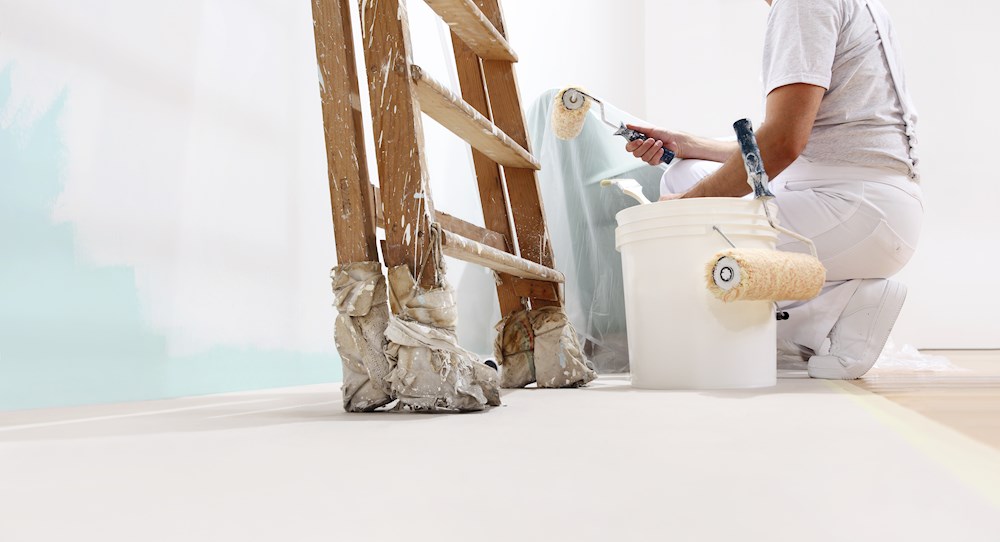
What does a painter cost
A painter costs on average between €40 and €55 per hour, or €6 to €50 per m² depending on the type of work. The price depends on factors such as the surface to be painted, preparation time, the type of paint, and whether it concerns interior or exterior work. In this price guide, you can read about the costs of a painter and what to look out for when hiring a professional for your job.
Table of Contents
What does a painter cost?
Hiring a painter costs on average €50 to €55 per hour. For larger surfaces, many painters charge per m², with prices between €10 and €35 per m². Full projects vary from €100 to €1,300, depending on the scope and complexity of the work.
The way a painter calculates depends on the type of task. For small repairs or work that is difficult to estimate, an hourly rate is usually used. For large surfaces such as painting walls and ceilings, a price per m² is common. Complete renovations or standard tasks often receive a fixed project price.
Overview of painter costs
Type of work | Unit | Price |
|---|---|---|
Project price | per project | €100 - €1,300 |
Hourly rate | per hour | €50 - €55 |
Price per m² | per m² | €10 - €35 |
The table shows that the hourly rate of a painter is fairly consistent, between €50 and €55. Total costs differ mainly due to the chosen calculation method and the size of your project. An interior painter typically charges €40 to €50 per hour, and an exterior painter charges similar rates between €40 and €50 per hour.
All mentioned prices include 21% VAT and labour. The professional performing the job can provide a more accurate quote once they have inspected the specific situation at your home.
Painter costs per surface type
The price a painter charges varies greatly per type of surface. Painting interior walls is the most affordable at €6 per m², while exterior walls are significantly more expensive at €25 to €50 per m² due to extra preparation time and weather-resistant paint. Below you can see what different surfaces and projects cost.
Costs per surface (per m²)
Surface | Price per m² |
|---|---|
Interior walls | €6 - €15 |
Ceilings | €10 - €20 |
Exterior walls | €25 - €50 |
Painting over wallpaper | €10 - €15 |
Decorative plaster | €10 - €20 |
Plasterboard | €10 - €20 |
Tiles and flagstones | €20 - €50 |
Costs per project
Type of task | Unit | Price |
|---|---|---|
Painting a door | per door | €100 - €150 |
Painting stairs | per staircase | €400 - €1,000 |
Painting a radiator | per radiator | €100 - €250 |
Painting kitchen cabinet | per cabinet/drawer | €40 - €65 |
Price-determining factors for painting work
What exactly does a painter cost per hour? The answer depends on several factors that influence the total price. Some can be estimated well in advance, such as the condition of your walls. Other factors, such as urgent jobs or weekend work, have a direct effect on the hourly rate.
Urgent versus planned work
An urgent job costs more than planned work. The painter must adjust their schedule, postpone other tasks, and potentially arrange materials at short notice. This increases labour costs by an average of 20% to 30%.
Weekend and evening work
Work during the weekend or in the evening is more expensive than during weekdays. Painters charge a surcharge because this falls outside regular working hours. This can increase the hourly rate by €10 to €15.
Condition of the surface
A poor surface requires extra preparation time. Cracking, moisture damage, peeling paint, or a damaged plaster layer must be repaired first. This can extend the labour time by hours. A wall that can be painted immediately is therefore cheaper than a wall that first needs to be restored.
Complexity of the work
Complex tasks such as ornaments, mouldings, or hard-to-reach places require more time and expertise. A painter works more slowly and accurately on intricate detail work. This increases the total labour hours and thus the costs.
Type of paint and finish
Paint types such as latex, acrylic, and alkyd have different prices. Latex is the most affordable, while alkyd costs more due to its durability. The finish also plays a role. Matte paint requires less perfection during application than high gloss, which highlights every unevenness.
Number of paint layers
Most projects require two to three layers of paint. For major colour changes, for example from dark to light or vice versa, more layers are needed for good coverage. Each extra layer means more work, more material, and higher costs.
Interior versus exterior
Exterior painting is more expensive than interior painting. Outside, weather-resistant paints are needed, high-pressure cleaning is often necessary, and sometimes scaffolding or aerial platforms are required.
Required materials
The price of paint, primers, abrasives, and covering material is included in the total costs. High-quality paint costs more but covers better and lasts longer.
Region
In large cities, prices are higher than in rural areas. This is due to higher wages, more expensive business operations, and higher demand for professionals.
Postponement of maintenance
Addressing small problems like peeling paint early is cheaper than repairing major damage. Moisture problems or wood rot that are ignored get worse and eventually require more restoration work.
Accessibility of the workplace
A clear, accessible workplace saves the painter time. Move furniture, remove socket plates, and clear space before the professional arrives.
Local professional
A local painter can be on-site faster and has no extra travel time. This saves on total costs. Zoofy connects you to professionals from the neighbourhood without call-out charges.
Transparent price agreements
Know what you pay in advance. With transparent platforms, you see the hourly rate beforehand and only pay after the job is completed. No hidden costs, no surprises afterwards.
Additional costs and surcharges
Extra costs are situational. At Zoofy, you do not pay call-out charges.
Urgency surcharge: For urgent tasks, a surcharge often applies because the painter must adjust their schedule.
Weekend surcharge: Work during the weekend is more expensive than during the week due to work outside regular hours.
Additional work: Extra costs can arise from removing wallpaper or old paint layers, repairing damage to walls or woodwork, finding mould or moisture during preparation, extra paint layers for good coverage, applying special primer on difficult surfaces, or working at great heights.
How does the painter work?
Inspection and preparation: The painter inspects the surface, covers floors and furniture with foil, and cleans the work area for optimal paint adhesion.
Pre-treatment: The surface is sanded, cracks are filled, and loose paint is removed. For new or difficult surfaces, the professional applies a primer.
First paint layer: The first layer of paint is applied with a roller, brush, or sprayer, depending on the surface and desired finish.
In-between sanding: For a smoother result, the surface is lightly sanded between layers. This significantly improves the finish.
Second and third paint layer: Multiple layers ensure better coverage and durability. The paint is touch-dry within a few hours; full curing takes 24 to 48 hours.
Detail work and finishing: Edges, corners, and mouldings are precisely finished for a professional end result.
Cleaning and final inspection: The professional clears the workspace, removes covering material, and checks the result. Painting an average room takes 1 to 2 days.
How to save on painting work
Address problems early: Repairing small cracks or peeling paint now prevents larger repairs later. This saves preparation time and labour costs.
Prepare yourself: Move furniture, remove socket plates, and clear the workplace. The less preparatory work the professional has to do, the lower the total costs.
Plan wisely: Book painting work during the week instead of as an emergency. In spring and autumn, temperatures are ideal and painters are sometimes more flexible with prices.
Combine tasks: Have multiple rooms painted at the same time for economies of scale. This saves start-up time and more efficient material use lower the total costs.
Book via Zoofy: You get a fixed rate in advance, without call-out charges and without surprises. You only pay after the job is finished.
Common problems with painting work
Peeling paint
Peeling paint is usually caused by poor preparation, moisture behind the paint layer, or using the wrong type of paint for the surface.
Cracking
Cracks occur due to the natural movement of the house, a poor surface, or paint layers that are too thick and do not move along. These require professional filling and repainting.
Stains through the paint
Nicotine stains, moisture spots, or old stains can bleed through new paint layers. A blocking primer prevents these stains from remaining visible.
Find the best painter for your job
No call-out charges: You never pay extra for the painter's arrival.
Fixed price in advance: You know exactly what you pay, no surprises afterwards.
Fast booking without quotation hassle: Arrange a painter directly without waiting for multiple quotes.
Payment via QR code after completion: You only pay when the work is done and you are satisfied.
Reliable, verified professionals: All affiliated painters are screened, with valid Chamber of Commerce registration and adequate insurance.
Transparent quotes: Pay attention to specified surfaces in square metres, number of paint layers, type of paint with brand names, preparatory work, and warranty agreements.
Frequently asked questions about painting work
What does a painter cost per hour in 2026?
A painter costs on average €50 to €55 per hour. Interior and exterior painters both charge €40 to €50 per hour, depending on the complexity of the work.
How much does it cost to have a house painted?
Costs vary from €100 to €1,300 depending on the size and type of work. Per m² you pay €10 to €35 for painting work.
How many layers of paint are normally needed?
Most projects require two to three layers of paint. For large colour differences, more layers may be required.
How long does an average painting project take?
Painting an average room takes 1 to 2 days. Larger projects or exterior work take longer, also due to the required drying time between layers.
Should I purchase paint myself or does the painter do that?
The affiliated professionals usually bring the paint. This is often included in the price or calculated separately.
Can you paint over wallpaper?
Yes, but only if the wallpaper is firmly attached without loose edges or bubbles. Textured wallpaper remains visible under the paint.
How long should I wait before putting furniture back?
Paint is touch-dry within hours, but full curing takes 24 to 48 hours. Wait before replacing furniture to prevent damage.
What is the difference between interior and exterior painting in terms of price?
Exterior painting is more expensive: €25 to €50 per m² versus €6 to €15 per m² for interior walls.
What happens if the surface has moisture problems?
Moisture must be resolved before painting. Painting over damp walls leads to peeling and mould.
What about paint smell and ventilation?
Ensure good ventilation during and after painting. Modern water-based paints smell less than traditional ones.
Book a painter for your project
Ready to have painting work carried out? At Zoofy, you book a professional directly, without quotes and without call-out charges. You see exactly what it costs beforehand, and Zoofy connects you with a reliable, verified professional. You only pay once the work is finished.