
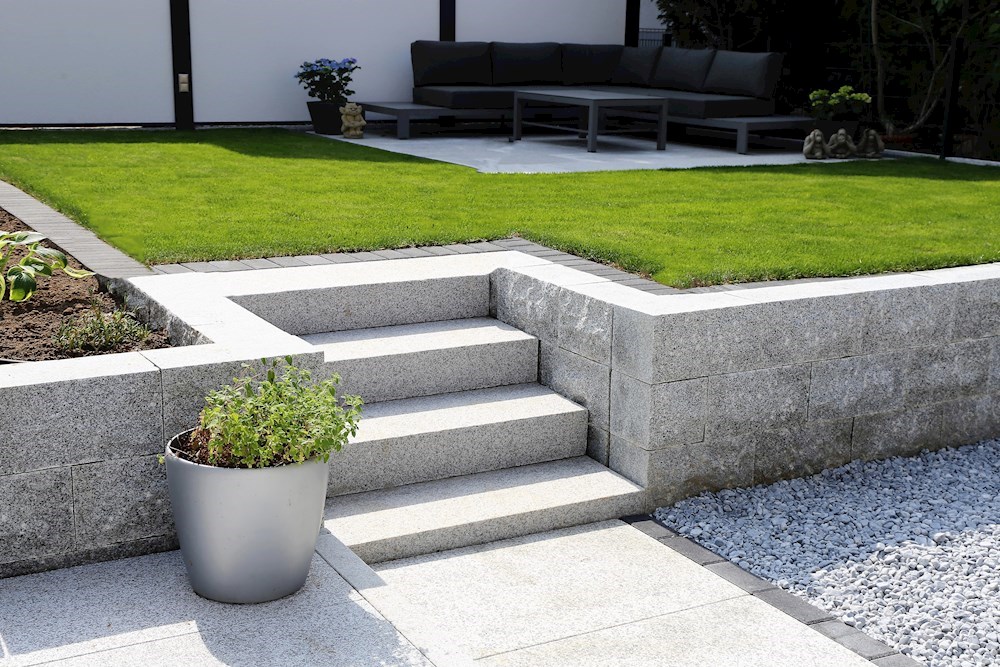
Paving your garden costs on average between €50 and €100 per m², depending on the material and the complexity of the project. Garden paving refers to the application of solid surfacing such as tiles, pavers or natural stone for a terrace, driveway or garden path. In this price guide, you can read about the costs for paving per m² and what to look out for when carrying out this task.
How much does garden paving cost?
Paving a garden costs an average of €50 to €100 per m², including material and labour costs. The exact costs for paving your garden depend on the type of paving you choose, the surface area of your project, and the laying pattern.
Costs per type of paving per m²
Type of paving | Costs per m² |
|---|---|
Gravel | €10 |
Rubber tiles | €15 to €50 |
Concrete tiles | €15 to €35 |
Baked tiles | €35 to €60 |
Natural stone | €30 to €65 |
Paving costs per m² vary greatly per material. Gravel is the cheapest option, while natural stone and baked tiles are at the top end of the price spectrum.
Other costs for garden paving
Element | Costs |
|---|---|
Levelling and jointing sand | €65 to €100 per project |
Retaining edges | €2 to €5 per metre |
Paver (professional) | €20 to €25 per m² |
In addition to the material itself, there are often extra costs involved. The costs for a professional paver are between €20 and €25 per m², and you need retaining edges to keep the paving in place. Levelling and jointing sand are essential for a stable and water-permeable foundation.
All mentioned prices include 21% VAT. The final costs may differ depending on the specific situation, such as the accessibility of your garden and the current state of the subsoil.
Garden paving costs per type of material
The type of material largely determines the costs for paving your garden. Gravel is the cheapest option at €10 per m², while natural stone and baked tiles are at the top end of the price spectrum with amounts up to €65 per m².
Type of paving | Price per m² | Suitable for |
|---|---|---|
Gravel | €10 | Garden paths with little traffic |
Rubber tiles | €15 to €50 | Play areas |
Concrete tiles | €15 to €35 | Terraces and driveways |
Baked tiles | €35 to €60 | Luxury terraces |
Natural stone | €30 to €65 | Representative terraces |
Price-determining factors for garden paving
The costs for paving your garden vary greatly per project. Not only the chosen material plays a role, but also the complexity of the work, the timing, and the conditions on site. Below you can read which factors determine the final price and how you can save smartly.
Laying pattern and complexity
The chosen laying bond has a direct influence on the total price. Stretcher bond is the simplest and takes the least time to lay. Herringbone bond is very stable but labour-intensive, causing the labour costs to be higher. Random bond requires a lot of customisation and precise planning, which extends the labour duration.
Surface area
A larger terrace or garden path means more material, more levelling sand, and longer retaining edges. The working hours also increase proportionally. For large areas, the professional can often work more efficiently, which slightly reduces the costs per m².
Soil type and ground conditions
Clay soil, sand, or peat require different preparatory work. With poor load-bearing capacity or sloping terrain, extra stabilisation material is needed, such as geotextile or a thicker foundation. This increases the required amount of material and the labour duration.
Water drainage
Water-permeable paving requires a different foundation than non-water-permeable tiles. A correct slope of 1-2% is necessary to prevent water nuisance. For poorly draining soil, extra drainage may be required, which increases costs.
Season and weather conditions
Paving ideally takes place in dry weather in the spring or autumn. Frost periods make the work impossible because the ground cannot be worked then. Wet ground slows down the planning and can lead to extra costs due to longer drying times.
Urgency and planning
Urgent jobs are always more expensive than planned work. Plan your paving project well in advance to avoid extra costs. The professional can then better organise their schedule and materials more efficiently.
Weekend versus weekdays
Work on the weekend costs more than during the week. Choose a weekday to limit costs. This easily saves dozens of euros on the total price.
Region and accessibility
In large cities, prices are often higher than in rural areas due to higher wage costs. The accessibility of your garden also plays a role. If materials have to be transported over a long distance or through narrow passages, it costs extra time.
Preparation of the workplace
A free and easily accessible workplace saves the professional time. Move garden furniture and plants in advance. The fewer obstacles, the faster the work can be carried out and the lower the labour duration.
Type of material
Natural stone is more expensive than concrete tiles but lasts longer. Gravel is the cheapest option but requires regular maintenance. The choice of material affects not only the purchase price but also the lifespan and ease of maintenance.
Existing situation
If old paving needs to be removed, it costs extra time and labour. The disposal of debris also increases the final price. With a well-prepared subsoil, the professional can start laying immediately.
Retaining edges and finishing
Retaining edges keep the paving in place and prevent subsidence. The choice for plastic, concrete, or metal strips affects the price. Scaling the edges and transitions also requires craftsmanship and time.
Platform and transparency
At Zoofy, you know what you pay in advance, without surprises. No call-out charges and payment only after completion. This provides certainty about costs and prevents unexpected additional charges.
Additional costs and surcharges
Extra costs are situation-dependent. At Zoofy, you do not pay call-out charges.
Urgency surcharge: A surcharge often applies to urgent tasks because the professional must adjust their schedule.
Weekend surcharge: Work during the weekend is more expensive than on weekdays.
Levelling and jointing sand: This costs €65 to €100 per project and is needed for the foundation and finishing the joints.
Retaining edges: These cost €2 to €5 per metre and keep the paving in place.
Removal of old paving: Does existing paving or planting need to be removed? Then account for extra costs for disposal and possible soil remediation.
How does the paver work when paving the garden?
The job follows a fixed sequence of preparation, foundation, and finishing.
Staking out and excavating the section: The paver stakes out the section to be paved and excavates the ground to the correct depth. The depth depends on the use: a terrace requires a different foundation than a driveway for cars. If necessary, a weed membrane is placed to prevent weed growth.
Applying and levelling the foundation: The surface is raised with levelling sand. This sand is compacted with a vibrating plate until it forms a level surface. For heavy loads, a concrete foundation may be necessary.
Placing retaining edges: Retaining edges are placed around the paving. These keep the tiles in place and ensure a neat edge finish. Types include concrete edges, palisades, L-elements, or natural stone borders.
Laying the paving: The professional lays the tiles accurately in the chosen laying pattern. With a spacer, the joint width remains consistent everywhere. Where necessary, tiles are cut for a perfect fit.
Sweeping in jointing sand: After laying, jointing sand is swept in to fill the joints. This provides a better appearance and prevents shifting.
An average terrace of 20-30 m² takes about 1-2 days. The costs vary per project, depending on material and surface area.
How can you save on garden paving?
There are several ways to save on the costs for paving your garden.
Choose the right material: Invest in durable materials that last a long time. A slightly higher investment now prevents replacement in 10 years and saves in the long run.
Good preparation: Make the workplace clear and accessible. Move garden furniture, plants and other obstacles yourself so the paver can get straight to work without wasting time.
Plan on weekdays: Do not book in the weekend and avoid urgent tasks. During the week, rates are lower and you save on surcharges.
Simple laying pattern: Choose stretcher bond instead of herringbone bond. This saves labour hours and therefore labour costs.
Use polymer jointing sand: This prevents weed growth and saves future maintenance and maintenance costs.
Book via Zoofy: You get a fixed rate in advance, without call-out charges and without surprises. You only pay after the job is completed.
Common problems with garden paving
Problems with garden paving have various causes and are often preventable.
Subsidence
Subsidence is caused by a poor foundation or insufficiently compacted subsoil. This is recognisable by uneven tiles and puddles that remain after rainfall. Ignoring it leads to tripping hazards and further damage to the paving, which entails higher costs for repair.
Shifting tiles
Shifting tiles are caused by missing or damaged retaining edges. The tiles slide out of position, especially at the edges of the paved surface. Timely inspection of retaining edges prevents larger repairs.
Water nuisance
Water nuisance arises from insufficient slope or a clogged drain. Puddles remain after rainfall because the water cannot flow away properly. Correcting the slope or installing drainage solves this problem.
Find the best paver for garden paving
A good paver ensures a foundation that lasts for years, while poor installation leads to subsidence and expensive repairs.
Check experience and references: Ask if the professional has experience with your type of project and view previous work examples before booking.
No call-out charges: At Zoofy, you never pay call-out charges, regardless of where you live.
Fixed price in advance: You know exactly what the costs are before the job begins, without surprises afterwards.
Book quickly without the hassle of quotes: Book a professional directly without first having to request or compare quotes.
Payment via QR code after completion: You only pay when the work is finished and you are satisfied with the result.
Reliable, verified professionals: All pavers who carry out the job are checked for quality and reliability, so you are assured of craftsmanship.
Transparency about costs: When having your garden paved, you know immediately what the costs per m² are, including all additional work.
Book a paver for garden paving
Ready to have your garden paved? At Zoofy, you book a professional directly, without quotes and without call-out charges. You see exactly what it costs in advance, and Zoofy pairs you with a reliable, verified professional. You only pay once the work is done. Book a professional directly.
Useful links
Frequently asked questions
Paving an area of 40 m² costs on average between €2,000 and €4,000, including material and labour costs. The exact costs depend on the chosen material and the complexity of the laying pattern.
For a complete garden landscaping of 100 m², you pay between €5,000 and €10,000, depending on the combination of paving, planting, and other elements. The costs for paving per m² form an important part of the total budget.
A paver charges an average of €20 to €25 per m² for laying paving, excluding materials. For larger areas, this rate may be slightly lower due to more efficient working.
Gravel is the cheapest option at €10 per m², suitable for paths with little traffic. Concrete tiles are an affordable alternative at €15 to €35 per m² and last longer.
An average terrace of 20-30 m² takes 1-2 days. Larger projects or complex laying patterns require more time, which can increase the costs.
No, paving is not possible during frost because the ground cannot be worked. The best periods are spring and autumn in dry weather for optimal results.
A permit is usually not required for regular garden paving. For large surfaces or in protected areas, an environmental permit may be required, so always check this with your municipality.
You can walk over it immediately after completion. For heavy loads such as cars, it is wise to wait 1-2 days until the jointing sand has settled properly.
Use polymer jointing sand instead of regular jointing sand. This material allows less moisture and seeds through and saves future maintenance costs.
Yes, this is possible and can lower the costs. Discuss the required quantities in advance with the paver, including 5-10% reserve for cutting loss.