
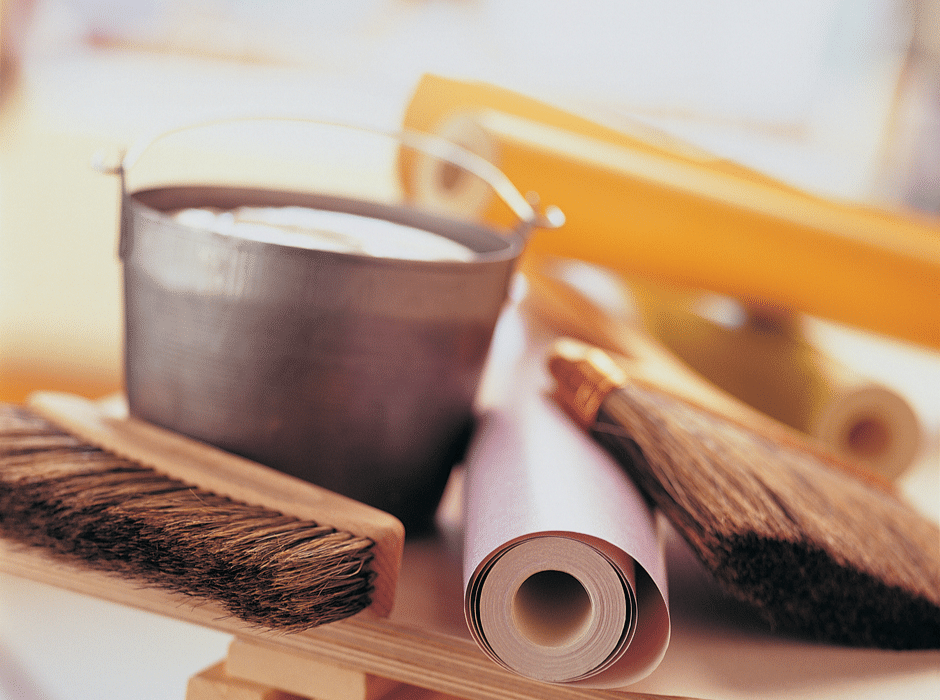
Wallpapering your home costs between €300 and €750 on average, depending on the surface area, the type of wallpaper, and the complexity of the room. Wallpapering involves applying wallpaper to walls or ceilings as a wall finish, a popular way to give your interior a new look. In this price guide, you can read about the costs of wallpapering and what to look for when choosing a paperhanger.
Table of Contents
How much does wallpapering cost?
Hanging wallpaper costs €500 on average, with a range of €300 to €750 for a complete project. Labour costs vary between €3 and €21 per square metre, while the material starts from €13 per roll and can go up to hundreds of euros depending on the type and quality.
Overview of wallpapering costs per unit
Unit of measurement | Average costs |
|---|---|
Per hour | €50 - €55 |
Per single roll | €35 - €50 |
Per metre | €6 - €21 |
Most paperhangers use a rate per hour, per roll, or per square metre. The hourly rate is between €50 and €55, which is especially useful for smaller projects or complex rooms where the required time is difficult to estimate. For larger surfaces, paperhangers often charge per metre or per roll, making the costs more predictable.
The total costs for wallpapering per m² depend on the chosen calculation method, the area of the room, and the condition of the walls. For a standard bedroom of 12 m², you easily pay between €350 and €450 in labour costs, excluding materials. Larger projects such as a living room or multiple rooms naturally involve higher costs.
All mentioned prices include 21% VAT and labour, but exclude the wallpaper itself.
Wallpapering costs per room
The costs for wallpapering depend heavily on which room you have wallpapered. A hallway or kitchen costs less due to the smaller wall surface, while a living room or dining room with larger walls is considerably more expensive. Below you can see what you can expect per room type.
Room | Cost range |
|---|---|
Hallway | €150 - €550 |
Kitchen | €150 - €550 |
Bathroom | €200 - €650 |
Bedroom | €250 - €850 |
Living room | €500 - €1,700 |
Dining room | €500 - €1,700 |
Price-determining factors for wallpapering
The costs for wallpapering differ per project. This is because several factors influence the total price. Below you can read which circumstances cause higher or lower costs.
Urgency versus planned work
If you want wallpapering work carried out urgently, the costs are higher than for a planned job. The professional has to adjust their schedule and possibly reschedule other appointments. This involves extra effort, which translates into a higher price.
Work at the weekend
Wallpapering at the weekend costs more than during the week. The professional is then working outside their regular hours, which leads to a surcharge on the hourly rate. For non-urgent tasks, it is more economical to choose a weekday.
Complexity of the space
Rooms with difficult corners, many cut-outs around sockets and windows, or sloping walls require more craftsmanship and time. Wallpapering ceilings or working in stairwells is also labour-intensive. The more complicated the space, the higher the costs will be.
Condition of the walls
If the walls show cracks, holes, or irregularities, the paperhanger must first perform repair work. Filling holes, filling cracks, and priming the wall cost extra time and material. Smooth, clean walls keep costs lower.
Type of wallpaper
The type of wallpaper you choose influences the labour time and material consumption. Simple paper wallpaper or vinyl wallpaper is faster to apply than luxury materials such as grasscloth, hemp, or coated fabric. Non-woven wallpaper and glass fibre wallpaper also sometimes require extra attention, which increases the cost per m².
Pattern matching
Wallpaper with large or complex patterns requires precise alignment. The paperhanger must ensure that the pattern matches beautifully between the strips, which results in more waste and time. Wallpaper without a pattern or with a small pattern is more efficient to process.
Removing old wallpaper
If old wallpaper must first be removed from the wall, this takes extra time. The professional steams or soaks the old wallpaper before it can be removed. This extra step increases the total price.
Surface area of the room
The larger the room, the more wall surface the paperhanger must cover. This means more rolls of wallpaper and more labour hours. A living room with many walls therefore costs more than a small hallway or storage room.
Ceiling height
High ceilings make the work more complex and time-consuming. The paperhanger needs more time to apply the strips accurately and often has to work with scaffolding or a high ladder. This increases the labour duration and thus the costs.
Region
In large cities, prices are often higher than in rural areas. This is due to higher business costs and a greater demand for professionals. Keep this in mind when estimating your budget.
Good preparation
Ensure the workspace is clear and accessible. Remove furniture, clean the space, and ensure the paperhanger can start work immediately. This saves time and prevents delays, which reduces costs.
Timing of the task
Do not postpone the wallpapering task. Small problems such as a damaged wall are cheaper to tackle early. Later, extensive repairs may be needed, which can cause costs to rise significantly.
Choosing a local professional
A local professional can be on-site faster and often has lower travel costs. This can make a difference in the total price, especially for smaller tasks.
Extra costs and surcharges
Extra costs are situational and at Zoofy you do not pay call-out charges.
Urgent jobs: A surcharge often applies to urgent jobs because the professional has to adjust their planning
Weekend work: Work at the weekend is more expensive than during the week
Removing old wallpaper: If the paperhanger first has to remove old wallpaper, this involves extra time and costs
Wall repair: Filling holes or repairing cracks increases costs due to the required extra work
Pre-treatment: Applying a primer or undercoat costs extra time and material
How does the professional work when wallpapering?
The wallpapering task follows a fixed sequence of steps to guarantee a beautiful end result.
Preparation of the wall: The paperhanger inspects the wall for irregularities, repairs any holes or cracks, and applies a primer if necessary for better adhesion.
Removing old wallpaper: If existing wallpaper is present, it is removed by steaming or soaking with water.
Calculation and cutting: The professional calculates how many rolls of wallpaper are needed and cuts the strips to size, taking pattern matching into account.
Applying adhesive: With traditional wallpaper, the adhesive is applied to the wallpaper. With non-woven wallpaper, the adhesive is spread directly onto the wall.
Applying wallpaper: The first strip is aligned vertically, air bubbles are removed with a wallpaper brush or spatula. Subsequent strips are applied with attention to patterns.
Finishing: Edges at corners, sockets, and switches are carefully trimmed. Excess adhesive is removed. The job takes an average of one to two days, depending on the size of the space.
How can you save on wallpapering?
There are several ways to lower the costs of wallpapering without compromising on quality.
Tackle problems early: Treat small damages such as cracks or loose wallpaper immediately, before they require larger repairs that increase costs.
Prepare yourself: Move furniture and ensure the walls are clean and dry before the paperhanger arrives. This saves labour hours and reduces the total price.
Plan during the week: Choose a weekday for the job and avoid urgency. Weekend and urgent jobs involve extra surcharges.
Buy extra rolls: Order a few spare rolls for future repairs, so you don't get a mismatch in colour or pattern later.
Book through Zoofy: You get a fixed rate in advance, without call-out charges and without surprises. You only pay after completion of the job.
Find the best paperhanger for your job
A skilled paperhanger prevents you from investing in repair work or new materials later.
No call-out charges: At Zoofy you never pay extra for the professional's arrival; costs are transparent and complete.
Fixed price in advance: You know exactly what the wallpapering task costs before the work begins, without surprises afterwards.
Quick booking without quote hassle: Book a paperhanger directly and choose a time, without waiting weeks for quotes.
Payment via QR code after completion: You only pay when the job is completely finished and you are satisfied with the result.
Reliable, vetted professionals: All affiliated paperhangers are verified for craftsmanship and experience.
Professional end result: The professional ensures straight vertical seams, accurate pattern matching, no air bubbles or creases, and clean finishing around sockets.
Evaluate the work yourself: Look for straight seams without gaps, no visible creases, correct pattern matching between strips, and no excess adhesive on the surface.
Book a paperhanger
Ready to have your room wallpapered? At Zoofy you book a professional directly, without quotes and without call-out charges. You see exactly what it costs in advance, and Zoofy connects you with a reliable professional who has been vetted. Payment is only made when the work is finished.
Useful links
Frequently asked questions
A paperhanger charges an average of between €35 and €50 per roll in labour costs. This excludes the wallpaper itself, which starts from €13 per roll depending on type and quality.
The material itself costs from €13 per roll for simple paper wallpaper up to hundreds of euros for luxury variants such as grasscloth or textile wallpaper. The total costs per roll including labour are between €50 and €60.
The hourly rate is between €50 and €55. This rate is often used for smaller projects or complex spaces where the required time is difficult to predict.
Wallpapering a standard room takes an average of one to two days, depending on size and preparation. The wallpaper then needs a few more days to dry completely.
This depends on the wall surface and the pattern repeat of your chosen wallpaper. The affiliated professional calculates this accurately based on the dimensions of your space.
Most walls are suitable, but the surface must be clean, dry, and smooth. Damaged walls with cracks or holes must first be repaired for an optimal result.
Yes, provided you choose moisture-resistant wallpaper such as vinyl wallpaper. Also ensure good ventilation to prevent moisture build-up. The costs for a bathroom are between €200 and €650.
In some cases, yes, but it is usually better to remove old wallpaper. This ensures better adhesion and a smoother end result.
Paint is often cheaper to purchase, but wallpaper can last longer if properly placed. Wallpaper also offers more options for texture and patterns in your interior.
Luxury wallpaper such as textile wallpaper or grasscloth requires more expensive materials and more craftsmanship during application. The specific processing techniques significantly increase the costs.