
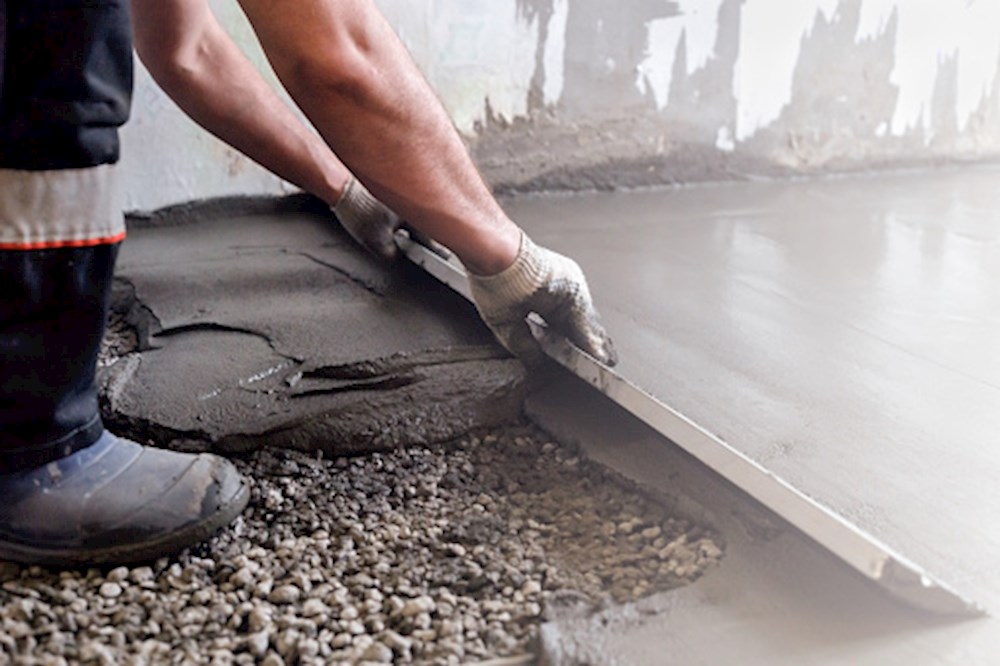
A resin floor costs on average between €50 and €150 per m², depending on the type of system you choose. A resin floor is a seamless floor that is applied on-site in liquid form and hardens into a sleek, durable surface. The price for a resin floor is mainly determined by the type of resin floor (such as epoxy, polyurethane, or cement-bonded), the thickness of the layer, and the pre-treatment of the subfloor. In this price guide, you can read about what a resin floor costs and what to look out for when choosing the right variant.
How much does a resin floor cost?
The price of a resin floor averages between €50 and €150 per m², depending on the type you choose. Floor coating is the most affordable option starting from €50 per m², while microcement and concrete floors are at the top of the price range. These prices include labour and materials.
Resin floor costs per type
Type of resin floor | Costs per m² |
|---|---|
Floor coating | €50-50 |
Epoxy resin floor | €50-100 |
ESD resin floor | €100-100 |
Trowel floor | €100-100 |
Gravel floor | €50-50 |
PU resin floor | €100-100 |
Polished concrete | €100-100 |
Beton Cire | €100-150 |
Concrete floor | €100-150 |
Microcement | €100-150 |
The table shows that the costs for a resin floor vary greatly per type. Floor coating and gravel floors are the cheapest options, ideal for garages and basements. Epoxy and trowel floors are in the mid-range, while polished concrete, beton cire, concrete floors, and microcement have the highest costs per m² due to their finish and application in living areas.
The professional calculates the costs per square metre. The total price depends on the surface area of your space, the chosen type, and the condition of the subfloor. A larger surface area often means a lower price per m² due to economies of scale.
All mentioned prices include 21% VAT and labour.
Resin floor costs per type
The price for a resin floor depends mainly on the type you choose. There are two main categories: industrial resin floors for commercial properties and workspaces, and design resin floors for homes and offices. Industrial variants are functional and affordable, while design resin floors combine an aesthetic look with durability.
Industrial resin floor price per m²
Type of resin floor | Costs per m² |
|---|---|
Floor coating | €50-50 |
Epoxy resin floor | €50-100 |
ESD resin floor | €100-100 |
Trowel floor | €100-100 |
Industrial resin floors do not have a concrete-look option. Floor coating is the thinnest (0.5 mm) and cheapest. Epoxy resin floor (2-3 mm thick) offers excellent value for money and is suitable for high loads. ESD resin floor protects against static electricity, ideal for operating rooms or workspaces with electronic equipment. Trowel floor (5-6 mm thick) can be finished with anti-static and anti-slip properties.
Design resin floor price per m²
Type of resin floor | Costs per m² |
|---|---|
Gravel floor | €50-50 |
PU resin floor | €100-100 |
Polished concrete | €100-100 |
Beton Cire | €100-150 |
Concrete floor | €100-150 |
Microcement | €100-150 |
Gravel floor is the most economical design option, available in all colours and shapes. PU resin floor (polyurethane resin floor) combines well with underfloor heating and can be given a concrete look. Polished concrete is usually used throughout the entire house. Beton Cire is suitable for kitchens and bathrooms. Microcement gives a unique appearance. Concrete floor has a robust look and is very sturdy.
Price-determining factors for a resin floor
The price for a resin floor differs per situation. In addition to the chosen type, planning, subfloor, surface area, and region also play a role. Below you can read which factors influence the costs and what you should take into account.
Surface area
The larger the floor, the lower the costs per m². With larger surfaces, the professional works more efficiently because they spend less time on starting up and finishing. Combine multiple rooms in one job for a more favourable total price.
Type of resin floor
The chosen type directly determines the costs. Floor coating is cheap and quick to apply, while microcement and Beton Cire require more material and labour hours. Premium materials have a higher cost price but are more durable.
Condition of the subfloor
The existing floor must be dry, level, clean, and load-bearing. The professional performs a moisture measurement to prevent problems during curing. If the subfloor is uneven or damp, extra preparation work is necessary. This increases the price.
Complexity of the space
Resin floors with special patterns, logos, or in hard-to-reach spaces require more time and craftsmanship. Corners, level differences, and obstacles such as floor drains make the work more labour-intensive. This translates into higher labour costs.
Underfloor heating
All resin floor types can be combined with underfloor heating. The costs for a resin floor with underfloor heating are higher due to extra installation work and adapted material choice. You earn this back within ten years through lower energy costs.
Climate conditions
Humidity and temperature influence the curing process. In weather that is too humid or too cold, the floor dries more slowly, causing delays. The professional therefore prefers to plan the job in good weather.
Extra options
An anti-slip layer increases safety and prevents premature wear, but costs extra material and labour. Sound-dampening finishes are recommended in apartments but increase the price. Personalised patterns require more craftsmanship and time.
Urgency versus planned
Urgent jobs are more expensive than planned work. The professional has to adjust their schedule and move other jobs. Plan your job ahead to avoid unnecessary costs.
Weekend
Work on the weekend costs more than on weekdays due to surcharges. Choose weekday planning if you want to reduce costs.
Region
In large cities, prices are often higher than in rural areas. This is due to higher labour costs and travel time. Local professionals can be on-site faster and charge less travel time.
Accessibility and preparation
Ensure the workspace is clear and accessible. Remove furniture and old flooring yourself to save on labour costs. The professional can then start immediately.
Lifespan and maintenance
An epoxy resin floor can last 15 to 20 years with good maintenance. Cheaper options like floor coating need replacement sooner. The quality of the subfloor and maintenance determine the ultimate lifespan.
Deferred problems
Addressing small problems in the subfloor early is more economical than repairing major damage after the resin floor has been applied. Invest in good preparation to prevent later costs.
Additional costs and surcharges
Extra costs are dependent on the situation. At Zoofy, you do not pay call-out charges.
Urgency surcharge applies to urgent jobs, as the professional must adjust their schedule
Weekend surcharge increases the price for work on the weekend
Leveling subfloor is necessary if the existing floor is not flat or stable
Removing old floor involves additional costs before the new resin floor can be applied
Extra finishes such as an anti-slip layer, sound damping, or special patterns increase the costs
How does the professional work when laying a resin floor?
Laying a resin floor happens according to a fixed sequence of steps.
Preparation of subfloor: The professional checks if the existing floor is dry, level, clean, and load-bearing. They perform a moisture measurement and repair cracks, holes, or inequalities by leveling the subfloor if necessary.
Applying primer: An adhesive layer (primer) is applied so that the resin floor adheres optimally to the subfloor. This layer forms the basis for a sustainable result.
Pouring the floor: The resin floor material is poured over the floor in liquid form and evenly distributed with special tools. The professional ensures a smooth, seamless finish.
Curing: After 24 to 48 hours, you can carefully walk over the floor. Furniture can be replaced after a few days. Full curing usually takes 7 to 14 days.
Finishing: If desired, the professional applies a protective top layer, anti-slip layer, or other finish. This step affects the final price.
Ensure the space is empty and remove skirting boards and old flooring if possible. Laying takes 1 to 3 days, depending on surface area and type.
How can you save on a resin floor?
There are several ways to reduce costs without compromising on quality.
Ensure a good subfloor: Tackle moisture problems or an uneven subfloor early. This prevents expensive repairs and increased costs later.
Prepare the space yourself: Empty the room, remove old flooring and skirting boards, and cover walls. This saves labour costs because the professional can start immediately.
Plan on weekdays: Do not book on the weekend or with urgency. Weekday and planned work are more economical than urgent jobs with surcharges.
Combine multiple rooms: Have a resin floor laid in multiple rooms at the same time for a lower price per m² due to economies of scale.
Consider underfloor heating: The costs for a resin floor with underfloor heating are higher, but you save in the long term through lower energy bills.
Book through Zoofy: You get a fixed rate in advance, without call-out charges and without surprises. You only pay after the job is completed.
Common problems with resin floors
Problems with resin floors can have various causes. Early recognition prevents major damage and higher costs.
Cracks
Cracks occur due to movement in the subfloor or curing too quickly during application. They are recognisable by visible lines in the floor. Ignoring them leads to further cracking and moisture infiltration, which shortens the lifespan.
Lifting from the subfloor
This problem is caused by a damp or poorly prepared subfloor. It can be recognised by hollow spots or bubbles in the floor. Without timely repair, the entire floor can come loose.
Discolouration
Discolouration occurs due to UV light, chemicals, or moisture under the floor. Some resin floors are more sensitive to discolouration than others. This mainly affects the aesthetic appearance and can increase costs for replacement.
Find the best professional for your resin floor
A resin floor is an investment that lasts for years, so choose a reliable professional who prepares the subfloor correctly and applies the material professionally.
No call-out charges: You only pay for the work itself, not for the professional's arrival.
Fixed price in advance: You know exactly what the price is, without surprises afterwards.
Quick booking without quote hassle: Reserve a moment directly without long waiting times or time-consuming quote comparisons.
Payment via QR code after completion: You only pay once the job is done and you are satisfied with the result.
Reliable, vetted professionals: All affiliated professionals are screened and experienced in applying resin floors.
Transparent costs: You see exactly what the work costs per square metre in advance, including labour and material.
Book a professional for your resin floor
Ready to have a resin floor laid? At Zoofy, you can book a professional directly, without quotes and without call-out charges. You see exactly what it costs in advance, and Zoofy connects you with a reliable, vetted professional. You only pay when the work is done.
Useful links
Frequently asked questions
The price for a resin floor is between €50 and €150 per m², including labour and material. Floor coating is the most economical, while microcement and Beton Cire are at the top end. The total price depends on the type, the surface area, and the condition of the subfloor.
Yes, the initial purchase is higher. PVC costs approximately €20-€40 per m², while the costs for a resin floor start from €50 per m². However, a resin floor lasts 15-20 years compared to 10-15 years for PVC, making it more economical in the long run.
Yes, initially. Tiles cost €25-€60 per m² including laying. The costs for a resin floor start from €50 per m², but luxury variants like microcement are more expensive than tiles. The advantage is the seamless finish without joints.
Advantages: seamless, hygienic, durable, and suitable for underfloor heating. Disadvantages: higher initial costs than PVC or laminate, professional application required, and some types discolour with UV light. Good preparation is essential for a durable result.
Yes, in most cases, a resin floor can be applied directly over existing tiles. The subfloor must be stable and well-adhered. The professional will assess this beforehand and advise if a primer is needed.
Yes, especially Beton Cire and PU resin floors are excellent choices. They are waterproof and seamless, meaning no moisture can penetrate. The costs for a resin floor in the bathroom are between €100 and €150 per m² for these premium variants.
After 24-48 hours, you can carefully walk on it. Furniture can be replaced after a few days. Full curing takes 7-14 days, depending on the type and climate conditions during application.
Without underfloor heating, a resin floor can feel cool. The costs for a resin floor with underfloor heating are higher, but you always have warm feet and save energy in the long run. All resin floor types can be combined with it.
Use pH-neutral cleaning agents for daily maintenance. Avoid aggressive chemicals or abrasive cleaners that damage the top layer. A damp mop with mild soapy water is sufficient for most dirt.
With good maintenance, a high-quality resin floor such as epoxy or PU lasts 15-20 years. Floor coating has a shorter lifespan of 10-12 years. The quality of the subfloor and maintenance determine the final lifespan.