
Tiling a bathroom costs on average between €50 and €100 per m² for wall tiles and €50 to €100 per m² for floor tiles. These costs are influenced by factors such as tile size, material type, and the complexity of the pattern. In this price guide, you can read about the costs of installing wall and floor tiles in your sanitary space and what to look out for when choosing a tiler.
What does tiling a bathroom cost?
Tiling a complete bathroom (25 to 30 m²) costs on average between €2,450 and €2,600, including labour and VAT. For wall tiles, you pay €50 to €100 per m², and for floor tiles €50 to €100 per m². The exact costs depend on the type of tile, the tile size, and the complexity of the laying pattern.
Cost overview
Job | Costs |
|---|---|
Wall tiles per m² | €50 to €100 |
Floor tiles per m² | €50 to €100 |
Demolishing old bathroom | €400 |
Container hire (6 to 10 m³) | €400 to €500 |
Tiling complete bathroom (25-30 m²) | €2,450 to €2,600 |
Complete bathroom incl. floor (25-30 m²) | €2,150 to €2,250 |
The costs for tiling a bathroom are usually calculated per square metre. For larger projects, such as completely tiling a bathroom, the professional can also offer a total price. Please note: demolition work and container hire are on top of the tile costs if you first need to remove the old bathroom.
All mentioned prices include 21% VAT and labour from the affiliated professionals.
Bathroom tiling costs per tile type
The costs for tiling a bathroom are largely determined by the type of tile you choose. Ceramic tiles are the most affordable option, while natural stone tiles are significantly more expensive but have a luxury appearance.
Tile type | Price per m² |
|---|---|
Ceramic tiles | €40 to €60 |
Natural stone tiles | €90 |
Price-determining factors for tiling a bathroom
The costs for tiling a bathroom vary per situation. How much you ultimately pay depends on factors such as the condition of the surface, the type of tile, and the complexity of the job. Below you can read which aspects influence the price and why.
Size of the bathroom
The larger the bathroom, the more tiles and labour hours are required. A space of 25 m² logically requires more material and time than a bathroom of 10 m². This directly affects the total costs.
New construction or renovation
With an existing bathroom, the old situation must first be demolished, which costs about €400. In new construction, this cost item is omitted, making the total costs lower.
Condition of the surface
A flat surface is essential for a beautiful end result. Unevenness, cracks, or loose parts must first be repaired. Plastering or levelling costs €50 to €250 per m² extra, depending on the severity of the damage and accessibility.
Tile size and laying pattern
Mosaic tiles require more labour hours than large tiles because each small stone must be placed individually. Complex patterns such as herringbone or diagonal laying require more cutting and precision, which increases labour time and therefore the price.
Type of tile
Ceramic tiles cost €40 to €60 per m², while natural stone tiles are around €90 per m². More expensive material means higher total costs.
Waterproof detailing
In wet zones such as the shower corner, a waterproof layer (tanking) must first be applied. This prevents moisture damage behind the tiles. The extra materials and labour hours increase the total price.
Grouting
Cement-based joints are standard, but epoxy joints with anti-fungal properties are more expensive. High-quality grouting extends the life of your bathroom and prevents maintenance problems.
Complexity of the space
Tiling around niches, pipes, heating, and sloping walls requires more precision and custom work. More cutting and fitting work means longer labour hours, which increases the price.
Urgent versus planned
Urgent jobs are more expensive because the professional has to adjust their schedule. Planned work offers room for efficient planning, which saves labour costs.
Weekend or weekdays
Work in the weekend costs more due to surcharges. Tiling during the week is more economical if your schedule allows it.
Accessibility and preparation
An easily accessible workplace saves time. Empty the bathroom yourself and ensure the professional can start immediately. This saves labour costs.
Do not postpone small maintenance
Addressing loose tiles or small damp spots early is more economical than repairing major moisture damage. Preventive maintenance keeps costs manageable.
Local professional versus travel distance
A local professional can be on-site faster and knows local conditions. This saves travel time and prevents extra charges for call-outs.
Extra costs and surcharges when tiling a bathroom
In certain situations, extra costs may apply. At Zoofy, you never pay call-out charges.
Urgent jobs cost more because the professional has to adjust their schedule
Work during the weekend is more expensive than during the week
Demolishing an old bathroom costs €400 for removal and disposal of old tiles
Container hire costs €400 to €500 for a container of 6 to 10 m³
Plastering or levelling costs €50 to €250 per m² for unevenness in the surface
Emergency shower hire costs €100 to €300 per week during the work
Installing underfloor heating costs €900 to €1,300 per 10 m² when combined with tiling
How does the tiler work when tiling a bathroom?
Tiling a bathroom proceeds in five fixed steps.
Preparation and demolition: The professional removes the old tiles and inspects the surface for damage. Ensure that sanitary ware and furniture are removed beforehand and all materials are ready. Order 10-15% extra tiles for cutting loss.
Preparing the surface: Unevenness is levelled or plastered for a flat surface. In wet zones such as the shower corner and around the bath, the installer applies a waterproof layer (tanking) to prevent moisture damage.
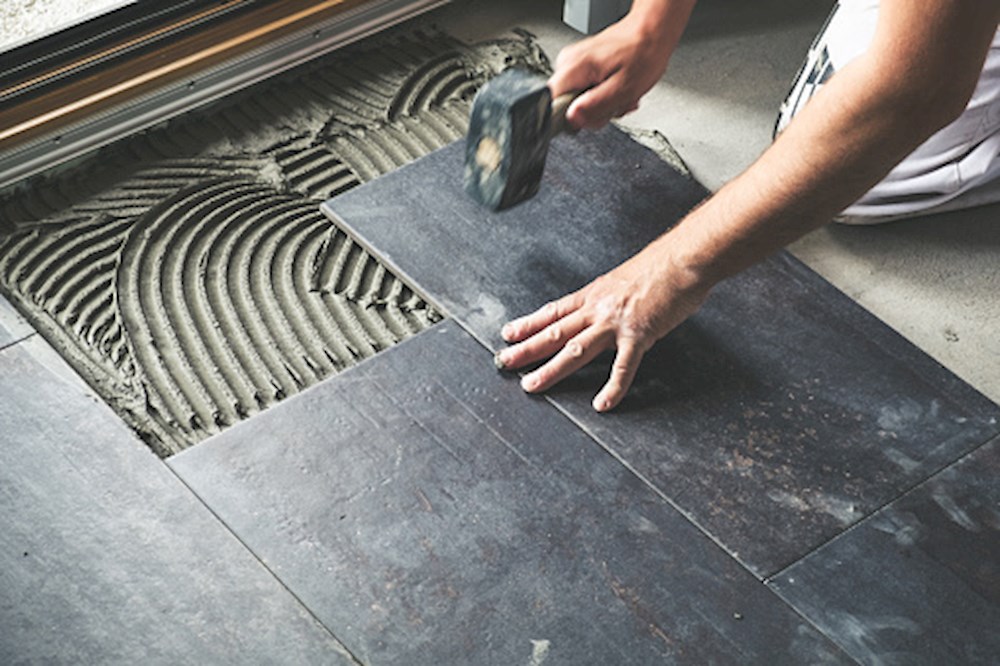
Placing tiles: The tiler applies tile adhesive and places the tiles according to the agreed pattern. Around pipes and sockets, tiles are cut to size for an accurate connection.
Grouting and sealing: After at least 24 hours of drying time, the joints are filled. Connections with sanitary ware are sealed with silicone for a waterproof finish that prevents leaks.
Completion: The bathroom is cleaned and delivered. Wait 24-48 hours before you can walk on the floor and shower again. Tiling an average bathroom (25-30 m²) takes 3 to 5 working days, excluding drying times.
How can you save on tiling your bathroom?
There are several ways to reduce the costs of tiling your bathroom without compromising on quality.
Address problems early: Repairing loose tiles or mould in joints immediately prevents larger and more expensive damage to the underlying structure. Preventive maintenance keeps costs manageable.
Prepare the job: Empty the bathroom yourself and ensure all tiles and materials are ready before the professional arrives. This saves labour hours and lowers the total costs.
Choose the right time: Book your tiler during the week and not as an emergency. Weekend and urgency surcharges can significantly increase costs.
Choose smart materials: Ceramic tiles (€40-€60/m²) are more affordable than natural stone (€90/m²). A simpler laying pattern such as half-brick bond is laid faster than diagonal, which saves labour costs.
Book via Zoofy: You get a fixed rate in advance, without call-out charges and without surprises. You only pay after completion of the job.
Common problems with bathroom tiles
Problems with bathroom tiles can have various causes.
Loose tiles
This arises from poor adhesion, moisture behind the tiles, or an unstable surface. Ignoring it leads to water damage to the structure, which significantly increases the costs for re-tiling.
Mould in joints
Mould is caused by insufficient ventilation and moisture accumulation. Regular airing and good mechanical ventilation are essential to prevent this.
Cracks and bursts
These arise due to movement in the surface or too little flexibility in the adhesive. This can indicate structural problems that require attention.
Find the best tiler for your bathroom
A reliable tiler prevents costly moisture problems and high repair costs.
Experience with bathrooms: Choose a professional with demonstrable experience in waterproof detailing, such as tanking in wet zones. Ask for references or a portfolio of previous bathroom projects.
No call-out charges: At Zoofy, you never pay call-out charges; this is standard.
Fixed price in advance: You know exactly what the costs are beforehand, without surprises afterwards.
Quick booking without quote hassle: Choose a moment directly and book a tiler without first requesting quotes.
Payment via QR code: You only pay after completion of the job via a convenient QR code, never in advance.
Reliable, verified professionals: All tilers at Zoofy are verified and reviewed, so you are sure of craftsmanship and quality.
Book a tiler for your bathroom
Ready to have your bathroom tiled? At Zoofy, you can book a professional directly, without quotes and without call-out charges. You see exactly what it costs beforehand, and Zoofy connects you with a reliable professional who has been verified. You only pay when the job is done. Book a professional directly now.
Useful links
Frequently asked questions
Wall tiles cost €50 to €100 per m², and floor tiles cost €50 to €100 per m². These prices include labour and 21% VAT. The exact rate depends on the tile type, size, and complexity of the pattern.
Tiling a bathroom of 25-30 m² takes on average 3 to 5 working days, excluding drying times for adhesive and grout. The actual duration depends on the complexity of the pattern and the condition of the surface.
No, you cannot use the bathroom during the work. You can optionally hire an emergency shower for €100 to €300 per week as an alternative.
Wait at least 24 to 48 hours after grouting before you enter the floor and use the shower, so that adhesive and grout can harden properly.
Floor tiles are thicker, more wear-resistant, and have better slip resistance. Wall tiles are lighter but not suitable for floors due to insufficient strength.
Yes, in most cases, the sanitary ware (toilet, washbasin, shower tray) must be removed for a neat result. Discuss this beforehand with the affiliated professional.
The costs for tiling a bathroom are usually calculated per m², not per hour. This gives you a transparent overall picture of the investment without surprises.
This is sometimes possible if the old tiles are firmly attached and the surface is flat, but it is not always recommended due to extra thickness and possible adhesion problems.
Well-placed ceramic tiles last 20 to 30 years, natural stone even longer with correct maintenance. Joints must be periodically renewed.
Wall panels may seem cheaper to purchase, but tiles are more durable and easier to maintain. In the long run, tiles are often more economical.