
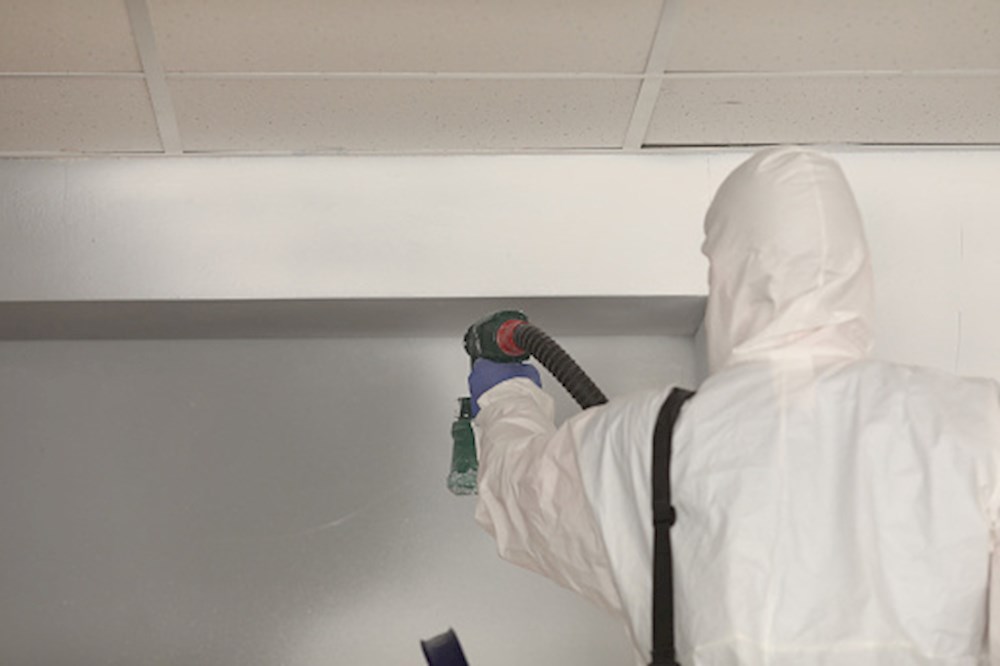
Spray painting your ceiling costs on average between €9 and €14 per m². Ceiling spraying involves applying paint with a paint sprayer instead of a roller, which works faster and provides a smooth, streak-free result. The costs for spraying a ceiling mainly depend on the surface area, the condition of the ceiling, and the type of paint you choose. In this price guide, you can read exactly what to look out for when spraying your ceiling.
What does ceiling spraying cost?
Spraying a ceiling costs an average of between €9 and €14 per square metre. These costs include paint and labour, providing you with a beautiful, streak-free result. The price per square metre mainly depends on the type of paint you choose: latex paint or spack.
Costs are calculated per square metre and are project costs. This means the professional first measures the surface area of your ceiling and provides a quote based on that. Below is an overview of the average costs per paint type.
Overview of ceiling spraying costs
Type of spray work | Costs per m² |
|---|---|
Ceiling spraying with latex | €10 - €13 per m² |
Ceiling spraying with spack | €9 - €14 per m² |
Latex paint is the most commonly used option for ceilings because it provides good coverage and is easy to keep clean. Spack gives an extra even result and is often chosen if your ceiling has minor imperfections you wish to mask. The price differences between both options are minimal.
All mentioned prices include 21% VAT and labour. These are indicative prices based on previously performed jobs by affiliated professionals. Final costs may vary depending on the condition of your ceiling and any necessary preparatory work.
Costs of ceiling spraying per paint type
The costs for spraying a ceiling mainly depend on the type of paint you choose. Latex paint is the most commonly used and costs between €10 and €13 per m². Spack offers possibilities for textured finishes and ranges between €9 and €14 per m². Below you can see the price per paint type.
Paint type | Costs per m² |
|---|---|
Ceiling spraying with latex | €10 - €13 per m² |
Ceiling spraying with spack | €9 - €14 per m² |
Price-determining factors for ceiling spraying
The costs for spraying a ceiling vary per situation. Below you can read which factors influence the price and how it is determined.
Urgency versus planning
An urgent job costs more than planned work. The professional must adjust their schedule and move other appointments, which requires extra time and organisation. This leads to higher costs.
Weekend and evening hours
Work in the weekend or evenings is more expensive than during weekdays. Surcharges apply which increase the costs.
Condition of the ceiling
A ceiling with water damage, mould, cracks, or peeling paint requires preparatory work. The professional must treat stains, fill cracks, and sand the surface. This costs extra time and increases labour duration, causing total costs to rise.
Type of ceiling material
Plasterboard, concrete, wood, and plaster each require a different approach. Some materials absorb more paint or require a primer. This influences the number of required paint layers and total labour costs.
Ceiling height
High ceilings or difficult-to-reach spaces take more time. The professional may need scaffolding or a lift, increasing labour duration and costs.
Surface area
Smaller surfaces are relatively more expensive per square metre. Preparation time, masking, and setting up spray equipment remain the same regardless of the ceiling size. For larger surfaces, these fixed costs are spread over more square metres.
Choice of paint
Latex paint and spack differ in price and quality. High-quality paint with better coverage costs more but sometimes saves a layer of paint. The choice influences both material costs and labour time.
Region
In large cities, costs are higher than in rural areas. This is due to higher wage costs and travel time. The price therefore differs per postcode area.
Preparatory work
Degreasing, masking, and covering floors and furniture takes time. The more preparatory work required, the higher the total costs.
Accessibility of the workplace
A clear, easily accessible workplace saves time. If the professional must first create space or move obstacles, labour duration increases.
Extra paint layers
For dark or heavily discoloured ceilings, extra paint layers are sometimes needed for full coverage. This increases both material and labour costs.
Combination with other work
If you have multiple rooms sprayed or also want to have walls sprayed, the professional can work more efficiently. This lowers the costs per square metre.
Local professional versus travel distance
A local professional saves travel time. Longer distances increase total project costs due to time and fuel expenses.
Extra costs and surcharges
Extra costs depend on the situation. At Zoofy, you do not pay call-out charges.
Urgency surcharge: A surcharge applies to urgent jobs because the professional must adjust their planning to perform your task quickly.
Weekend surcharge: Work at the weekend costs more than on weekdays as it falls outside regular working hours.
Extra preparation work: In case of serious ceiling damage, mould, or old water damage, more preparatory work is needed, increasing the costs.
Primer: Certain surfaces or highly absorbent ceilings require a primer before spraying can begin.
Extra paint layers: Dark base colours or a desire for better coverage require more paint layers.
Repair of hidden damage: Loose parts or hidden cracks that only become visible during preparation require extra repair work.
Complex details: Beams, ornaments, or difficult-to-reach corners require more time and precision.
How does the professional work when spraying a ceiling?
Spraying your ceiling follows a fixed method in five steps.
Masking: The professional protects all floors, windows, doors, and walls with plastic sheeting and tape to prevent paint splatters. This preparatory work ensures only the ceiling is sprayed.
Switching off power: The power is switched off to prevent short circuits. Latex paint is liquid and can penetrate sockets, even if they are masked.
Preparing the ceiling: The ceiling is degreased with lukewarm water and a degreasing agent. Water damage stains are sealed, and cracks or holes are repaired.
Spraying the ceiling: The professional uses an air-assisted or airless paint sprayer and starts in the corners, then works towards the middle. Usually, two layers are sprayed for optimal coverage and durability.
Drying and ventilating: The room is well ventilated during and after spraying. Once the paint is completely dry, the professional removes the plastic sheeting. Drying time depends on the surface, the paint, and the ventilation.
How can you save on ceiling spraying?
There are several ways to lower the costs of spraying your ceiling without compromising on quality.
Address problems early: Water damage stains or small cracks become larger if left alone. Early treatment prevents more expensive repair work.
Prepare the workspace: Move furniture, dismantle lamps, and empty the room before the professional arrives. This saves labour hours and lowers the price.
Plan on weekdays: Do not book on the weekend or as an urgent job. Weekday planning avoids surcharges and keeps costs lower.
Ensure ventilation: Good ventilation during and after spraying speeds up the drying process and improves the end result. This prevents delays and extra costs.
Book via Zoofy: You get a fixed rate in advance, without call-out charges and without surprises. You only pay after the job is completed.
Common ceiling problems
Problems with your ceiling can have different causes and influence the costs for spraying.
Mould growth
Mould arises from moisture and poor ventilation and is recognisable by dark spots. The professional must treat the mould before the ceiling can be sprayed, which requires extra time and material.
Old water damage
Water damage causes brown or yellow stains and can lead to loose paint layers. These areas must first be repaired and treated with a stain-blocking agent to prevent bleed-through.
Nicotine stains
Yellow discolouration from smoke requires a special primer before the ceiling can be sprayed. Without a primer, the stains will show through the new paint layer, ruining the end result.
Cracks and peeling paint
Cracks can indicate subsidence or temperature fluctuations and must be sealed. Peeling paint indicates poor adhesion or moisture problems. The professional must remove loose parts and sand the surface. Ignoring these problems leads to a poorer result and higher costs in the long run.
Find the best professional for ceiling spraying
Ceiling spraying requires expertise and professional equipment to prevent uneven coverage and drips.
No call-out charges: You only pay for the work performed, never extra for the professional's arrival.
Fixed price upfront: You know exactly what the costs are before the job starts, without surprises later.
Quick booking without quote hassle: Choose a time that suits you directly, without waiting long for quotes.
Payment via QR code after completion: You only pay when the job is fully finished and you are satisfied with the result.
Reliable, verified professionals: All affiliated painters are verified, ensuring your ceiling is sprayed by an expert.
Expertise for multiple jobs: The professional can also estimate costs for wall spraying if you want multiple rooms treated.
Transparent price breakdown: The price is clearly specified, so you know exactly what you are paying for.
Book a professional for ceiling spraying
Ready to have your ceiling sprayed? At Zoofy you book a professional directly, without quotes and without call-out charges. You see exactly what it costs upfront, and Zoofy pairs you with a reliable, verified professional. You only pay once the work is done.
Useful links
Frequently asked questions
Spraying a ceiling costs an average of between €9 and €14 per square metre, including paint and labour. The costs depend on the surface area, the type of paint, and the condition of the ceiling.
Spraying is usually cheaper because the professional can treat large surfaces faster, requiring fewer labour hours.
Spraying is cheaper than plastering. Plastering requires more preparation time and material, while sprayed paint can be applied directly over existing ceilings after minimal preparation.
Spraying delivers a more streak-free result and is faster than painting with a roller. The end result is smoother and more uniform, making spraying the preferred method for ceilings.
The spraying itself takes a few hours, but including preparation and drying, you should count on a full day for an average room. The exact duration depends on the surface area and the number of paint layers required.
It is recommended to leave the room during spraying due to paint fumes. Good ventilation is essential for your health and for the best end result.
After the last paint layer, the paint must dry for a few hours to a day. Ventilate the room well before replacing furniture to shorten the drying time.
Yes, spraying can be applied to almost all ceilings, provided they are well prepared. Seriously damaged ceilings require repair before they can be sprayed.
Yes, moving or covering furniture yourself can save labour hours and lower the price. The professional takes care of professionally masking floors and walls.
A professionally sprayed ceiling with two layers of paint lasts for years, provided there are no moisture problems. Regular cleaning extends the lifespan significantly.