

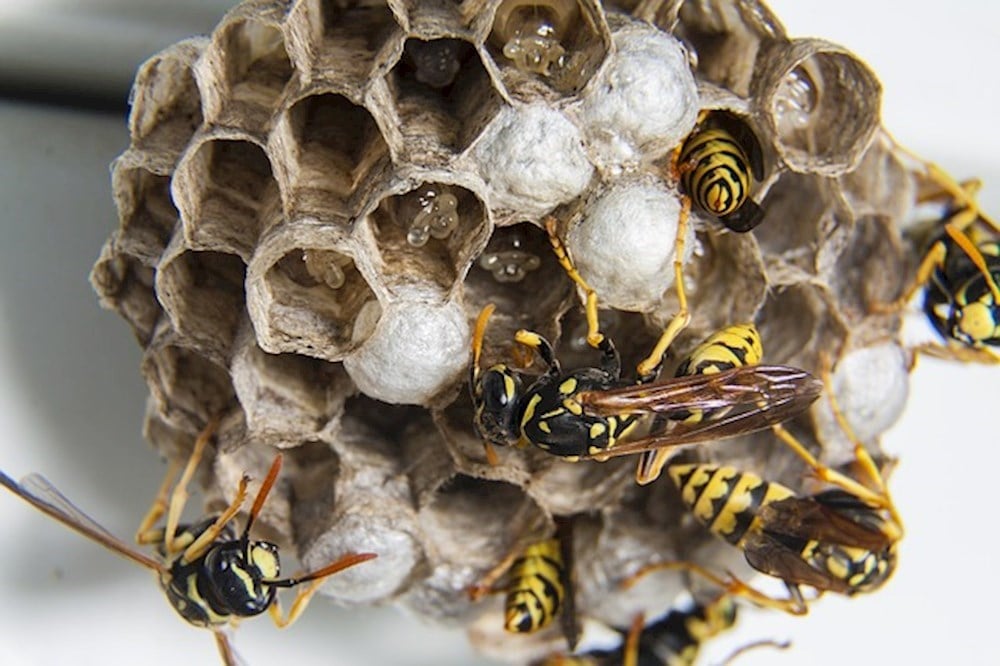
Wasp nest removal costs
The removal of a wasp nest costs on average between €89 and €150. A professional first treats the wasps with specialised agents, after which the empty nest is safely removed. The price depends on factors such as the size and location of the nest. In this price guide, you can read about the costs for removing a wasp nest and what to look out for when hiring an exterminator.
Table of Contents
What does it cost to remove a wasp nest?
Removing a wasp nest costs on average €100 on weekdays and €150 at weekends or for urgent assignments. This price includes the full service: the exterminator first kills the wasps with professional products, then removes the empty nest and ensures the environment is left safe. The costs are calculated per project, not per hour, so you know exactly what you are paying in advance.
Costs per timing
Moment | Price |
|---|---|
Weekdays | €100 |
Weekend | €150 |
Urgent | €150 |
The table shows that the price mainly depends on the moment you have the job carried out. Weekdays are the most economical, while weekend and emergency help cost approximately 50% more. Regardless of the time, you receive the same professional service.
All mentioned prices are including 21% VAT and labour. At Zoofy, you do not pay call-out charges, so the costs you see are actually what you pay. This makes it easy to make a good trade-off between the timing of execution and your budget.
Price-determining factors for removing a wasp nest
The costs for removing a wasp nest vary per situation. Various factors determine how much time and resources the exterminator needs. Below you can read which elements influence the price and how you can save costs.
Moment of execution
Planned jobs on weekdays cost €100, while urgent assignments and weekend work cost €150. In case of urgency, the professional must adjust his schedule and be immediately available. Work at the weekend costs more due to irregular working hours.
Season
In spring, nests are still small with only the queen. Treatment is then simpler and more effective. In summer, nests grow rapidly and wasps become more aggressive. This requires more time, expertise and caution from the exterminator.
Accessibility of the nest
A nest at eye level in a shed is quickly accessible. A nest high in a tree, in a cavity wall or under roof tiles requires special equipment such as extended spray lances, ladders or cherry pickers. This increases the labour duration.
Size and complexity
Large nests contain more wasps and require more extermination agents and time. Nests in difficult-to-reach locations such as between insulation material require extra expertise. In the case of a wasp infestation with multiple nests, several treatments are necessary.
Required materials
Professional extermination agents such as wasp powder or foam have different prices. The quantity and type of agent influence the total costs.
Region
In large cities, prices are often higher than in rural areas. Operational costs such as office rent and transport are higher in urban areas.
Saving costs by intervening early
A wasp nest grows rapidly. Intervening in April or May when nests are still small saves time and resources. Waiting until summer means larger nests and higher costs.
Choose a local professional
Local pest controllers can be on-site faster. This is especially important in case of a nuisance or when you want to be helped quickly.
Good preparation
Locate the nest yourself by following the flight paths of wasps. This saves searching time for the professional and lowers the costs.
Use an honest platform
With Zoofy, you know in advance what removing a wasp nest costs, without surprises. You pay no call-out charges, so the price you see is what you pay.
Additional costs and surcharges
Extra costs depend on the situation. At Zoofy, you pay no call-out charges.
Urgent jobs cost €50 extra (total €150 instead of €100) because the professional must adjust his schedule for urgent situations
Weekend work costs €150, which is €50 more than during the week
In the case of difficult-to-reach nests in cavity walls, high in trees or under roof tiles, special equipment may be required
In the case of a wasp infestation with multiple nests, extra treatments may be needed to remove all nests
How does the professional work when removing a wasp nest?
The job follows a fixed sequence of steps to control wasps safely and effectively.
Inspection: The professional inspects the location and the nest. For hidden nests, he follows the flight paths of wasps to determine the exact location.
Protective clothing: The exterminator puts on a full wasp suit covering the throat, neck, wrists, and ankles, plus gloves and face protection.
Method determination: The professional chooses the best treatment method. For nest entrances at the top, powder is used. Wasps spread this themselves to the queen. For entrances at the bottom, foam is applied to fill the entire nest.
Application: The extermination agent is applied, preferably in the evening or at night when wasps are less active. Extensions on the sprayer ensure a safe distance.
Aftercare: All wasps die within three days. The nest remains open so that returning wasps come into contact with the poison. After one to two weeks, the nest is completely extinguished. The professional can carry out a follow-up check after three weeks to verify that the treatment was successful.
The costs cover this complete approach, including all necessary materials and protective equipment.
How can you save on removing a wasp nest?
There are several ways to reduce costs by smart planning and doing preparatory work.
Intervene early: Have a nest removed in April or May when it is still small. This is cheaper and more effective than waiting until summer when nests are large and wasps become aggressive.
Locate it yourself: Follow the flight paths of wasps to find the nest. This saves searching time for the professional.
Choose a smart time: Book on a weekday (€100) instead of at the weekend (€150) and avoid urgent assignments if possible.
Choose a local professional: Local exterminators can be on-site faster and have shorter travel times.
Prevent new nests: Seal cracks and gaps in facades and roof edges, check sheds and attics in spring, and avoid open food and drinks outside.
Book via Zoofy: You get a fixed rate in advance, without call-out charges and without surprises. You only pay after the job is completed.
Common causes of a wasp nest
Wasp nests arise because queens look for suitable locations to start a colony. Below you can read where they end up at your place.
Nest locations under roof edges and in cavity walls
Wasp queens crawl through small crevices in spring to sheltered spots. Roof edges, cavity walls, sheds and attics offer protection against weather and natural enemies. Hollow trees and ground cavities are also popular.
More aggressive behaviour in August
In spring and early summer, wasps are relatively calm. From August onwards, this changes because larvae no longer produce a sweet substance. Workers actively go in search of sugars from humans, which explains intrusive behaviour.
Consequences of delay
A nest grows rapidly. Intervening in May is simpler and cheaper than in August when thousands of wasps are present. The larger the nest, the higher the costs and the risk of stings.
Find the best professional for removing a wasp nest
Removing a wasp nest yourself is life-threatening and increases the costs if things go wrong.
Why a professional: Self-treatment is risky because wasps react aggressively when disturbed. Retail products often do not reach the heart of the nest. Methods such as burning or drowning are life-threatening.
Professional expertise: A good pest controller has knowledge of wasp behaviour, professional treatment techniques, protective clothing and safety standards.
No call-out charges: You never pay extra for the arrival of the exterminator; the price you see is what you pay.
Fixed price in advance: You know exactly what removing the wasp nest costs, without surprises afterwards.
Book quickly without quotation hassle: Directly book a pest controller and choose a time, without waiting for quotes.
Payment after completion: You only pay when the job is done via a handy QR code.
Reliable professionals: All affiliated exterminators are certified and checked for quality and reliability.
Seasonal guarantee: If the nest becomes active again at the same location in the same season, the professional returns at no extra cost.
Frequently asked questions about wasp nest removal
How can I have a wasp nest removed for free?
Free removal no longer exists. The fire brigade and municipalities have not done this for years, unless it concerns protected species such as bees or bumblebees. The costs start at €100 for weekdays.
Can I remove a wasp nest myself?
This is strongly discouraged. Wasps react aggressively when disturbed and can sting multiple times. Without protective clothing and professional products, you risk serious stings and allergic reactions. Methods such as burning or blocking are life-threatening.
Is it bad to leave a wasp nest?
You do not necessarily have to have a nest at a safe distance from your house removed. Wasps die naturally after the first night frost. In case of a nuisance or nests near windows, doors or play areas, removal is recommended.
How quickly can an exterminator come?
Usually within one to two days, also during busy summer periods. In case of acute nuisance, urgent assignments are possible. The costs for urgency are €150 instead of €100.
What is the best time to have a wasp nest removed?
Spring (April-May) is ideal. Nests are then still small and contain only the queen, making treatment simpler, more effective and cheaper.
Must the nest be physically removed after treatment?
Usually not. The empty nest can stay put because wasps never reuse it. An existing nest can even deter other queens.
Can difficult-to-reach nests also be treated?
Yes, professionals have special equipment such as extended spray lances, ladders and cherry pickers for nests in cavity walls, high in trees or under roof tiles.
Why do wasps become so intrusive in August?
In the first half of summer, workers are fed by a sweet substance from larvae. As soon as all larvae are fully grown, this feeding stops and wasps actively go in search of sugars from humans.
What are the risks of wasp stings?
For most people, a wasp sting is painful but harmless. In case of allergic reactions, symptoms such as breathing problems, dizziness and a swollen throat can occur. In that case, call 112 immediately.
Does a wasp nest return after treatment?
Wasps never use an old nest. With proper treatment in which the queen is killed, return at the same spot is impossible. Seasonal guarantee is included.
Book a professional for removing a wasp nest
Ready to have a wasp nest removed? At Zoofy you book a professional directly, without quotes and without call-out charges. You see exactly what it costs in advance, and Zoofy pairs you with a reliable professional who has been checked. You only pay when the work is finished.