
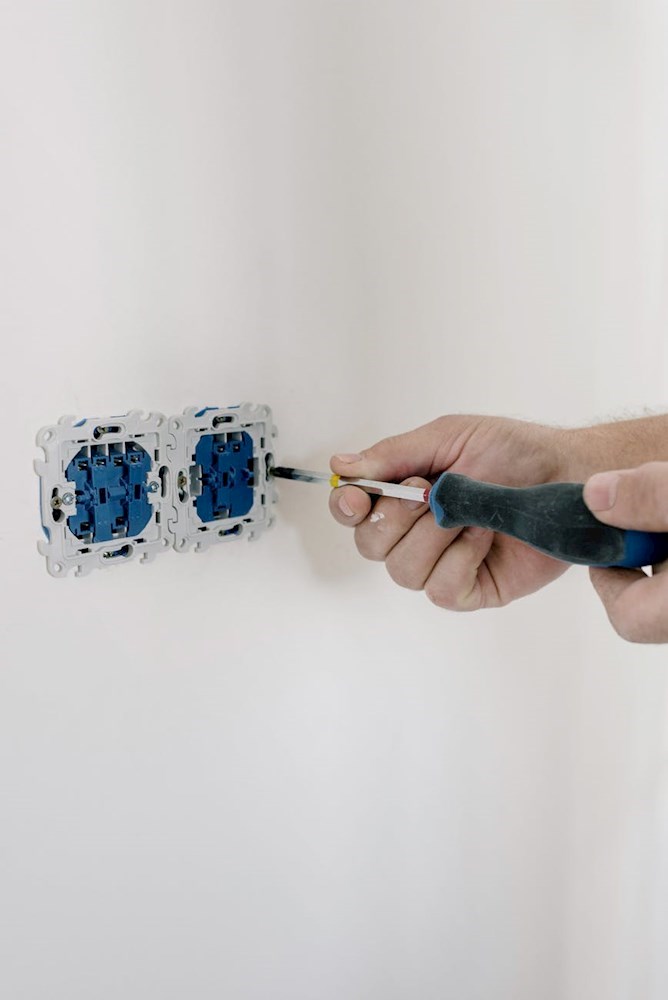
The average cost of installing a switch is €150, with prices ranging from €50 to €300, depending on the type of switch and the complexity of the wiring. Installing a switch involves connecting a light switch to the electrical wiring, including safety checks in accordance with NEN1010 standards (the Dutch standard for electrical safety in homes and buildings). In this price guide, you can read exactly what influences the costs for installing a switch and what you should pay attention to during this task.
Table of Contents
How much does it cost to install a switch?
The average cost of installing a switch is €150, with prices ranging from €50 to €300. Most homeowners pay between €100 and €200 for placing a light switch. These costs include labour and 21% VAT.
Cost overview for installing a switch
Description | Price |
|---|---|
Average costs | €150 |
Typical range | €100-€200 |
Low end - high end | €50-€300 |
The table shows the full price spectrum for installing a switch. Most jobs fall within the typical range, with standard single-pole switches at the lower end and more complex two-way switches or double switches at the higher end.
The costs also depend on the type of work. Replacing an existing switch costs €50 to €150 because the wiring is already present. Moving a switch to a different location costs an average of €100 to €150, due to the extra work on wiring and finishing the old location.
Electricians charge an hourly rate between €60 and €75 per hour. The switch itself usually costs between €5 and €50, depending on the type and quality. The total costs for installing a switch therefore mainly consist of labour and include 21% VAT.
Costs per type of switch
The costs for installing a switch depend heavily on the type of switch you choose. A single-pole switch is the cheapest, while smart light switches are at the top of the price spectrum. Below you can see what different switch types cost per piece, excluding installation costs which average €100 to €200.
Type of switch | Price per piece |
|---|---|
Single pole | €1-€20 |
Double hotel switch | €10-€20 |
3-way switch | €3-€15 |
4-way switch | €10-€25 |
Dimmer | €15-€35 |
Smart light switch | €45-€150 |
Price-determining factors for installing a switch
The costs for installing a switch are determined by various factors. Some are the same for every job, others depend on your specific situation.
Type of switch
The price of the switch itself varies greatly per type. A basic single-pole switch costs €5 to €20, while smart light switches cost between €45 and €150. This difference in material costs translates directly into higher total costs.
Complexity of the installation
Connecting a single pole switch is simple and fast. A 3-way switch or 4-way switch takes more time because the electrician has to connect multiple switch locations and control them correctly. More complex installations cost €100 to €200 per switch due to the longer labour duration.
Condition of existing wiring
If the existing wiring does not meet NEN1010 standards, it must be adjusted or replaced. This requires extra labour and materials. Outdated wiring can mean that the group must first be adjusted before the switch can be installed.
Accessibility of the location
If the electrician has to cut into the wall to lay wiring, or if plasterboard work has to be repaired after installation, costs will rise. Difficult-to-reach locations require more time and precision work.
Wall construction
Solid walls such as concrete or brick are labour-intensive to work with. Plasterboard constructions are easier to work with, making the installation faster and costing less.
Materials needed
Mounting hardware and fittings such as junction boxes and screws cost €5 to €10 extra. With outdated or damaged wiring, extra cabling and connection material are sometimes necessary, which increases the total price.
Emergency versus planned work
Emergency jobs are more expensive than planned work. The electrician has to adjust his schedule and can work less efficiently, resulting in higher rates.
Weekend and evening work
Work at the weekend or in the evening costs more due to surcharges on the hourly rate. Weekday jobs during the day are the most economical.
Region
In large cities, rates are often higher than in rural areas. This is due to higher labour costs and living costs that electricians pass on.
Housing type
Older homes often have outdated electrical installations. Extra adjustments to meet standards increase the costs. New-build homes usually have modern systems where installation is easier.
Compatibility with lamps
If you install a dimmer, the connected lamps must be dimmable. Standard LED lamps do not work with dimmers. Dimmable LED lamps are more expensive, which increases the total investment.
Number of switches to be installed
Having several switches installed at the same time is more efficient. The electrician only has to come to the site once and can make optimal use of the hourly rate of €60 to €75.
Preparation and accessibility
If the workplace is clear and easily accessible, the electrician works faster. An accessible meter cupboard and clear communication about the desired switch location save time and therefore costs.
Additional costs and surcharges
The costs for installing a switch can increase due to extra work or surcharges. Via Zoofy you do not pay call-out charges.
Electricians often apply a fixed starting rate of €70 to €100 for performing the job
For emergency jobs, a surcharge usually applies because the professional has to adjust his schedule
Work at the weekend is more expensive than during the week due to weekend surcharges
If the electrician has to cut into the wall or repair plasterboard work after installation, costs will rise
Replacing or adapting old wiring to current NEN1010 standards brings additional costs
Adding an extra group to the distribution board causes extra costs
How does the electrician work when installing a switch?
The installation of a switch follows a fixed set of steps that ensure safety and compliance with NEN1010 standards.
Switching off power and checking: The electrician switches off the power via the distribution board and checks with a voltage tester whether the wires are de-energised.
Removing old switch: When replacing, the existing switch is unscrewed and the wiring is disconnected. The electrician checks the condition of the wires.
Checking and preparing wiring: The electrician checks whether the wiring meets the applicable standards. If necessary, the wiring is adjusted or renewed.
Connecting new switch: The wires are connected to the new switch according to the correct colour coding. With two-way switches, the wiring is more complex.
Mounting the switch: The switch is placed in the junction box and firmly screwed down. The cover plate is attached.
Testing the installation: The electrician switches the power back on and tests whether the switch functions correctly.
Installing a single switch takes an average of 30 to 60 minutes. Ensure that the workplace is clear and the meter cupboard is accessible to keep costs limited.
How can you save on installing a switch?
There are several ways to limit the costs for installing a switch without compromising on safety.
Replace in time: Replace switches when they show signs of wear, such as flickering or heat development. Addressing small problems early prevents expensive repairs later.
Prepare: Clear the workplace, ensure the meter cupboard is accessible and determine in advance which type of switch you want. This saves the electrician time and lowers costs.
Plan smartly: Do not book at the weekend or as an emergency. Weekday work is cheaper because no surcharges apply.
Combine jobs: You can make optimal use of the hourly rate of €60 to €75 by having several electrical jobs carried out at the same time, such as sockets or grounding.
Invest in quality: Cheap switches wear out faster. Invest in a high-quality switch for a longer lifespan and fewer replacement costs.
Book via Zoofy: You get a fixed rate in advance, without call-out charges and without surprises. You only pay after completion of the job.
Common problems with switches
Switches can become defective due to wear or load, resulting in safety risks.
Flickering lights and loose connections
Flickering lights often indicate a loose connection in the switch or worn contacts. Due to years of use, the internal contact points wear out, making the power supply unstable. This is not only annoying but can also lead to a short circuit.
Sparks and heat development
Small sparks when switching can be normal, but repeated or large sparks indicate a defect that poses a fire hazard. A switch that feels warm indicates an overload or a poor contact. This is a direct safety risk that requires immediate attention.
Mechanical wear
Creaking noises when operating or a switch that does not click properly indicate internal wear of the contacts. A loose-hanging switch can cause a short circuit. Ignoring these signals can lead to electric shocks and consequences for your insurance in case of home damage.
With these problems, it is wise to call in an electrician immediately.
Find the best electrician for installing a switch
Electrical work requires professional knowledge and certification to guarantee safety and prevent fire hazard.
Reliable, checked professionals: Via Zoofy you only work with certified electricians who provide quality work in accordance with NEN1010 standards.
No call-out charges: You never pay extra for the arrival of the professional, regardless of the location.
Fixed price in advance: You know exactly what the costs are beforehand, without surprises afterwards.
Book quickly without quote hassle: Choose a time immediately and book a professional, without first requesting multiple quotes.
Payment via QR code after completion: You only pay when the work is finished, safely and easily via a QR code.
Check on accreditation and insurance: All affiliated electricians have the correct certification, work experience and insurance.
Important for insurance and home sale: A professional installation by a certified electrician ensures correct inspection reports and prevents problems during home inspections or when taking out insurance.
Book an electrician for installing a switch
Ready to have a switch installed? Via Zoofy you can book a professional directly, without quotes and without call-out charges. You will see exactly what it costs in advance, and you will be linked to a reliable professional who has been checked. You only pay once the work is finished. Book a professional directly now.
Useful links
Frequently asked questions
Replacing a switch costs an average of €50 to €150, because the wiring is already present. The costs depend on the type of switch and the complexity of the wiring.
Technically it is possible, but it is discouraged. Incorrect wiring can lead to short circuits, fire hazard and problems with insurance. A certified electrician guarantees a safe installation in accordance with NEN1010 standards.
Installing a single switch takes an average of 30 to 60 minutes. For a transfer switch, this is 3 to 4 hours, depending on the complexity.
Electricians charge an hourly rate between €60 and €75 per hour. Placing a socket costs similarly, usually between €50 and €150 per socket.
A two-way switch (3-way) operates one lamp from two locations. A cross switch (4-way) is added to operate the same lamp from three or more locations.
No, not all lamps are suitable for dimmers. LED lamps must specifically be of the dimmable type. Some energy-saving lamps and fluorescent lamps are incompatible or require a special type of dimmer.
Moving a switch costs an average of €100 to €150, depending on the required wall work and the restoration of the old location.
Smart switches cost €45 to €150 per piece, excluding installation costs. They can be operated via smartphones and are compatible with systems like Google Home, Apple HomeKit and Alexa.
An electrician must be certified to work on electrical installations. This is important for safety, inspection reports and insurance during home sales.
Yes, with professional installation you get a warranty on both the material and the work performed. The exact warranty period differs per electrician.