
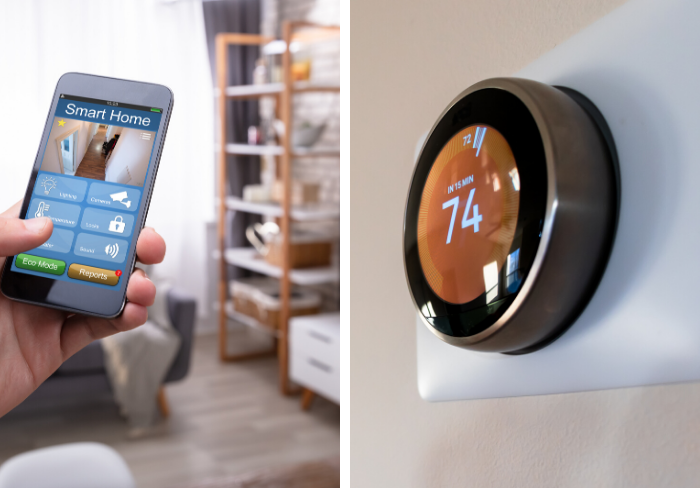
Equipping a smart home costs on average between €2,000 and €20,000, depending on the number of devices and the desired automation. A smart home is a residence where devices such as lighting, heating, and security are automatically controlled via voice, apps, or artificial intelligence. The price is mainly determined by the size of the system and the choice between wired or wireless home automation. In this price guide, you will read which factors influence the costs and what you should look out for when installing a smart home.
What does a smart home cost?
Equipping a smart home costs an average of €5,500, with a price range between €2,600 and €9,100. For a basic setup with a smart speaker, lighting, and thermostat, you pay at least €2,000, while full automation of a home with lighting, blinds, smart locks, irrigation system, and multiple speakers can reach €20,000. The exact costs depend on the number of rooms, the choice of devices, and the complexity of the installation.
Overview of smart home costs
Description | Costs |
|---|---|
Average costs | €5,500 |
Average range | €2,600-€9,100 |
Minimum costs | €2,000 |
Maximum costs | €20,000 |
These amounts provide a realistic picture of what you can expect at different levels of home automation. The minimum amount covers a starter kit with a few smart devices, while the maximum amount includes a fully integrated system with automation in every room.
Installation costs vary between €80 and €100 per hour, depending on the professional and the nature of the work. Basic settings such as configuring a hub and pairing devices start from €300, but the installation of larger systems such as smart underfloor heating or a complete security system can reach €1,000. All mentioned prices are including 21% VAT and labour from the connected professionals.
Smart home costs per room
The costs for a smart home differ significantly per room, as each room requires different devices and automation. A smart kitchen with integrated appliances costs between €7,800 and €20,800, while a garage with only a smart door opener costs only €200 to €400.
Room | Costs (incl. installation) |
|---|---|
Kitchen | €7,800-€20,800 |
Living room | €3,500-€12,000 |
Bathroom | €3,250-€9,100 |
Bedroom | €1,000-€3,500 |
Lighting | €1,300-€3,900 |
Heating and cooling | €1,050-€2,600 |
Home security | €700-€5,000 |
Garden | €250-€650 |
Garage | €200-€400 |
Price-determining factors for a smart home
The costs for a smart home vary greatly per project. This is because every home has different requirements and residents have different wishes. Below you can read which factors influence the prices, so you can better estimate what your situation means for the total investment.
Complexity of the system
The more devices and integrations you want, the higher the costs. A basic setup with a few smart lamps and a thermostat costs from €2,000, while full automation of lighting, heating, security, and entertainment can reach €20,000. More devices mean more installation time, extra configuration, and often more advanced equipment.
Choice of ecosystem
You choose between Google Assistant, Amazon Alexa, or Apple HomeKit. Each platform works with specific devices and brands. Some smart products are compatible with multiple ecosystems, others only with one. This choice determines which devices you can use and whether you need extra adjustments to make everything work together.
Communication protocols
Smart devices communicate via WiFi, Zigbee, Z-Wave, or the Matter standard. Zigbee and Z-Wave often require a central hub such as Samsung SmartThings or Homey, which costs €150 to €400 extra. WiFi devices work directly with your router but can strain your network with many devices. The choice of protocol affects both the purchase costs and the installation complexity.
Wired versus wireless
Wired home automation such as KNX offers the highest stability and speed but is only practical for new builds or major renovations. The installation requires extensive cabling work and takes more time. Wireless systems are easier to place in existing homes and require fewer structural adjustments, which lowers installation costs.
Internet speed and WiFi coverage
A smart home system needs a stable internet connection of at least 25 Mbps. In larger homes or with thick walls, a WiFi mesh system may be necessary for sufficient range. Laying cabling for access points costs €750 to €1,000 extra. Without good coverage, devices work slowly or unreliably.
Required materials
The prices of devices vary greatly. A smart thermostat costs €50 to €300, a smart doorbell €150 to €350, and a smart fridge €1,600 to €4,000. Premium brands with advanced features cost more than basic models. The choice for budget or high-end devices significantly affects the total price.
Regional price differences
In large cities, prices for home automation installation are often higher than in rural areas. This is due to higher local costs and demand for professionals. The difference can be up to 10-15% of the total costs.
Emergency versus planned work
Emergency jobs are more expensive because the professional has to adjust their schedule. Planned installations cost less because the professional can work more efficiently and order materials in advance.
Weekend and evening work
Work during the weekend or in the evening costs more due to surcharges. Having the installation done during the day on weekdays saves costs.
Preparation and accessibility
Good preparation reduces labour time. Ensure work areas are clear and accessible. Know in advance which ecosystem you want to use and which devices you desire. This prevents delays and extra costs during installation.
Phased expansion
Start small and expand in phases. This spreads the investment and gives you time to learn what you really need. Addressing small problems early prevents higher costs later.
Choice of local professional
Local professionals can be on-site faster and know local conditions. This saves travel time and costs.
Transparent price agreements
With platforms like Zoofy, you know in advance what you pay, without surprises. No call-out charges and payment only after completion. This provides clarity on the total costs before the work begins.
Additional costs and surcharges
Additional costs are situation-dependent. At Zoofy, you do not pay call-out charges.
Emergency jobs: A surcharge often applies to emergency jobs because the professional must adjust their schedule
Weekend work: Work during the weekend is more expensive than during the week
Cabling: Laying wiring for ethernet cables costs €750 to €1,000 extra
Large appliances: Installation of large smart home appliances can reach up to €1,000 in labour costs
TV wall mounting: Mounting a television on the wall costs €100 to €300 extra
How does the professional work during a smart home installation?
A smart home installation follows a fixed sequence of steps.
Inventory: The professional discusses your wishes per room and checks the internet speed and WiFi coverage. This determines which devices are suitable and whether extra provisions are needed.
System choice: Together you choose a main ecosystem such as Google Assistant, Amazon Alexa, or Apple HomeKit. You also determine which protocols (WiFi, Zigbee, Z-Wave) best fit your situation.
Hub installation: If necessary, the professional installs a central hub that allows all devices to communicate with each other. This is especially important for Zigbee and Z-Wave devices.
Device installation: The chosen devices such as smart thermostats, lighting, sensors, and locks are installed and connected to the system.
Configuration and testing: All devices are configured and automations are set up. The system is extensively tested and all residents receive an explanation on how to use it.
A basic installation takes a few hours, while full home automation can take several days. Prior to the job, it is useful to clear work areas, have your WiFi password ready, and decide which ecosystem you want to use. This preparation lowers the installation time and therefore the costs.
How can you save on a smart home?
There are several ways to lower the costs for a smart home without sacrificing functionality.
Start small: Start with one ecosystem and basic functions that offer the most benefit, such as a smart thermostat (€50 to €300) and lighting (€50 to €200). This gives you time to get to know the system before investing further.
Good preparation: Determine in advance which platform you want to use, ensure your WiFi network is in order, and clear work areas. This reduces installation time and therefore labour costs.
Timing: Do not book during the weekend or as an emergency to avoid surcharges. Installations planned during the week are cheaper.
Phased expansion: Only expand to other rooms when you are satisfied with the first installation. This prevents costly mistakes and spreads the investment.
Book via Zoofy: You get a fixed rate in advance, without call-out charges and without surprises. You only pay after the job is completed.
Common problems with smart home systems
Smart home systems can encounter various malfunctions, each with its own causes and consequences.
Power failure
During a power failure, many smart home functions stop. Some devices like smart locks have battery backup, others do not. Manual operation must always remain possible to guarantee access to your home.
Internet outage
Without internet, cloud-based functions will not work. Locally running systems will continue to function in a limited capacity. This mainly affects control via apps and voice assistants outside your home network.
Weak WiFi signal
Devices go offline or respond slowly with weak WiFi coverage. This occurs in larger homes or with thick walls. A WiFi mesh system or extra access points can strengthen the signal and improve stability.
Find the best professional for your smart home
A reliable smart home specialist is essential because the installation influences the safety, comfort, and energy consumption of your home.
Certifications: Look for installers with certifications for specific brands or systems such as KNX-certified or Google Nest Pro, so you know they have expertise with your chosen equipment.
Aftercare and support: Ask if the professional also offers aftercare and support after the installation, not just during the placement of devices.
Training for all residents: Check if the professional provides training to all residents so that everyone can use the system safely.
No call-out charges: At Zoofy, you never pay extra for the professional coming over, regardless of your location.
Fixed price in advance: You know exactly what the costs are before the work starts, without surprises afterwards.
Quick booking without quote hassle: Choose a time immediately and get started, no waiting weeks for quotes.
Payment after completion: You pay via QR code only when the job is fully completed to your satisfaction.
Reliable professionals: All connected installers are verified and checked for craftsmanship and reliability.
Book a professional for your smart home
Ready to have your smart home installed? At Zoofy, you can book a professional directly, without quotes and without call-out charges. You will see exactly what the costs are in advance, and Zoofy pairs you with a reliable professional who has been checked. You only pay once the work is done.
Useful links
Frequently asked questions
The average costs are around €5,500, with a range from €2,000 for a basic setup to €20,000 for full automation of your home. The price depends on the number of devices, the choice for wired or wireless systems, and the complexity of the installation.
Simple devices such as smart lamps and plugs can be installed yourself. For more complex systems with a hub, cabling, or integration of multiple devices, a professional is recommended to prevent malfunctions.
Not automatically. Devices must be compatible with the same ecosystem (Google Assistant, Amazon Alexa, or Apple HomeKit) or protocol (WiFi, Zigbee, Z-Wave, Matter). Always check this in advance.
You need at least 25 Mbps for basic use. With many devices or larger homes, a WiFi mesh system may be necessary for stable coverage.
Most smart home functions stop during a power failure. Some devices like smart locks have battery backup. Ensure manual operation always remains possible.
With the right precautions, yes. Change default passwords, keep firmware up-to-date, and choose brands with a good security reputation.
This varies per situation. Smart thermostats and lighting can significantly reduce consumption. The payback period depends on your current consumption.
On average 3 to 7 years, depending on the type of device and usage. Take replacement costs into account after this period.
Not always. WiFi devices work directly with your router, but Zigbee and Z-Wave devices do need a hub. Some smart speakers have built-in hub functionality.
Home automation is the technical term and often includes professional wired systems. A smart home refers to wireless, user-friendly solutions that you control via apps and voice.