

Every time you close the shower door, you have to lift it a little. And every time you shower, a towel ends up on the floor. Is it time for a new shower enclosure? First, check where the water is coming from and why the door sticks. A new door seal or a set of rollers may be all you need. If you do need a replacement, the floor, walls and drain will largely determine whether you can fit it yourself.
Jump to:
When should you replace your shower enclosure?
Dry the floor and see where water first appears during normal use. If it escapes around the door, check the seal and make sure the door closes properly. If water is getting through a split or loose bead of sealant, resealing may be enough, provided the tray and profiles are secure. If a sliding door sticks, start by cleaning the track and checking whether replacement rollers are available.
Stop using the shower if the glass is damaged or a panel is loose. Ask whether a matching replacement panel is available. Replacing the whole enclosure makes sense if several parts are worn, the frame is distorted or compatible parts are unavailable. If the tray moves underfoot, has a crack or you notice a damp patch on the adjoining wall or ceiling below, stop using the shower and have the source checked. The tray, drain or waterproofing could be at fault.
What types of shower enclosure can you choose?
Square or rectangular corner enclosure. It fits against two existing bathroom walls. A rectangular model gives you more room in one direction if the layout allows.
Quadrant enclosure. The curved front leaves more room to move around a tight corner. If you plan to keep the existing tray, check its curvature as well as its width and depth.
Recess door or fixed shower screen. A door may be enough if your shower sits between three walls. For a walk-in shower, you can have a fixed shower screen installed. Allow for splashes near the open entrance.
Complete shower cabin. A unit with back panels and its own tray can work well if you are replacing everything. Before you buy, check where the water supply and drain need to be and how much space the installer needs to assemble it.
Measure the space in front of the shower, too. A sliding door needs no swing clearance. A corner-entry model opens at the corner, which can help if a basin or toilet is alongside. A hinged door can give you a wider entrance. Check which way it opens and whether it can swing freely.
Clear safety glass keeps the bathroom looking open. Frosted glass offers more privacy. Plastic panels are often lighter and less expensive. Adjustable wall profiles can accommodate a wall that is slightly out of plumb. Frameless models generally need more precise measurements.
What can you do yourself?
You can usually work out which model fits and prepare for installation yourself. Fitting it yourself is most practical when you are replacing the enclosure alone, the existing tray is firm and compatible, and you know where you can safely fix the profiles. Read the instructions for the exact model before ordering.
Measure where the profiles will sit. Measure between the finished walls at the bottom, middle and top. Use a spirit level to check whether the walls are plumb. Compare every measurement with the manufacturer's fitting range. If you are keeping the tray, check how much usable rim width you have for the profiles.
Check what has been delivered. Go through the parts list, inspect the glass for damage and check that the door opens the way you need it to. Do this before removing the old enclosure.
Follow the fitting instructions. Lift large glass panels with a second person and protect the edges and corners. Follow the manufacturer's instructions for fixing the panels, adjusting the door and applying sealant. Keep any drainage openings clear. If you are unsure where pipes run or how the wall is built, have the fixing points checked first.
Test the shower once the sealant has cured. Open and close the door several times. Then run the shower as you normally would and check that water drains freely and the floor outside the enclosure stays dry.
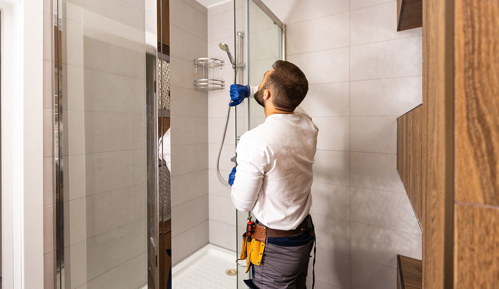
What can go wrong during installation?
The tiled floor slopes. A slope towards the drain is normal. Check the difference in floor height along the line where the glass and door will sit. Too much of a slope can make the door catch or leave a gap beneath the bottom seal. Check that your model is suitable for this type of floor installation.
The shower tray is uneven or moves. The top rim of a standard tray should generally be level. The tray itself directs the water towards the drain. Have an unstable tray properly supported or repaired first. Movement can split a fresh bead of sealant.
A wall is out of plumb or the corner is out of square. Adjustable profiles can accommodate only the amount of variation they are designed for. Beyond that, the glass may be under strain or the door may close unevenly. You may need a different model or a made-to-measure enclosure.
A sloping ceiling, boxed-in pipe or recess gets in the way. Measure the available height for the glass and any support bar. Check there is room to bring the panel upright. Toughened safety glass cannot be cut or drilled after manufacture.
The old enclosure leaves holes or loose tiles. The new profile may sit just beside the old screw holes. Have loose tiles, damaged waterproofing and old holes in the wet area checked and repaired as needed before securing the new enclosure.
When should you call a plumber?
Get the area checked first if the floor or wall falls outside the fitting range, the tray needs replacing, the drain needs moving or you cannot find the source of a leak. With your booking request, send photos of the whole shower area, the tray rim, the drain and anything that looks uneven. If you have already chosen a model, include the product link or fitting diagram. If you still need to order, ask whether a separate measuring visit is needed.
Budget for the enclosure, fitting and any additional materials or alterations. Agree in advance whether the plumber will remove and dispose of the old enclosure, connect the tray or drain, and apply the sealant. Schedule the fitting after you have checked the delivery. Allow time for the sealant to cure before using the shower, following the product instructions.
What matters to customers who have a shower enclosure fitted?
In reviews from customers who booked shower enclosure installation through Zoofy, a neat finish, punctuality and help with tricky fittings come up often. One customer said the doors closed properly again and the enclosure was neatly sealed. Another appreciated that the fitter came back after a missing part arrived.
Less satisfied customers mention water escaping from the enclosure, unexpected charges for materials and uncertainty about sealing or disposal. One customer described how a tray that moved caused the sealant to split. Agree what the fitting includes, check together that the door moves smoothly and ask when you can test the shower for leaks.
Want someone to fit or replace your shower enclosure? Book a vetted plumber through Zoofy with no call-out fee. You pay through Zoofy after the work is done.
Frequently asked questions about fitting a shower enclosure
Can I fit a new shower enclosure on my old tray?
Yes, if the tray is undamaged and stable and the new enclosure fits on the rim according to the manufacturer's instructions. Measure where the profiles will sit. If the tray is curved, check that the curvature matches as well.
Can I fit a shower enclosure directly onto tiles?
Yes, if the enclosure is designed for floor mounting and the tiled floor, waterproofing and drain are suitable for a shower without a tray. Check that the slope along the installation line is within the model's specifications. If you are unsure, have the floor and drainage checked first.
Do I need to replace the whole enclosure if the door leaks?
Start by cleaning or replacing the door seal and checking the door alignment. If water still escapes, have someone check whether it is coming through the door, a profile, the sealant, the tray or the drain before ordering parts.
Can I shower straight after installation?
Wait for the sealant to cure according to the product instructions. Ask the fitter when you can use the shower again. Once you can, run it as normal and check that the floor outside the enclosure stays dry.

My name is Wilm, a construction and home improvement expert at Zoofy, with many years of experience in the construction and renovation sector. Over the years, I have supervised countless projects, ranging from small maintenance jobs to full-scale renovations. This hands-on experience has taught me how essential transparency in pricing and quality is for every project.
At Zoofy, I share my knowledge about construction costs, pricing, and smartly comparing jobs. Whether it’s the cost of a painter, a plumber’s hourly rate, or the price of a complete bathroom renovation, I help you understand what a fair price is and what to look out for.
My goal is to make home improvement projects more transparent, so everyone knows where their money goes. By combining up-to-date pricing information with real-world experience, I make it easier to find the right professional—without any surprises afterward.