
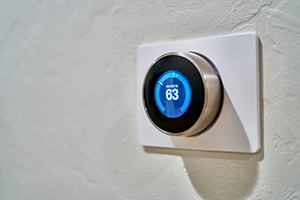
Installing a thermostat costs on average between €300 and €350, including labour and materials. The price depends on the type of thermostat (wired or wireless), the complexity of your heating system and any adjustments to the wiring. In this price guide, you can read which factors influence the costs, what the installation exactly entails and what you should look out for when choosing a new thermostat.
What does installing a thermostat cost?
Having a thermostat installed costs an average of €350, including labour and materials. The total cost range lies between €300 and €350, depending on the type of thermostat and the complexity of the installation. Labour costs amount to between €65 and €100 per hour, with most installations being completed within two hours.
Overview of thermostat installation costs
Description | Costs |
|---|---|
Average total costs (labour + materials) | €350 |
Total cost range | €300-€350 |
Labour costs per hour | €65-€100 |
Material costs thermostat | €85 |
The table shows the breakdown of the costs for installing a thermostat. The material costs for a standard thermostat are around €85, while labour costs vary based on the experience of the professional and the time required for the installation. For installing a smart thermostat, costs may be higher as these often require more time for configuration and linking with other systems.
The costs in this price guide include 21% VAT and labour. The final price depends on factors such as the type of system (wired or wireless), any adjustments to the wiring and the accessibility of the installation site.
Thermostat costs per type
The costs for installing a thermostat depend heavily on the type you choose. A mechanical thermostat is the cheapest, while a smart thermostat requires the highest investment but also offers the most functions. Below you can see the product costs per type:
Type of thermostat | Price range |
|---|---|
Mechanical/manual | €15-€35 |
Non-programmable electronic | €25-€65 |
Programmable electronic | €25-€200 |
Smart thermostat | €200-€300 |
Price-determining factors for installing a thermostat
The costs for installing a thermostat vary per situation. Not all installations are the same: one job requires more time and material than another. Below you can read which factors influence the price and why.
Type of thermostat
A mechanical thermostat costs between €15 and €35 and usually has standard wiring. A smart thermostat costs between €200 and €300 and often requires extra configuration time. Some smart models need a C-wire (common wire) for constant power. If that wire is missing, the professional must install extra wiring. This increases labour costs by an average of half an hour to an hour.
Condition of the existing wiring
When replacing, the existing wiring is usually directly accessible. The professional can remove the old thermostat and connect the new one without extra work. If the wiring is damaged or outdated, it must first be repaired or replaced. This requires extra material and labour time, which increases the costs.
Complexity of the installation
Installing a thermostat in new builds is faster than in existing buildings. In new builds, the wiring is often already prepared and the wires are visible or easily reachable. Moving a thermostat to a different location means pulling new wiring through walls or ceilings. This significantly increases labour costs.
Compatibility with the heating system
Smart thermostats that communicate with central heating boilers, heat pumps or underfloor heating sometimes require knowledge of both electricity and heating systems. Not all thermostats work directly with every system. In complex installations, it may be necessary for both an electrician and a heating engineer to be involved, which increases the price.
Number of thermostats
If you have multiple thermostats installed at the same time, the costs per unit are lower. The professional only comes once and can perform several installations in succession. This saves travel time and preparation time.
Emergency versus planned work
Emergency jobs cost more than planned work. A professional must adjust their schedule to be immediately available. This entails extra costs. Plan the installation ahead to avoid these additional charges.
Weekend or evening work
Work on the weekend or in the evenings costs more than during the week during the day. Hourly rates are higher outside regular working hours.
Region
In large cities, the costs to have a thermostat placed are often higher than in rural areas. This is due to higher hourly rates and higher operating costs for professionals in urban regions.
Accessibility of the workplace
Installing a thermostat is faster if the workplace is easily accessible. If the professional first has to move furniture or work through a tight space, it costs extra time.
Preparation by the customer
Good preparation saves time. Take photos of the old wiring before removing the thermostat. Ensure that the power can be safely switched off. The better the preparation, the faster the professional can work.
Choice of a local professional
Local professionals often charge less travel time and can be on site faster. This reduces the total costs for the installation.
Use of a transparent platform
With platforms like Zoofy, you know in advance what you pay. There are no call-out charges and no surprises afterwards. This gives certainty about the final price.
Extra costs and surcharges
Extra costs are situation-dependent. At Zoofy, you pay no call-out charges.
For emergency jobs, a surcharge applies because the professional must adjust their planning
Work in the weekend is more expensive than during the week
Replacing or repairing old or damaged wiring increases the installation costs
Installing a C-wire for smart thermostats requires extra time and material
Adjustments to the mounting plate or new holes in the wall may be necessary
Plasterwork or painting around the old thermostat may require repair
Replacing a thermostat on a boiler costs between €100 and €300 due to the complexity
How does the professional work when installing a thermostat?
The installation follows a fixed sequence of steps.
Preparation: The professional switches off the power at the consumer unit to work safely. When replacing, the old thermostat is removed and the wires are identified and labelled for correct connection.
Attaching the mounting plate: The mounting plate is attached to the wall at the desired location. The professional checks if the plate is level and securely fixed.
Connecting the wiring: The wires are connected according to the manufacturer's diagram. With a smart thermostat, a C-wire may be needed for continuous power. If this is missing, the professional installs extra wiring.
Configuration and testing: The power supply is restored. The professional tests the operation of the thermostat and programmes it according to your wishes. With smart thermostats, the Wi-Fi connection is set up and checked.
Completion: The professional checks whether the heating system responds correctly to the thermostat. The average installation time is two hours or less for a standard replacement. The costs include all testing and configuration.
How can you save on installing a thermostat?
There are several ways to save on the costs of installing a thermostat.
Replace in a timely manner: Replace an outdated or defect thermostat before it fails completely. A poorly functioning thermostat leads to unnecessary energy consumption and higher heating costs, which offsets the savings of a new installation.
Prepare the workplace: Clear the area and make it accessible before the professional arrives. Take photos of the existing wiring and check if the Wi-Fi range is sufficient for smart thermostats. This prevents the professional from having to spend extra time on preparation.
Plan smart: Plan the job during the week and not as an emergency. Weekend work and emergency jobs increase costs. Combine multiple jobs or thermostats to save on travel costs.
Choose compatible: Choose a thermostat that is compatible with your current heating system. This prevents unexpected extra costs through additional adjustments to the wiring or the system.
Book via Zoofy: You get a fixed rate in advance, without call-out charges and without surprises. You only pay after completion of the job.
Common causes for thermostat replacement
Problems with thermostats have various causes that can lead to replacement.
Defective or outdated components
The thermostat no longer responds, freezes or shows no display. Incorrect temperature measurements that make it too warm or too cold are also common complaints. The heating does not start or stop at the right time, leading to uncomfortable temperatures and higher energy costs.
Connection problems with smart thermostats
Smart thermostats can have issues with the Wi-Fi connection or turn out to be incompatible with the heating system. Outdated software can limit functionality. These problems often require replacement or an upgrade to a suitable model.
Incorrect or outdated wiring
In older homes, the existing wiring may be unsuitable for modern thermostats. This requires replacement or adjustment of the cabling, which increases the installation costs.
Find the best professional for installing a thermostat
Installing a thermostat is electrical work that requires professional knowledge to prevent risks.
Errors can lead to injury or damage: Incorrect wiring can cause short circuits, damage your heating system or affect the resale value of your home.
Complex systems require specialist knowledge: For smart thermostats that communicate with CV boilers or underfloor heating, expertise from both an electrician and a heating engineer is sometimes needed.
No call-out charges: You never pay extra for the professional's arrival.
Fixed price in advance: You know exactly what the costs are, no surprises.
Quick booking without quote hassle: Choose a time immediately and schedule the job.
Payment via QR code after completion: You only pay when the job is done.
Reliable, verified professionals: All affiliated professionals are checked for quality and reliability before they are allowed to carry out jobs.
Frequently asked questions about installing a thermostat
What does it cost to install a thermostat?
The costs for installing a thermostat are on average between €300 and €350, including labour and materials. This is based on a standard installation completed within two hours. For more complex installations or installing a smart thermostat, costs may be higher.
How long does it take to install a thermostat?
Most installations are completed within two hours. With new wiring or complex systems such as linking to a heat pump, it can take longer. The professional only charges the actual time.
Can I install a thermostat myself?
While it is technically possible for someone with electrical experience, it is recommended to hire a professional. Mistakes can lead to injury, damage to your heating system or problems with insurance. Professional installation prevents these risks.
Do I need a C-wire for a smart thermostat?
Many smart thermostats need a C-wire for continuous power supply. If this is missing, the professional can add it. This increases the costs by an average of half an hour to an hour of extra labour.
Does every thermostat work with every heating system?
No, not all thermostats are compatible with all systems. Check in advance if the thermostat works with your CV boiler, heat pump or underfloor heating. The professional can check this beforehand to avoid problems.
Must the power be switched off during installation?
Yes, the professional always switches off the power at the consumer unit before they start working. This is a standard safety measure for any electrical installation work.
When should a thermostat be replaced?
In case of incorrect temperature measurements, a non-responsive display, or when the heating does not start or stop properly. Also, if energy consumption is unexplainably high, replacement may be necessary.
How much can I save with a smart thermostat?
According to research, homeowners can save 10 to 15% on heating and cooling costs with a smart thermostat. You therefore earn back the purchase price through lower energy bills.
Do I need permission from my landlord or VvE?
In rental homes or apartments, it is wise to ask for permission in advance, especially for changes to the wiring. This prevents discussions afterwards.
What if the new thermostat does not work after installation?
Contact the professional immediately. Possible causes are incorrect wiring or incompatibility with the heating system. The professional will resolve this free of charge during the warranty period.
Book a professional for installing a thermostat
Ready to have a thermostat installed? At Zoofy, you book a professional directly, without quotes and without call-out charges. You see exactly what it costs in advance, and Zoofy pairs you with a reliable, verified professional. You only pay when the work is finished.