
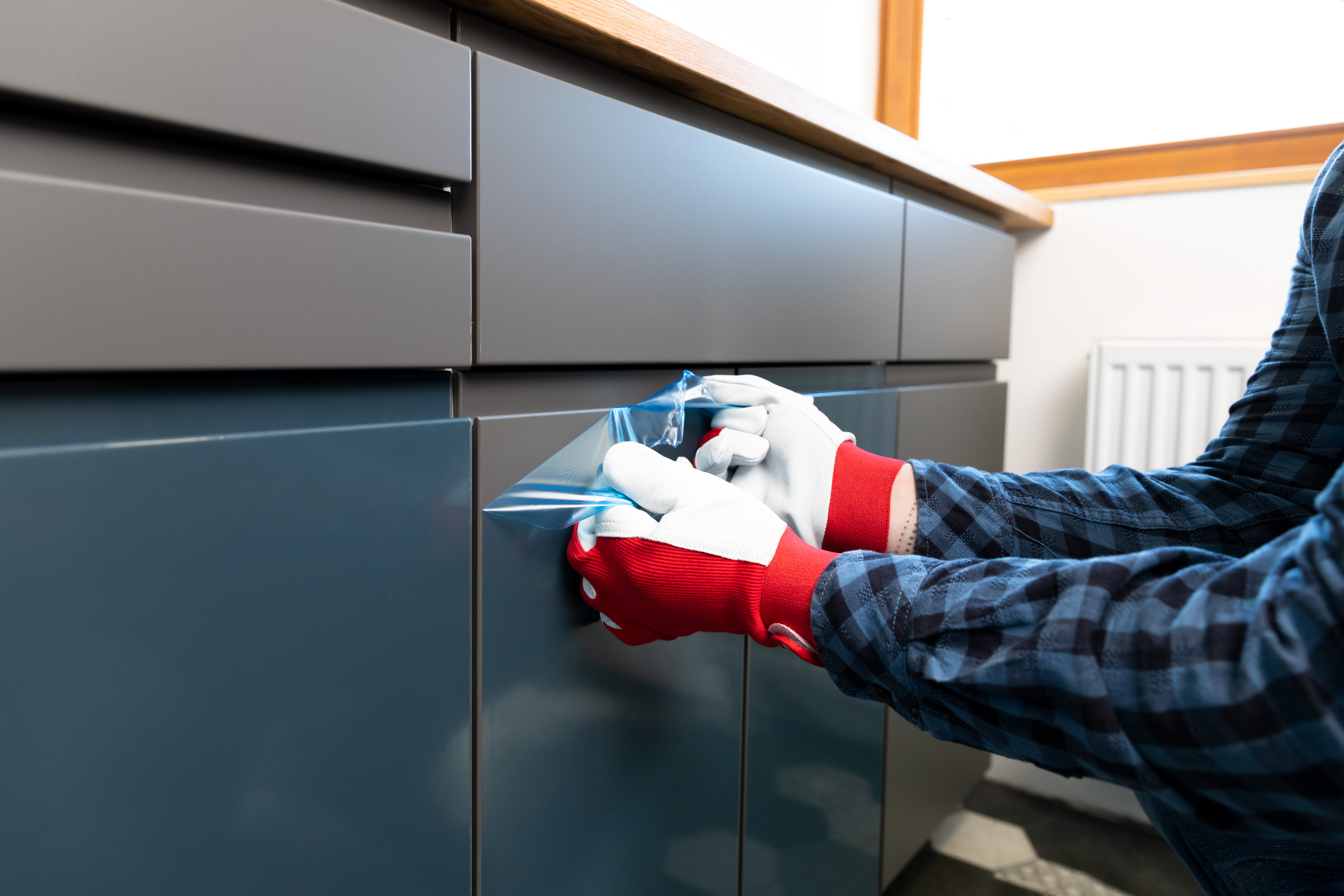
Wrapping your kitchen costs on average between €600 and €1,950, depending on the size of your kitchen and the type of foil. Kitchen wrapping involves applying self-adhesive foil to existing kitchen fronts, cabinets, and potentially worktops to give your kitchen a new look without complete replacement. In this price guide, you can read about the costs of kitchen wrapping and what to look out for.
How much does it cost to have a kitchen wrapped?
Having a kitchen wrapped costs on average between €600 and €1,950 per project, including materials and labour. This amount depends on the size of your kitchen and the number of doors, drawers, and fronts being wrapped. The more cabinets and surfaces the professional has to treat, the higher the total costs for wrapping your kitchen will be.
Price overview kitchen wrapping
Job | Price indication |
|---|---|
Kitchen wrapping (complete project) | €600 - €1,950 |
Costs are calculated per project, not per hour or square metre. The professional makes an estimate based on the number of cabinets, doors, and drawers in your kitchen. A small kitchen with few fronts is at the lower end of the price spectrum, while a large kitchen with plenty of cupboard space will be closer to €1,950.
The costs for wrapping kitchen cabinets are therefore directly related to the scale of your kitchen. A standard kitchen with approximately 10 to 15 cabinet doors usually costs around €1,200. For an extra-large kitchen with more than 20 fronts, additional drawers, and a kitchen island, you will pay more. The costs for having your kitchen wrapped include 21% VAT and the labour of the professional carrying out the task.
Price-determining factors for kitchen wrapping
The costs for wrapping a kitchen vary by situation. Several factors determine how much time and material are needed, and thus the total price. Below you can read which aspects influence the price.
Number of cabinet doors, drawers, and fronts
The more doors, drawers, and fronts your kitchen has, the more surface area needs to be wrapped. Every extra door or drawer means extra time for preparation, cutting, and finishing. A kitchen with 10 fronts requires less labour than a kitchen with 25 fronts. More surface area also means more foil material, which directly increases the costs.
Complexity of the kitchen layout
A straight kitchen with standard fronts is faster to wrap than a kitchen with corners, a peninsula, or curved elements. With complex shapes, the professional must measure the foil precisely, work around curves, and create sharp corners without air bubbles. This requires more craftsmanship and time, increasing the costs.
Condition of the current cabinets
Smooth, undamaged surfaces are ideal for wrapping. If your cabinets have scratches, dents, or uneven spots, the professional must treat these first. Pre-treatment such as sanding, filling, or cleaning costs extra time. The better the condition of your cabinets, the lower the labour duration and therefore the total price.
The chosen foil material
Cast foil is more flexible, durable, and expensive than calendered foil. Premium brands with special colours, wood grain, concrete look, or metallic effects cost more than standard plain foils. The choice of material determines a significant part of the total price.
Finish of the foil
Matte, high gloss, satin, or textured finishes have different price levels. High gloss and special textures are often more expensive than standard matte. The finish influences both the material costs and the processing time.
Wrapping extra elements
If you also want to have worktops, splashbacks, plinths, or appliance panels wrapped in addition to cabinet doors, the costs will rise. Every extra surface requires additional foil and labour time. Stick to fronts only to limit the costs.
Removing and replacing handles
Taking off and reattaching handles takes time. With many cabinets with handles, this adds up. Consider temporarily removing handles yourself if you want to save some money.
Suitability of the substrate
Wrapping works excellently on MDF, smooth lacquered surfaces, and flat fronts. Rough wood, heavily profiled, or textured surfaces require additional pre-treatment or are not suitable at all. The suitability of your substrate determines if prep work is needed and how much time the task takes.
Urgency versus planned
An urgent task costs more than a planned appointment. The professional has to adjust their schedule, which justifies a surcharge. Plan your kitchen wrapping well in advance to avoid extra costs.
Weekend
Work during the weekend is more expensive than during the week. If you are flexible with timing, choose a weekday to lower the costs.
Region
In large cities, prices are often higher than in rural areas. This is due to higher travel costs and market rates in urban regions.
Cost-saving tips
Do not delay tasks. Dealing with small damages to cabinet doors now prevents larger damage and higher costs later. Choose a local professional who can be on-site quickly. Ensure cabinets are empty and the workspace is clear and accessible so the professional can start immediately. Use a fair platform like Zoofy, where you know what you pay in advance without surprises.
Additional costs and surcharges
Extra costs depend on your specific situation. At Zoofy, you do not pay call-out charges.
Urgent tasks carry a surcharge because the professional must adjust their schedule
Weekend work is more expensive than during the week
Repair of damaged cabinet doors or MDF boards beforehand may be necessary
Replacement of worn hinges, handles, or rails brings additional costs
Heavily soiled or greasy surfaces require extra cleaning work
Wrapping extra elements such as plinths, appliance panels, or peninsulas increases the costs
Premium materials or special colours are more expensive than standard options
How does the professional work when wrapping a kitchen?
Kitchen wrapping happens in a series of steps to ensure a sleek and durable result.
Intake and colour choice: The professional discusses your wishes and shows physical samples so you can choose the colour and finish that match your interior.
Disassembly: Cabinet doors, drawers, and handles are disassembled where necessary for a neat finish without obstacles.
Cleaning and degreasing: All surfaces are thoroughly cleaned and degreased for optimal adhesion of the foil.
Possible repairs: Damage such as scratches or dents is repaired and surfaces are pre-treated if necessary.
Measuring and pre-cutting: The foil is accurately measured and pre-cut to the correct sizes per cabinet door or front.
Professional application: The professional applies the foil using special tools and heat technology to prevent air bubbles and guarantee a sleek result.
Finishing edges and seams: All edges and seams are carefully finished for a professional appearance without visible transitions.
Reassembly and check: Doors, drawers, and handles are replaced and the final result is checked. An average kitchen is wrapped within one to two days, depending on the number of fronts and the complexity.
How can you save on kitchen wrapping?
There are several ways to limit the costs for wrapping your kitchen without compromising on quality.
Ensure good preparation: Repair damaged doors beforehand, empty cabinets, and clean surfaces thoroughly to remove grease build-up. Good preparation saves the professional time, which lowers the price.
Choose the right timing: Book during the week instead of during the weekend and avoid urgent tasks. Planned tasks are more economical because the professional can align their schedule without a surcharge.
Maintain your kitchen well: Use mild cleaning agents without abrasives, dry spilled water immediately, and clean regularly with a soft cloth. Good maintenance extends the lifespan to five to ten years, allowing you to benefit from your investment longer.
Book via Zoofy: You get a fixed rate in advance, without call-out charges and without surprises. You only pay after the completion of the task.
Common problems with kitchen wrapping
Problems with kitchen wrapping often arise from incorrect preparation or cheap materials.
Air bubbles under the foil
Air bubbles occur due to careless application of the foil. Professionals use special tools and heat technology to apply the foil smoothly and without air. DIY attempts often lead to visible bubbles that can no longer be removed without re-applying the foil.
Peeling edges
Edges peel when the surface has not been cleaned properly or when using cheap foil. A professional degreases and prepares the surface thoroughly and uses quality material that adheres firmly. This prevents you from having to reinvest within a few months.
Visible seams and cracks
With large surfaces, incorrect application methods can lead to conspicuous seams. Experienced professionals plan seams strategically in less visible places. Incorrect material can also crack upon impact or heat, whereas the right choice of foil prevents this and lasts for years.
Find the best professional for kitchen wrapping
Reliability is crucial in kitchen wrapping because mistakes are directly visible and difficult to repair.
Experience with foil materials: Look for a professional who has experience with different types of foil and knows which solution best fits your kitchen. Knowledge of materials prevents disappointments and unnecessary costs.
No call-out charges: You never pay extra for the professional coming over, only for the actual work.
Fixed price in advance: You know exactly what the costs are before the task begins, without surprises afterwards.
Fast booking without quote hassle: Choose a moment immediately and book the professional without a lengthy quote process or waiting lists.
Payment via QR code after completion: You only pay once the task is fully completed and you are satisfied with the result.
Reliable, verified professionals: All affiliated professionals are screened and verified, so you are assured of quality and craftsmanship.
Book a professional for kitchen wrapping
Ready to have your kitchen wrapped? At Zoofy, you book a professional directly, without quotes and without call-out charges. You see exactly what it costs beforehand, and Zoofy pairs you with a reliable professional who has been verified. You only pay once the work is done. Book a professional directly now.
Useful links
Frequently asked questions
Having a kitchen wrapped costs on average between €600 and €1,950, depending on the size of your kitchen and the number of doors and fronts. A standard kitchen with approximately 10 to 15 cabinet doors usually costs around €1,200.
Wrapping does not work on all substrates. Rough wood and heavily profiled surfaces are less suitable. With cheap foil or incorrect application, air bubbles, peeling edges, and visible seams can occur.
A professionally wrapped kitchen lasts five to ten years with good maintenance. Use mild cleaning agents without abrasives and dry spilled water immediately to extend the lifespan.
Wrapping is often more economical than buying new fronts or replacing a complete kitchen. The costs for wrapping your kitchen are generally lower because you reuse existing cabinets without expensive disassembly and installation.
No, not every kitchen is suitable. Wrapping works excellently on MDF, smooth lacquered surfaces, and flat fronts. Textured surfaces and heavily profiled fronts are less suitable for wrapping.
An average kitchen is fully wrapped within one to two days, depending on the number of fronts and the complexity of the kitchen layout.
Yes, foil is reversible and can be removed. This does depend on the substrate and the quality of the original surface. With properly applied foil, usually no damage occurs.
High-quality kitchen wrap is moisture and heat resistant. However, avoid direct contact with very hot pans on wrapped surfaces to prevent damage.
Use mild cleaning agents without abrasives, dry spilled water immediately, and clean regularly with a soft cloth. This extends the lifespan and keeps your kitchen in optimal condition.
There is a wide range available: plain colours, wood grain, concrete look, metallic, matte, high gloss, and satin finishes. The price also depends on your choice of material.