
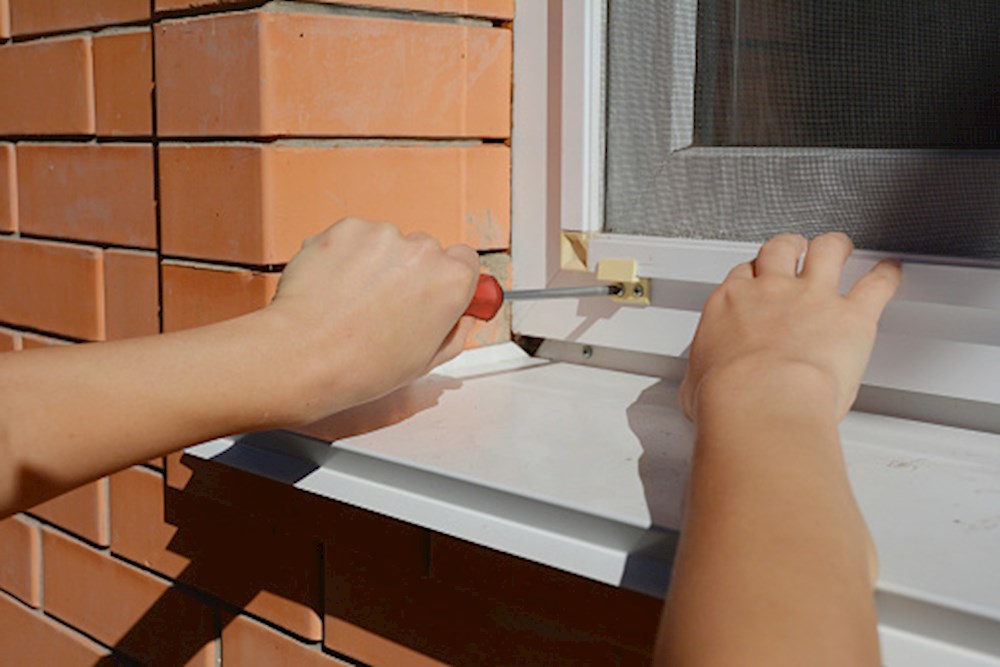
Installing insect screens costs on average between €40 for a simple insert screen and €400 for a complete screen door including installation. A screen is a mesh barrier mounted in front of windows or doors to keep insects out while allowing fresh air in. The costs for installing screens primarily depend on the type of screen, the dimensions, and whether you install them yourself or hire a professional. In this price guide, you can read about the costs of installing screens and what you should look out for.
What does it cost to install screens?
Installing screens costs on average €250 to €300 for a screen door including the product. For a simple insert screen, you pay between €40 and €100, while the costs for having screens installed for a complete screen door with installation start from €400. The total costs depend on the type of screen you choose and whether you outsource the installation.
Overview of screen costs per type
Type of job or service | Average costs |
|---|---|
Screen door | €250-€300 |
Insert screen | €40-€100 |
Clip-on screen | €50-€150 |
Roller screen | €50-€150 |
Window screen | €100-€150 |
Measuring screen | €50-€100 |
Installing screen door | €100-€150 per piece |
Installing window screen | €50-€100 per piece |
The table shows that insert screens are the cheapest option, suitable for windows where you can simply click them in. Roller screens and clip-on screens are in the mid-range, while screen doors with installation require the highest investment. Please note: the installation costs are in addition to the product prices.
All mentioned prices include 21% VAT. If you hire a professional for the installation, you pay separately for labour. A small insert screen is available from €50, having a window screen installed costs at least €200, and a complete screen door with installation starts from €400. The costs for measuring are often charged separately, between €50 and €100, especially for custom solutions.
Costs of screens per type
The costs for installing screens vary greatly per type. A simple insert screen is the cheapest option and often easy to install yourself, while a complete screen door requires the highest investment. Below you can see what each type of screen costs.
Type of screen | Price range | Suitable for |
|---|---|---|
Insert screen | €40-€100 | Tilt and turn windows that open inwards, easy to install yourself |
Roller screen | €50-€150 | Any type of window, can be mounted horizontally or vertically |
Clip-on screen | €50-€150 | Plastic tilt and turn windows with a clip system |
Window screen | €100-€150 | Outward-opening windows or skylights |
Screen door | €250-€300 | Doors, excluding installation (€100-€150 extra) |
Price-determining factors for installing screens
The costs for installing screens depend on various factors. Not every project is the same: the type of screen, the planning, your location, and the condition of the window frame all determine what you ultimately pay. Below you can read which factors influence the price and why.
Type of screen
The type of screen you choose has a direct influence on the costs. A simple insert screen costs from €40 and requires little to no installation work, while a screen door starts from €250 and requires professional installation. More complex systems such as roller screens with guides cost more in materials and installation time.
Custom-made versus standard sizes
Standard sizes are cheaper because they are produced in larger series. New-build homes often have uniform window frame sizes that standard screens fit into directly. Older homes, renovated buildings, or windows with unusual shapes such as triangles or arches require customization, which increases costs due to extra production time and precision work.
Type of mesh
Standard synthetic mesh is the most affordable. Aluminium mesh is stronger and more durable but costs more due to the material and production. Special mesh with finer weave for pollen filtering or pet-resistant mesh that is scratch-resistant requires different production processes and increases the price.
Colour and finish
Screens in standard colours such as white, grey, or brown are readily available and therefore cheaper. Different colours that perfectly match your window frames or facade require custom production, which increases costs.
Condition of the window frame
A damaged or rot-affected window frame cannot support a screen. If the window frame first needs to be repaired or reinforced, labour time increases and extra materials may be needed. This increases the total project costs.
Opening direction of window or door
Windows that open inwards are suitable for insert screens, while windows that open outwards often need a fixed frame. The opening direction determines which installation type is possible and how much material and time the installation takes.
Accessibility
High windows, skylights, or window frames that are only accessible via scaffolding require more preparation time. This means longer work and potentially extra equipment, which increases the costs.
Emergency job versus scheduled work
An emergency job requires the professional's immediate availability and may interrupt other scheduled work. Plan the installation of screens in good time in the spring before the insect season to avoid higher emergency rates.
Weekday versus weekend
Work at the weekend requires a higher hourly rate as it falls outside regular working hours. Book a professional during the week for the lowest rate.
Region
In large cities such as Amsterdam, Rotterdam, and Utrecht, costs are often higher due to higher business costs and demand. In rural areas, rates are often lower.
Number of screens at once
Installing multiple screens in one visit is more efficient than separate projects. The professional is already on site, tools are ready, and preparation only needs to be done once. This lowers the cost per piece.
Preparation by the customer
If the workspace is clear and accessible, the professional can get straight to work. Removing obstacles from windows and doors saves time and prevents extra costs for clearing work or waiting time.
Platform or intermediary
With Zoofy, you know in advance what you pay without surprises or call-out charges. Transparent rates help prevent unexpected additional costs.
Extra costs and surcharges
Extra costs depend on the situation. At Zoofy, you do not pay call-out charges.
Emergency surcharge: A surcharge often applies for emergency jobs because the professional has to adjust their schedule.
Weekend surcharge: Work at the weekend is more expensive than during the week.
Additional window frame work: If the window frame is not in good condition, repair costs may be added for installing screens.
Hard-to-reach places: High windows or skylights can involve extra labour costs.
Removing old screens: Dismantling existing screens can cause extra costs.
Special mesh types: Pollen-resistant, pet-resistant, or extra-strong mesh costs more than standard mesh.
How does the professional work when installing screens?
Installing screens follows a fixed method with clear steps.
Level assessment: The professional checks the opening direction of windows and doors, assesses the condition of the window frame, and discusses your requirements for the type of screen that suits your situation.
Measuring: They measure the window frame precisely to the millimetre for a perfect fit. For custom work, all measurements are noted for production.
Choosing the type of screen: Based on the situation, the professional advises on the right type. For inward-opening windows, an insert screen fits; for outward-opening windows, a window screen or hinged screen is used.
Window frame preparation: If necessary, the window frame is cleaned or prepared. In case of damage, repair may be necessary before installation can begin.
Installation: Depending on the type, the screen is clamped, screwed, or attached with hinges. Roller screens receive a cassette, plissé screens receive rails.
Adjustment and check: The professional tests whether the screen opens and closes smoothly. For roller screens, the retraction mechanism is checked; for magnetic screens, the closure is checked.
Instruction: You receive an explanation on use and maintenance: regular cleaning with a soft brush and keeping rails clean for roller screens. Installing one screen usually takes 30 to 60 minutes.
How can you save on installing screens?
There are several ways to lower the costs of installing screens without compromising on quality.
Maintain existing screens: Regular cleaning with a soft brush and lukewarm water extends the lifespan. Keep rails clean on roller screens to prevent repairs.
Plan smartly: Install screens in the spring before the insect season. Book during the week instead of at the weekend to avoid surcharges.
Install yourself where possible: You can often mount insert screens with a clip system yourself. This saves up to 35% of the total costs. Leave more complex systems to a professional.
Good preparation: Ensure windows and doors are freely accessible. Remove curtains or obstacles in advance so the professional can start immediately.
Choose standard sizes: Standard sizes are cheaper than custom work and often fit new-build homes.
Book via Zoofy: You get a fixed rate in advance, without call-out charges and without surprises. You only pay after the job is completed.
Common problems with screens
Problems with screens arise from wear and tear, incorrect use, or poor maintenance.
Tears in mesh
The mesh can tear due to daily use, pets jumping against the screen, or sharp objects. Visible holes or loose threads are immediately recognisable. If you ignore it, insects will simply come in while you thought you were protected.
Stuck roller screens
Dirt, pollen, or cobwebs in the rails or cassette cause the mechanism to falter. You notice it when the screen no longer rolls up smoothly or gets stuck halfway. Regular cleaning prevents this problem.
Detaching screens
An incorrectly mounted screen or worn clip system causes play. The screen wobbles in the window frame or even falls out. This problem is worsened by wind and daily opening of windows, which can increase replacement costs.
Find the best professional for installing screens
A professional who installs screens knows exactly how measuring and mounting works for your situation.
Experience with different screen types: Choose a professional who knows how insert screens, roller screens, and screen doors are correctly mounted and provides advice on which type fits your windows.
Clear warranty agreements: Ask in advance about the warranty on installation and materials, so you know where you stand if something goes wrong.
No call-out charges: You never pay call-out charges at Zoofy for having screens installed.
Fixed price in advance: You know exactly what the costs are before the professional begins, without surprises afterwards.
Book quickly without quote hassle: Indicate three times when the professional may contact you and book directly.
Payment after completion: You only pay when the work is finished, via QR code or invoice by email.
Reliable professionals: All affiliated professionals are vetted and score an average of 9.2 with over 200,000 satisfied customers.
Book a professional for installing screens
Ready to have screens installed? At Zoofy, you book a professional directly, without quotes and without call-out charges. You see exactly what it costs in advance, and Zoofy connects you with a reliable professional who has been vetted. You only pay when the work is done. Book a professional directly now.
Useful links
Frequently asked questions
The costs for installing screens are between €40 for a simple insert screen and €400 for a complete screen door including installation. Installing a window screen costs on average €200, while the costs for roller screens are between €50 and €150 excluding installation.
Insert screens with a clip system can often be installed yourself without drilling. For roller screens, plissé screens, and screen doors, a professional is recommended for perfect installation and adjustment. This prevents problems with fit and operation.
Installing one screen door usually takes 30 to 60 minutes. This depends on the condition of the window frame and whether extra preparation work is needed. Installing multiple screens at once is more efficient.
With good maintenance, a screen lasts 10 to 15 years. Roller screens and plissé screens may last slightly less long due to the moving parts that undergo wear.
There are screens for almost every type of window and door. The opening direction of the window determines which type is suitable: insert screens for inward-opening windows, window screens for outward-opening windows.
There is no real alternative that is equally effective at keeping insects out. Fly curtains or electric insect repellents work less well and do not allow for ventilation.
Most screens are wind-resistant. In extreme wind, slat screens may move more, while plissé screens and roller screens remain stable in the rails.
Yes, there is pet-resistant mesh that is scratch-resistant for cats. A fixed magnetic screen door is the only type that actually keeps pets inside as well.
Insert screens and clip-on screens are ideal for rental properties because they require no drilling and are easy to remove without damage to the window frame.
Yes, there are special window screens for top-hung skylights. Have these measured by a professional for a perfect fit and attachment.